
Account-based marketing spent the last few years converging with two forces that reshaped the category: intent data and AI. What began as a discipline — pick your best-fit accounts, market to the whole buying committee, align sales and marketing around revenue — became a software stack. The platforms that lead in 2026 win on how well they answer the hardest ABM question: which accounts are in-market right now, and how do you engage the whole buying group at those accounts across ads, web, email, and live conversation before your competitors do?
The result is that “what's the best ABM platform?” splits along two axes. The first is company size: enterprise leaders like 6sense and Demandbase justify five- and six-figure contracts with proprietary intent data and orchestration, while a wave of more accessible tools brought real ABM to the mid-market and SMB. The second axis is strategy: whether you lead with advertising, website personalization, or real-time signals decides your shortlist as much as your budget does.
This guide ranks the 10 ABM platforms we'd actually shortlist in 2026, organized by the job each is best at. We evaluated every tool on four criteria: intent data and account identification (how accurately it tells you which accounts to engage and when), orchestration and channels (how many surfaces it coordinates and how well), personalization depth (how specifically it tailors experiences to each account), and CRM fit and time-to-value (how deeply it syncs with Salesforce or HubSpot and how fast a team sees pipeline). Because nearly all ABM pricing is quote-based and annual, we've been honest about where costs land rather than pretending at precision.
Quick Comparison: The Best ABM Platforms at a Glance
| Platform | Best For | Pricing | Segment | Standout |
|---|---|---|---|---|
| 6sense | Best Overall | Quote (5-6 figures) | Enterprise | AI account ID & intent |
| Demandbase | All-in-One ABM | Quote (5-6 figures) | Enterprise | Ads + sales intelligence |
| HubSpot | HubSpot Users | From ~$800/mo | Mid-Market | Native CRM ABM tooling |
| Terminus | Multi-Channel | Quote-based | Mid-Market | Email signature + channels |
| RollWorks | Mid-Market & SMB | Lower entry (quote) | Mid-Market/SMB | Affordable full ABM |
| Mutiny | Website Personalization | Quote-based | Mid-Market/Ent. | No-code web personalization |
| Metadata | Paid Automation | Quote-based | Mid-Market | Paid campaign automation |
| Madison Logic | Content & Global ABM | Quote (enterprise) | Enterprise | Content syndication + reach |
| Warmly | Signal-Based Outbound | Free tier + accessible | SMB/Mid-Market | Visitor signals + AI outbound |
| Qualified | Conversational ABM | Quote-based | Mid-Market/Ent. | Live chat + Piper AI SDR |
How We Evaluated the Best ABM Platforms
Every vendor demos target-account dashboards and intent charts. We weighted the dimensions that separate platforms once they're running a real ABM program:
Intent Data & Account ID
The hardest ABM problem: knowing which accounts are in-market before they raise a hand. We scored the depth and accuracy of first- and third-party intent, website de-anonymization, and predictive models — the data edge that separates 6sense and Demandbase from the field.
Orchestration & Channels
ABM is multi-touch by design. We weighted how many surfaces each platform coordinates — advertising, web, email, chat, content — and how well automated plays move accounts through stages rather than firing disconnected campaigns.
Personalization Depth
Generic outreach isn't ABM. We scored how specifically each tool tailors experiences to the account — from ad creative to dynamic website copy to 1:1 landing pages and AI-generated variants — and how much of that personalization the AI now produces.
CRM Fit & Time-to-Value
The CRM is the system of record ABM orbits. We weighted how deeply each platform syncs with Salesforce and HubSpot — writing intent and engagement back where reps see it — and how fast a team gets from onboarding to real pipeline.
Pro Tip
Before you shortlist, decide what leads your strategy: predictive intent, coordinated advertising, website personalization, or real-time signals. ABM platforms optimize for different jobs, and the best fit depends more on which of those you're building around — and your company size — than on any single feature checklist.
Pricing at a Glance
Be warned: ABM pricing is deliberately opaque. Nearly every platform is quote-based and annual, with cost scaling by database access, number of target accounts, advertising spend, and seats — so published numbers are rare. Rather than pretend at precision, the chart below ranks the field by how accessible the entry point is, from free and low-cost mid-market tools (Warmly, RollWorks) up to the five- and six-figure enterprise contracts of the leaders (6sense, Demandbase). Always model total cost including intent data and ad spend, not just the license:
The Best ABM Platforms, by Category
Before reading individual reviews, place your team on this map — company size and the strategy you lead with narrow ten platforms to a shortlist of two or three:
Enterprise intent & orchestration platforms (6sense, Demandbase, Madison Logic) win on proprietary data and coordinated reach — the highest ceiling, if you can resource the program and fund the contract. Mid-market all-in-one tools (HubSpot, Terminus, RollWorks) deliver broad, approachable ABM that fits an existing stack without an enterprise lift. Website & campaign personalization specialists (Mutiny, Metadata) do one high-leverage slice — tailoring web experiences or automating paid campaigns — better than any suite, usually alongside a broader platform. And signal-based & conversational tools (Warmly, Qualified) catch accounts in real time, turning visitor signals and live conversation into warm pipeline for teams that want speed over a heavyweight platform.
6sense
Best for: Enterprise and upper-mid-market revenue teams that want AI-driven account identification, intent data, and orchestration leading their ABM strategy
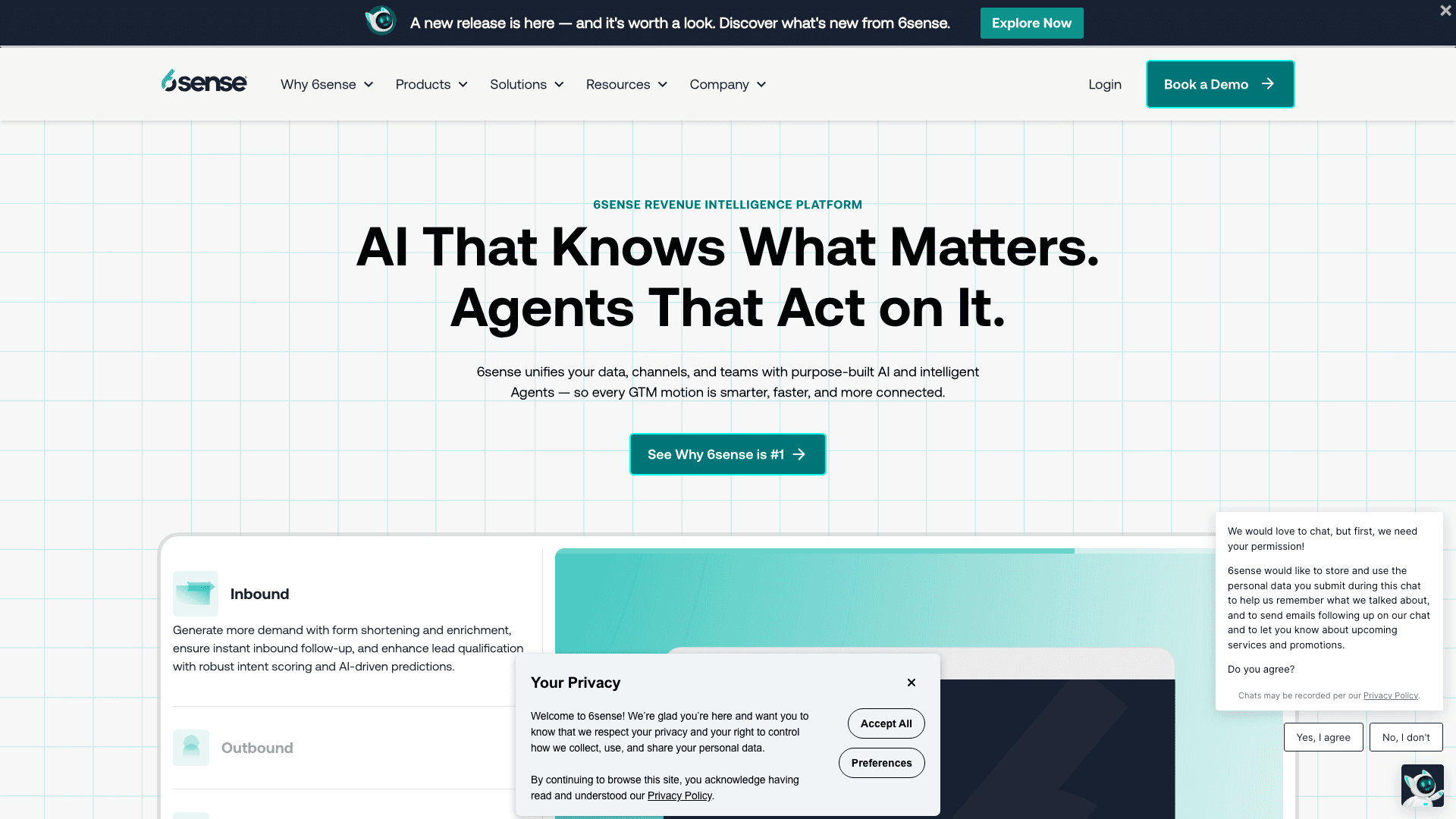
6sense earns the top spot by being the best in the category at the hardest ABM question: which accounts should you engage, and when? Its Revenue AI platform combines proprietary intent data, anonymous website de-anonymization, and predictive models to identify accounts that are in-market before they fill out a form, then scores them by buying stage so teams can time outreach and advertising to the moment of highest intent. Around that data core sits real orchestration — segmentation, advertising, and automated plays that push intent signals into your CRM and sales workflows. It's the platform enterprise ABM teams most often standardize on, and the one whose identification and timing models set the benchmark rivals measure against. The honest limits: it's expensive, quote-based, and genuinely complex — realizing its value takes a serious program, dedicated ops resources, and a real onboarding investment, which makes it overkill for small teams with short sales cycles.
Key Features
- AI Account Identification: De-anonymizes website visitors and predicts in-market accounts before they self-identify
- Proprietary Intent Data: First- and third-party intent scored into buying-stage models per account
- Predictive Orchestration: Automated plays and segments triggered by intent and stage across channels
- B2B Advertising: Account-targeted display and programmatic advertising tied to intent scores
- CRM & MAP Sync: Deep Salesforce and HubSpot integration writes intent and stage back to reps
Pricing
| Plan | Monthly | Annual (per month) |
|---|---|---|
| Free / Team (limited) | $0 (limited) | Free tier available |
| Growth | Quote-based | Quote-based (annual) |
| Enterprise | Custom | Custom (often six figures) |
Pros
- Best-in-class account identification and in-market timing
- Proprietary intent data with strong predictive accuracy
- Deep orchestration and advertising in one platform
- The enterprise standard sales and marketing align around
Cons
- Expensive and strictly quote-based at scale
- Complex — real value needs dedicated ops and onboarding
- Overkill for small teams with short sales cycles
Related reading: Best Sales Intelligence Tools
Verdict: 6sense is the best ABM platform for most enterprise and upper-mid-market teams in 2026. If predictive intent and orchestration lead your strategy and you can resource the program, its data edge is the highest in the category.
Visit 6senseDemandbase
Best for: Enterprise teams that want account intelligence, B2B advertising, and sales intelligence unified in a single vendor rather than stitched together
Demandbase is 6sense's closest rival and the most complete single-vendor platform in ABM. Where many tools do one job well, Demandbase One folds three into one system: account intelligence and intent, a mature B2B advertising engine, and sales intelligence (contact and company data from its InsideView and DemandMatrix heritage). That breadth is the pitch — teams that want advertising and sales tooling native rather than bolted on standardize on Demandbase to avoid stitching a data vendor, an ad platform, and an ABM tool together. Its advertising in particular is a genuine strength, with account-based targeting and a long track record. The trades mirror 6sense's: pricing is quote-based and lands in enterprise territory, the platform is broad enough that teams rarely use all of it, and some buyers feel 6sense still edges it on pure predictive-intent accuracy. For all-in-one coverage, though, nothing else matches its footprint.
Key Features
- Account Intelligence & Intent: Account identification and intent scoring to prioritize in-market targets
- Native B2B Advertising: Mature account-based display and programmatic advertising engine
- Sales Intelligence: Contact and company data with alerts pushed into sales workflows
- Orchestration & Journeys: Automated account journeys across advertising, web, and sales touchpoints
- CRM & MAP Integration: Bidirectional Salesforce, HubSpot, and Marketo sync for closed-loop data
Pricing
| Plan | Monthly | Annual (per month) |
|---|---|---|
| Advertising / Starter | Quote-based | Quote-based (annual) |
| Professional / One | Quote-based | Quote-based |
| Enterprise | Custom | Custom (five to six figures) |
Pros
- Widest single-vendor footprint across advertising and sales intelligence
- Genuinely strong B2B advertising engine
- Account intelligence and orchestration in one platform
- Reduces the number of stitched-together point tools
Cons
- Quote-based enterprise pricing
- Broad platform — teams rarely use every module
- 6sense is often seen as edging it on predictive-intent accuracy
Verdict: Demandbase is the best all-in-one ABM platform. If you want advertising and sales intelligence native to the same system as your account data, its breadth is unmatched — and it trades blows with 6sense at the top of the market.
Visit DemandbaseHubSpot
Best for: Mid-market teams already running HubSpot CRM that want ABM tooling native to the platform they use every day
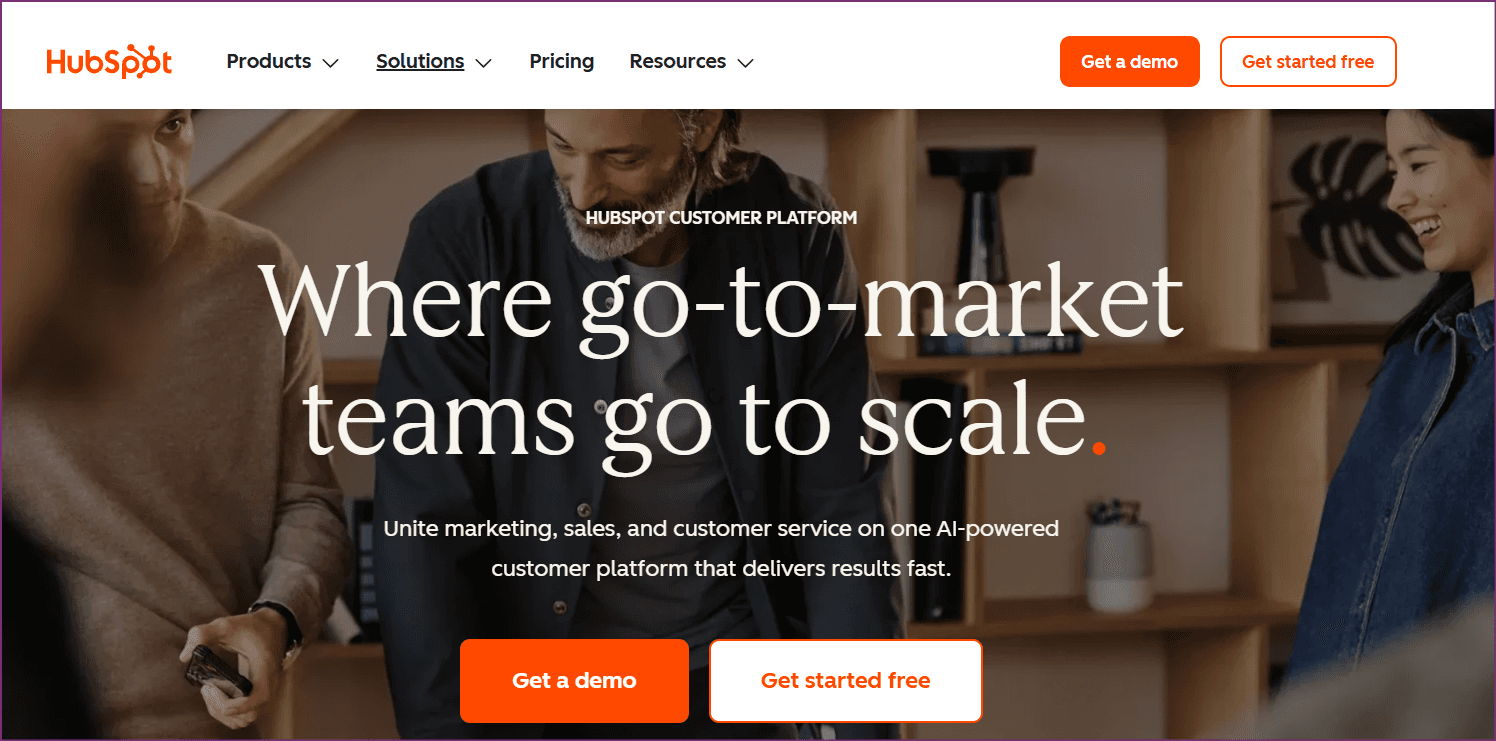
HubSpot isn't a dedicated ABM platform, but for the enormous number of teams already running its CRM it's often the most sensible place to start. ABM tooling is built into Marketing Hub (Professional and Enterprise): target-account properties and tiers, ideal-customer-profile scoring, ad audiences synced to LinkedIn and Google, account-based workflows, and dashboards that report engagement at the account level — all native to the CRM where your contacts, deals, and marketing already live. The advantage is zero integration friction and no second vendor: your reps and marketers work in one system, and account data flows without a connector. The honest limits are depth. HubSpot lacks the proprietary third-party intent data and predictive identification that 6sense and Demandbase are built on, so for heavy, intent-led enterprise ABM it's a lighter tool. But for mid-market teams that want real account-based motions without a six-figure contract or a new platform to learn, it's the pragmatic pick.
Key Features
- Native Target Accounts: Account tiers, ICP scoring, and buying-role properties inside the CRM
- Ad Audiences: Target-account audiences synced to LinkedIn and Google ad platforms
- Account-Based Workflows: Automated plays and alerts triggered by account engagement
- Account Dashboards: Engagement and pipeline reporting rolled up to the account level
- One-System CRM Fit: Contacts, deals, marketing, and ABM in a single native platform
Pricing
| Plan | Monthly | Annual (per month) |
|---|---|---|
| Marketing Hub Professional | From ~$800/mo | From ~$800/mo (annual) |
| Marketing Hub Enterprise | From ~$3,600/mo | From ~$3,600/mo (annual) |
| Add-ons & seats | Varies | Varies |
Pros
- ABM native to the CRM you already run — zero integration friction
- No second vendor or connector to maintain
- Approachable for mid-market teams without ABM ops
- Transparent, published pricing unlike most of the category
Cons
- No proprietary third-party intent data or predictive identification
- Lighter than dedicated platforms for enterprise intent-led ABM
- Real ABM features require the higher Professional/Enterprise tiers
Verdict: HubSpot is the best ABM starting point for teams already on its CRM. You give up the deep intent data of the leaders, but you gain native account-based motions with no new platform to buy or learn.
Visit HubSpotTerminus
Best for: Teams that want to coordinate ABM across advertising, email signatures, chat, and web personalization from one orchestration hub
Terminus built its reputation on running ABM across more channels than most platforms touch, and multi-channel orchestration remains its clearest strength. Beyond account-based advertising, Terminus reaches buyers through email signature marketing (turning every employee's outgoing email into a targeted banner), on-site chat, and web personalization — a genuinely broad surface for engaging accounts wherever they show up. Its data studio and account-based reporting tie those channels back to pipeline, and its intent and identification features prioritize which accounts to work. For teams whose ABM strategy is fundamentally about coordinated, multi-touch reach across owned and paid channels, that breadth is the draw. The trades: after ownership and strategy changes in recent years, some buyers weigh its momentum against faster-moving rivals, and its intent and predictive data aren't regarded as being at the 6sense or Demandbase tier. But for orchestration across an unusually wide channel set, it remains a strong, established choice.
Key Features
- Account-Based Advertising: Targeted display advertising to prioritized accounts and buying committees
- Email Signature Marketing: Turns employee email signatures into targeted, account-aware banners
- Web Personalization & Chat: On-site personalization and chat to engage identified accounts live
- Account-Based Reporting: Data studio ties multi-channel engagement back to pipeline
- Intent & Identification: Prioritizes accounts by fit and intent signals across the funnel
Pricing
| Plan | Monthly | Annual (per month) |
|---|---|---|
| Base platform | Quote-based | Quote-based (annual) |
| Multi-channel bundles | Quote-based | Quote-based |
| Enterprise | Custom | Custom |
Pros
- Unusually broad channel set including email signature marketing
- Strong coordinated multi-channel orchestration
- Account-based reporting ties channels to pipeline
- Established platform with a long ABM track record
Cons
- Intent and predictive data trail the two enterprise leaders
- Momentum questioned after ownership and strategy changes
- Quote-based pricing with no public transparency
Verdict: Terminus is the pick when your ABM strategy is about coordinated reach across many channels. Its email-signature and multi-channel orchestration cover ground the pure-intent leaders don't.
Visit TerminusRollWorks
Best for: Mid-market and SMB teams that want approachable, affordable ABM — identification, ads, and automation — without an enterprise contract
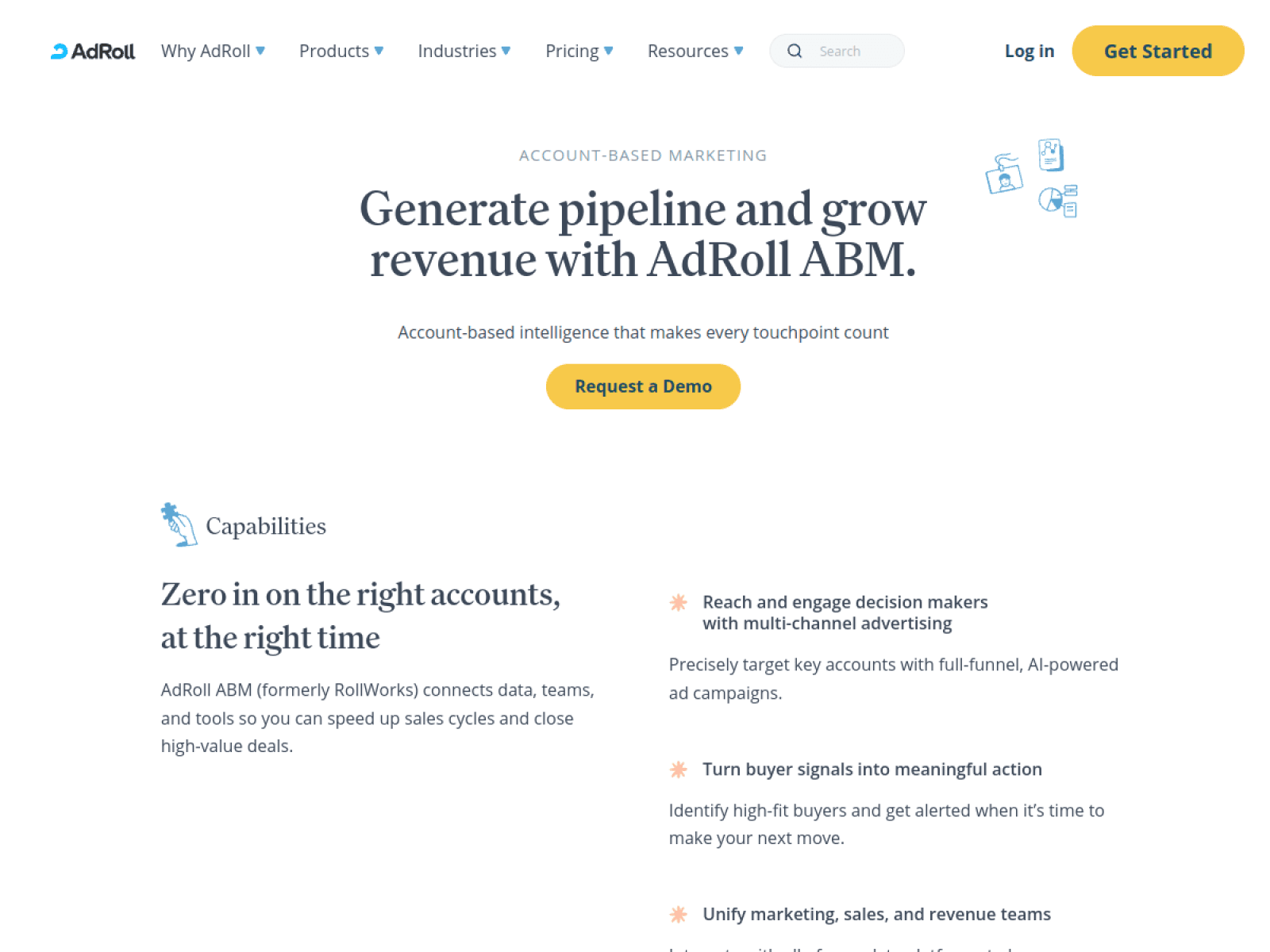
RollWorks, part of NextRoll, is the most approachable full ABM platform for teams that find 6sense and Demandbase too heavy and too expensive. It covers the core ABM motion — account identification, ICP and intent scoring, account-based advertising, and automation — at a materially lower entry point and with more transparent packaging than the enterprise leaders. The NextRoll advertising infrastructure underneath gives it a genuinely capable ad engine, and its integrations with HubSpot, Salesforce, and Marketo make it easy to slot into an existing mid-market stack. The pitch is pragmatic: real ABM outcomes without a six-figure commitment or a dedicated ops team. The honest trade-offs are depth and data scale — its intent and identification aren't as deep or as predictive as the top two, and very large enterprises may outgrow it. But for the broad middle of the market that wants to run ABM affordably, RollWorks is frequently the best value in the category.
Key Features
- Account Identification & Scoring: ICP fit and intent scoring to build and prioritize target-account lists
- Account-Based Advertising: Ad targeting on NextRoll's infrastructure with cross-channel reach
- Automation & Journeys: Triggered plays that move accounts through stages automatically
- CRM & MAP Integrations: Native HubSpot, Salesforce, and Marketo sync for the mid-market stack
- Approachable Packaging: Lower entry point and clearer tiers than the enterprise leaders
Pricing
| Plan | Monthly | Annual (per month) |
|---|---|---|
| Starter | Quote-based | Lower entry point (often five figures) |
| Standard / Professional | Quote-based | Quote-based (annual) |
| Enterprise | Custom | Custom |
Pros
- Most approachable full ABM platform for mid-market and SMB
- Capable advertising via NextRoll infrastructure
- Lower, more transparent entry point than the leaders
- Easy to integrate into an existing HubSpot or Salesforce stack
Cons
- Intent and identification less deep than 6sense/Demandbase
- Very large enterprises may outgrow its data scale
- Still quote-based despite clearer packaging
Verdict: RollWorks is the best-value ABM platform for the middle of the market. If enterprise tools are too heavy and too costly, it delivers the core motion at a fraction of the price and complexity.
Visit RollWorksMutiny
Best for: Teams that want to personalize their website and landing pages for target accounts without engineering, using AI and no-code tooling
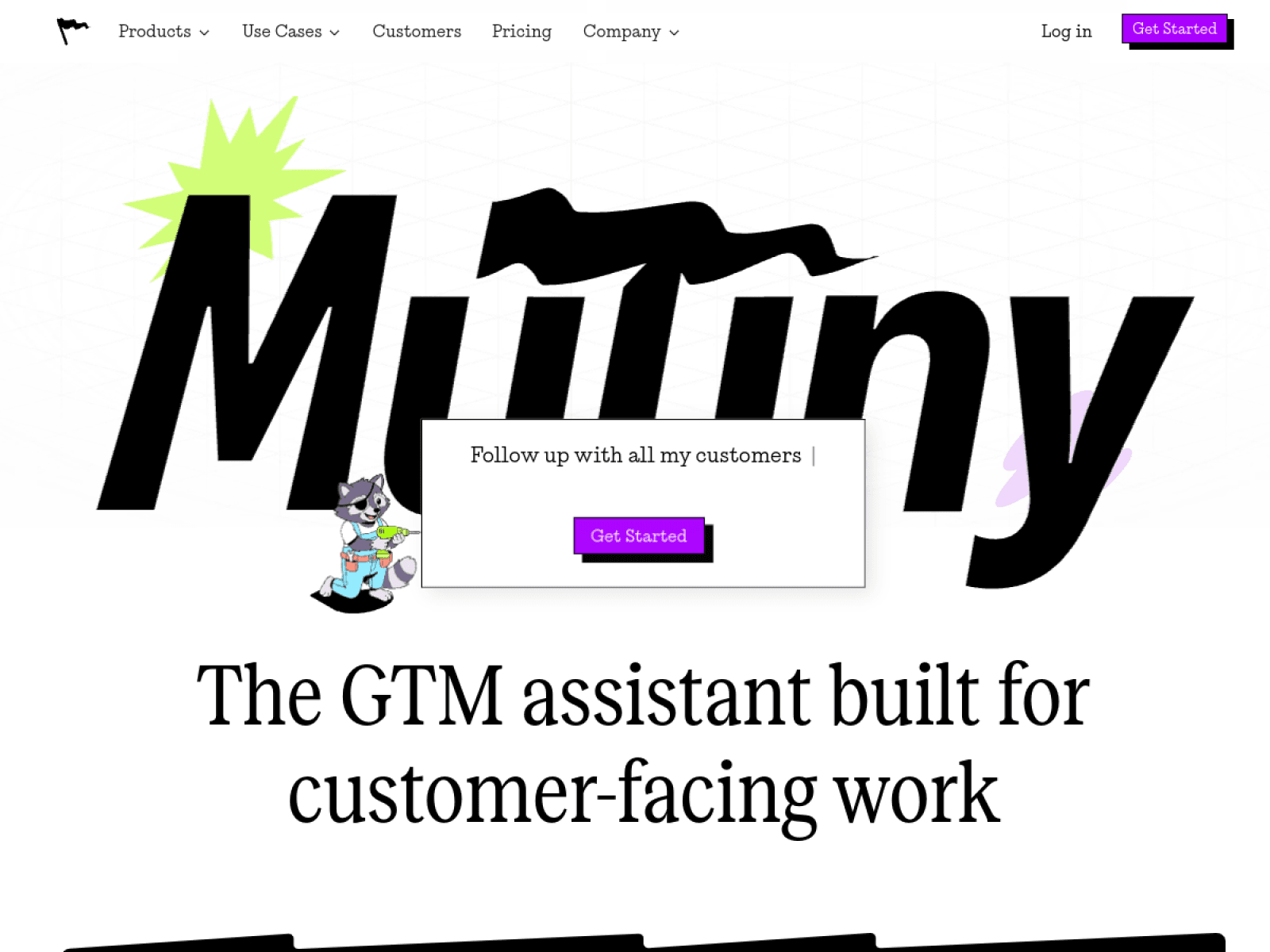
Mutiny attacks one high-leverage slice of ABM better than anyone: turning your website into a personalized surface for target accounts. Using firmographic and de-anonymization data, it detects who's visiting — by company, industry, or account tier — and dynamically tailors headlines, copy, CTAs, and social proof to match, all through a no-code editor marketers control without engineering. Its AI increasingly generates the variants and 1:1 landing pages, so a rep can send a prospect a page that already speaks to their company by name. For ABM programs where the website and paid landing pages are where target accounts convert, that personalization lifts conversion in a way generic pages can't. Mutiny isn't a full ABM suite — it doesn't do the advertising, intent-scoring, and orchestration breadth of the leaders — so it usually sits alongside a platform like 6sense or an ad tool rather than replacing them. But as the personalization layer, it's the category's standout.
Key Features
- No-Code Website Personalization: Marketers tailor headlines, copy, and CTAs by account without engineering
- Visitor De-Anonymization: Identifies visiting companies to trigger firmographic personalization
- AI-Generated Variants: AI writes and tests personalized copy and page variants at scale
- 1:1 Landing Pages: Account-specific landing pages reps can send to named prospects
- Experimentation & Analytics: A/B testing and conversion analytics on every personalized experience
Pricing
| Plan | Monthly | Annual (per month) |
|---|---|---|
| Starter / Growth | Quote-based | Quote-based (annual) |
| Pro | Quote-based | Quote-based |
| Enterprise | Custom | Custom |
Pros
- Best-in-class website and landing-page personalization
- No-code — marketers move without engineering
- AI generates variants and 1:1 pages at scale
- High-leverage lift right at the conversion point
Cons
- Not a full ABM suite — no advertising or orchestration breadth
- Usually needs a platform or ad tool alongside it
- Value depends on meaningful target-account website traffic
Verdict: Mutiny is the best ABM personalization layer. When the website is where target accounts convert, it turns generic pages into account-specific experiences no full suite matches — usually paired with a broader platform.
Visit MutinyMetadata
Best for: Demand-gen and ABM teams that want to automate paid social and search experiments and audience targeting instead of managing campaigns by hand
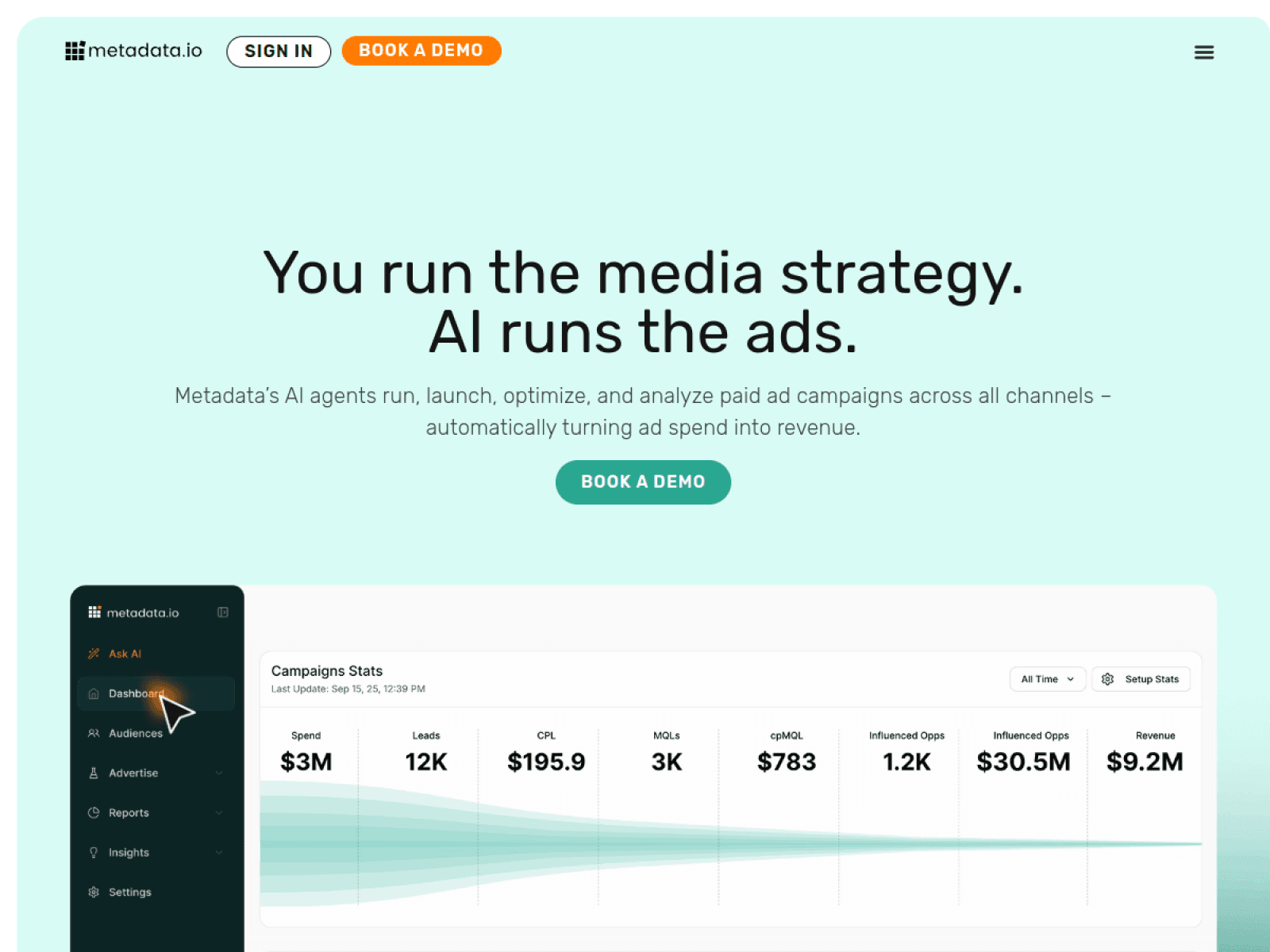
Metadata is built for the team whose ABM lives largely in paid channels and who is tired of manually building, launching, and optimizing campaigns. Its platform automates the grunt work of paid demand gen and ABM advertising: it builds target audiences from CRM and intent data, spins up large numbers of ad experiments across LinkedIn, Meta, and search, and uses its optimization engine to automatically shift budget toward the audiences, creatives, and offers that convert. For account-based advertising at scale, that automation replaces the spreadsheet-and-manual-uploads workflow that eats paid marketers' time. It also handles the post-click side with landing pages and lead enrichment. The trades: Metadata is focused on the paid campaign layer rather than being a full account-intelligence and orchestration suite, so it complements rather than replaces the identification-and-intent platforms. But for automating paid ABM and demand-gen experimentation, it's the specialist.
Key Features
- Automated Ad Experiments: Launches and manages large volumes of paid experiments across channels
- Audience Building: Builds target audiences from CRM, firmographic, and intent data
- Budget Optimization Engine: Automatically shifts spend toward winning audiences and creatives
- Multi-Channel Paid Reach: LinkedIn, Meta, and search campaigns from one platform
- Landing Pages & Enrichment: Post-click pages and lead enrichment to close the loop on paid
Pricing
| Plan | Monthly | Annual (per month) |
|---|---|---|
| Base platform | Quote-based | Quote-based (annual) |
| Growth | Quote-based | Quote-based |
| Enterprise | Custom | Custom |
Pros
- Automates paid campaign building and optimization at scale
- Strong audience targeting from CRM and intent data
- Optimization engine replaces manual budget shifting
- Covers post-click with pages and enrichment
Cons
- Focused on paid — not a full identification/orchestration suite
- Complements rather than replaces intent platforms
- Value concentrated in teams with real paid budgets
Related reading: Best Growth & Demand Gen Agencies
Verdict: Metadata is the best pick for automating paid ABM and demand-gen. If your program runs on LinkedIn and paid social experiments, its optimization engine removes the manual work that caps campaign scale.
Visit MetadataMadison Logic
Best for: Global enterprise teams that want multi-channel ABM anchored in content syndication, display, and LinkedIn with strong international reach
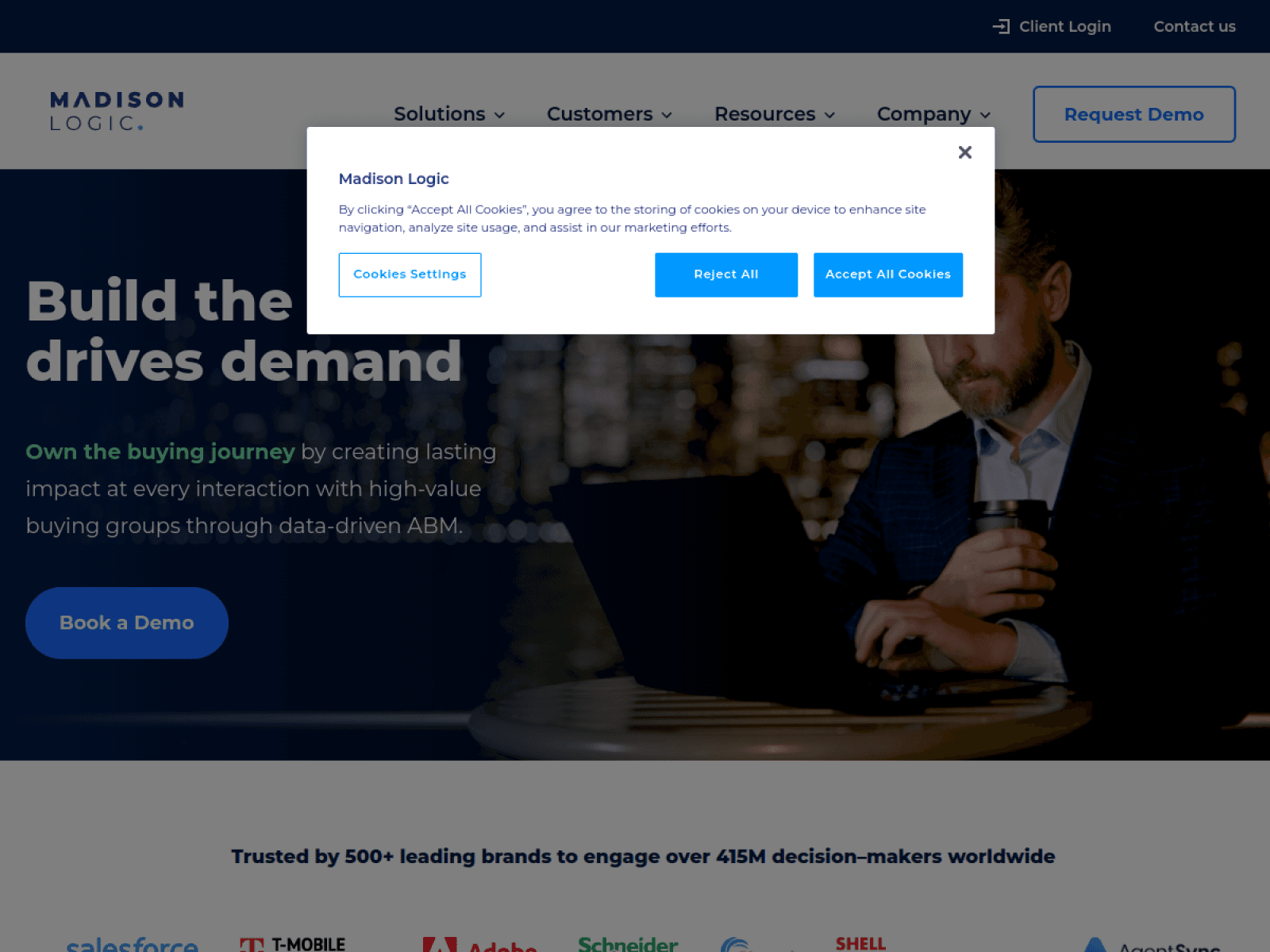
Madison Logic is the specialist for ABM programs built on content and global reach. Its ML Platform runs account-based campaigns across three coordinated channels — content syndication (delivering your assets to buying-committee members at target accounts and generating engaged leads), display advertising, and LinkedIn — all prioritized by its intent data and an account-measurement layer that ties activity back to pipeline. Content syndication is its heritage and its edge: for teams whose ABM depends on getting whitepapers, guides, and webinars in front of the right people at named accounts across regions, few platforms do it at Madison Logic's scale or with its international footprint. That global reach makes it a common pick for enterprises running ABM across North America, EMEA, and APAC from one system. The trades: it's a media-and-content-led platform rather than a website-personalization or conversational tool, and pricing is quote-based enterprise territory. But for content-driven, globally distributed ABM, it's a leader.
Key Features
- Content Syndication: Delivers assets to buying-committee members at target accounts globally
- Coordinated Multi-Channel: Content, display, and LinkedIn campaigns run in concert per account
- Intent-Prioritized Targeting: Intent data ranks accounts and topics to focus media spend
- Global Reach: International footprint for ABM across North America, EMEA, and APAC
- Account Measurement: Ties multi-channel engagement back to account pipeline and influence
Pricing
| Plan | Monthly | Annual (per month) |
|---|---|---|
| Base platform | Quote-based | Quote-based (annual) |
| Multi-channel programs | Quote-based | Quote-based |
| Enterprise | Custom | Custom |
Pros
- Best-in-class content syndication for target accounts
- Strong coordinated content, display, and LinkedIn reach
- Genuine global and multi-region footprint
- Intent data focuses media on in-market accounts
Cons
- Media-and-content-led — not website personalization or chat
- Quote-based enterprise pricing
- Overkill for teams without a content-heavy ABM motion
Verdict: Madison Logic is the pick for content-driven, global ABM. If syndicating content to buying committees across regions is central to your strategy, its multi-channel reach and international footprint lead the field.
Visit Madison LogicWarmly
Best for: SMB and mid-market teams that want to de-anonymize website visitors and act on intent signals with warm, AI-assisted outbound in real time
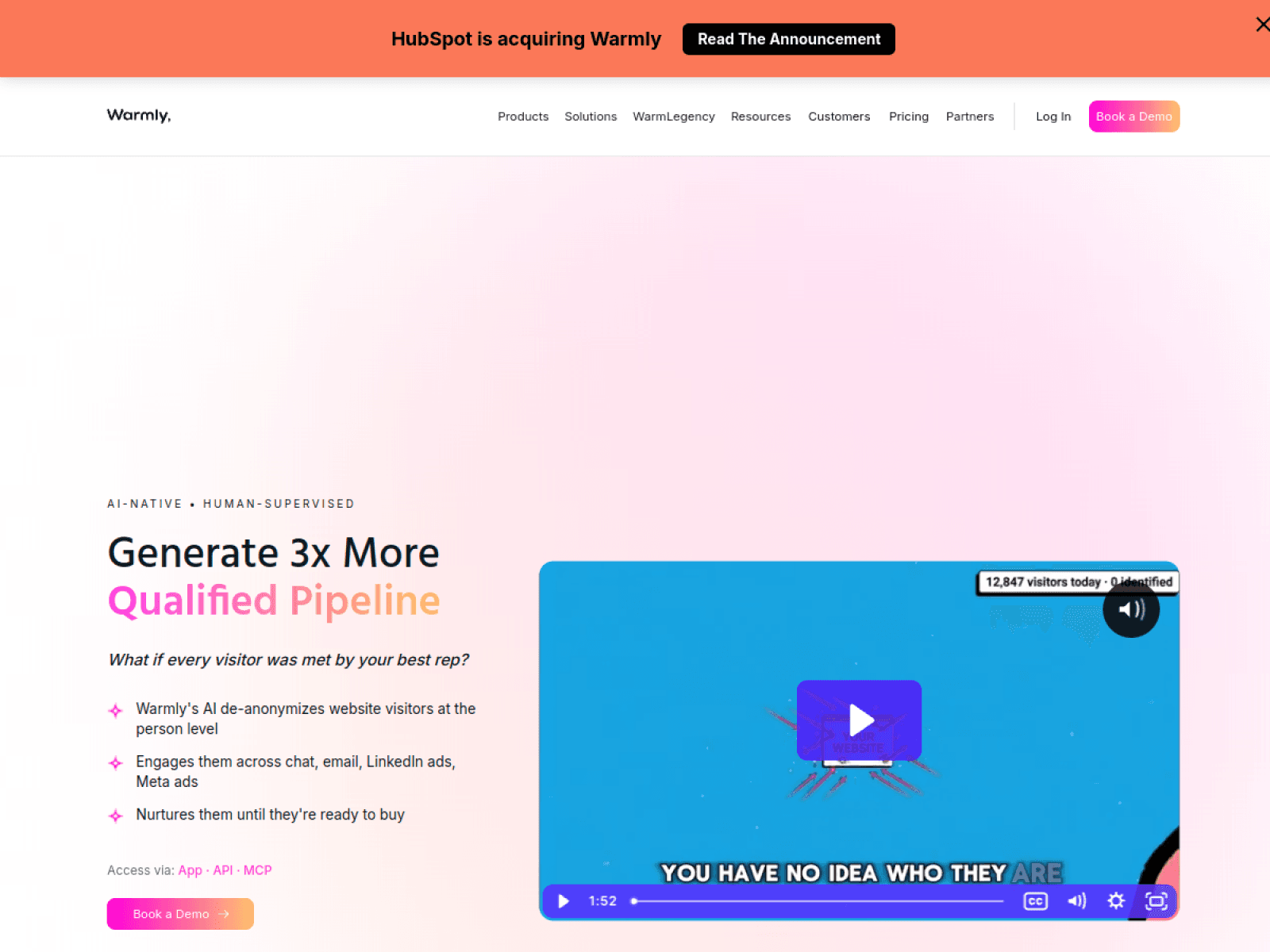
Warmly represents the newer, signal-based wave of ABM aimed squarely at SMB and mid-market teams. Instead of a heavyweight platform and a six-figure contract, it focuses on catching accounts at the moment they show intent: it de-anonymizes website visitors, layers in third-party intent and engagement signals, and surfaces the warmest accounts so reps (or its AI agents) can reach out while interest is high. That real-time, signal-to-outbound loop — often through Slack alerts, orchestrated sequences, and even live chat with visitors who are on your site right now — is its differentiator, and it sits close to the AI SDR category in how it automates first-touch. The accessible pricing, including a free starting tier, makes it easy for smaller teams to adopt. The trades: it's not a full advertising-and-orchestration enterprise suite, its data scale is smaller than the leaders, and it's best understood as the warm-outbound engine rather than the system of record for a large ABM program.
Key Features
- Website De-Anonymization: Reveals which companies and visitors are on your site in real time
- Intent & Engagement Signals: Layers third-party intent onto first-party activity to rank warm accounts
- AI-Assisted Outbound: Orchestrated sequences and AI agents engage warm accounts automatically
- Live Chat & Slack Alerts: Engage on-site visitors live and route hot accounts to reps in Slack
- Accessible Pricing: Free starting tier and lower entry point than enterprise platforms
Pricing
| Plan | Monthly | Annual (per month) |
|---|---|---|
| Free | $0 | $0 |
| Startup / Business | From lower four figures | Quote-based (accessible) |
| Enterprise | Custom | Custom |
Pros
- Real-time signal-to-outbound loop catches accounts while warm
- Website de-anonymization plus intent signals in one tool
- Free tier and accessible pricing for smaller teams
- AI agents automate first-touch outreach
Cons
- Not a full advertising and orchestration enterprise suite
- Smaller data scale than the category leaders
- Best as a warm-outbound engine, not a full ABM system of record
Related reading: Best AI Sales Tools
Verdict: Warmly is the pick for signal-based warm outbound. For SMB and mid-market teams that want to act on visitor and intent signals fast — without an enterprise contract — its real-time loop is the standout.
Visit WarmlyQualified
Best for: Salesforce-native teams that want conversational marketing and an AI SDR engaging target accounts live on the website to generate pipeline
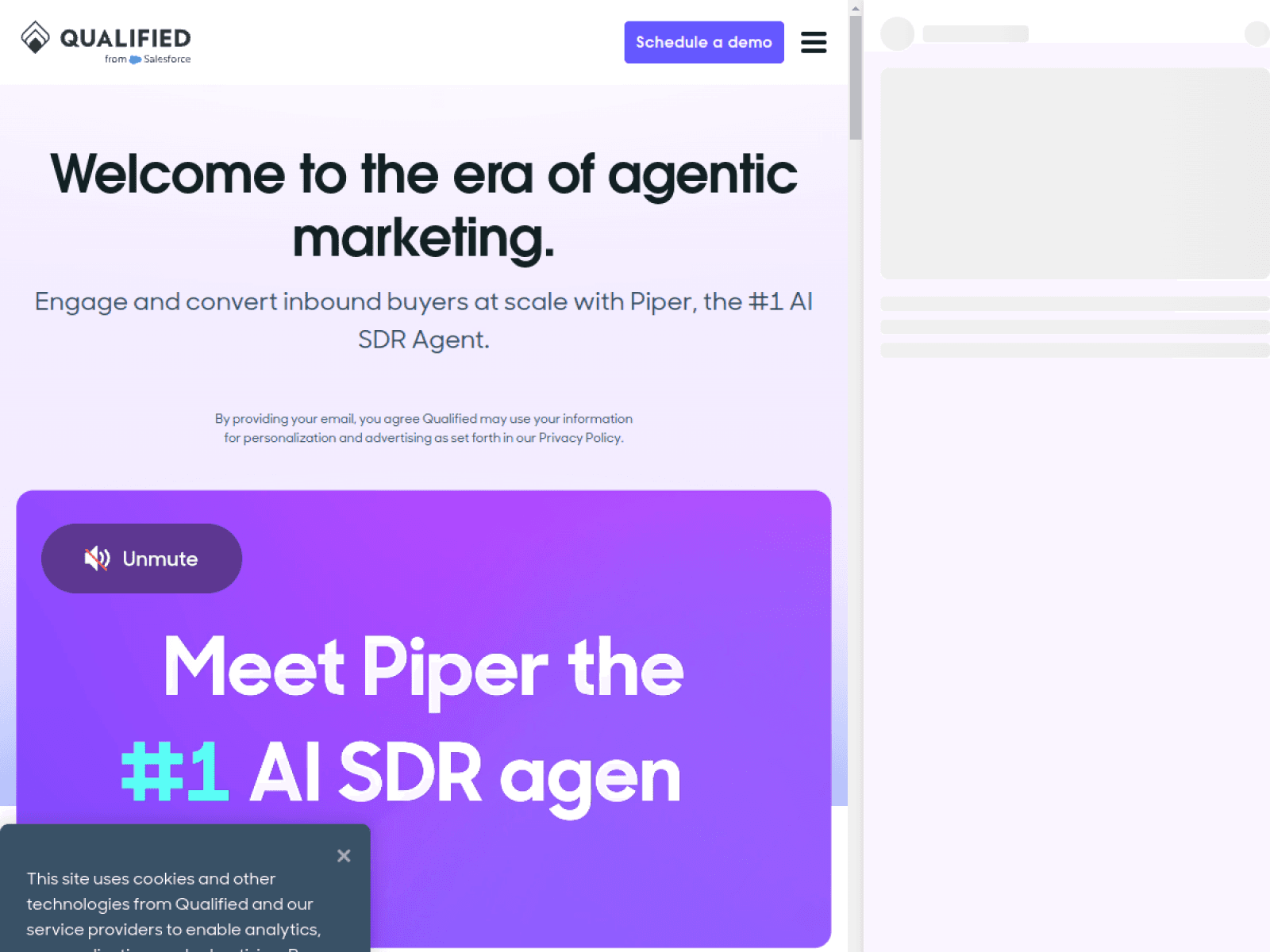
Qualified brings ABM to the moment a target account is on your website, right now, ready to talk. Built natively on and inside Salesforce, it combines live chat, conversational routing, and its Piper AI SDR agent to engage visiting accounts in real time — greeting known target accounts by context, answering questions, booking meetings, and routing hot buyers straight to the right rep. Because it's Salesforce-native, it reads your account and opportunity data to recognize who's visiting and personalize the conversation, and everything writes back into the CRM automatically. For teams whose ABM strategy centers on converting website traffic from target accounts into live conversations and pipeline, Qualified's conversational layer and increasingly autonomous AI SDR are the leaders in that niche. The trades: it's focused on the conversational and on-site engagement layer rather than advertising, intent-scoring, and orchestration breadth, and its Salesforce-native architecture makes it a natural fit for Salesforce shops specifically.
Key Features
- Conversational Marketing: Live chat and routing that engage target accounts on the website in real time
- Piper AI SDR: An AI agent that greets, qualifies, and books meetings with visiting accounts
- Salesforce-Native: Built inside Salesforce, reading and writing account data automatically
- Account Recognition: Identifies visiting target accounts to personalize the live conversation
- Meeting Booking & Routing: Routes hot buyers to the right rep and books meetings instantly
Pricing
| Plan | Monthly | Annual (per month) |
|---|---|---|
| Growth | Quote-based | Quote-based (annual) |
| Premier | Quote-based | Quote-based |
| Enterprise | Custom | Custom |
Pros
- Best-in-class conversational ABM and live website engagement
- Piper AI SDR automates real-time first-touch and booking
- Deep Salesforce-native architecture and data sync
- Converts existing target-account traffic into pipeline
Cons
- Focused on conversation — not advertising or intent breadth
- Salesforce-native fit favors Salesforce shops specifically
- Value depends on meaningful target-account website traffic
Verdict: Qualified is the best conversational ABM platform. For Salesforce teams that want to turn website visits from target accounts into live conversations and pipeline, its chat plus Piper AI SDR lead the niche.
Visit QualifiedHow to Choose the Best ABM Platform for Your Team
The decision framework, by the question that actually decides it:
If you're an enterprise running a serious ABM program
Buy the data and orchestration leaders. 6sense is the pick when predictive intent and account identification should lead your strategy; Demandbase when you want advertising and sales intelligence native in one all-in-one platform. Both reward dedicated ops resources and a real onboarding investment — and both pair well with our guide to the best sales intelligence tools for the contact data underneath.
If you're mid-market and want approachable, broad ABM
HubSpot is the pragmatic choice if you already run its CRM — native account-based tooling with no second vendor. RollWorks delivers the full ABM motion at a materially lower entry point for teams without enterprise budgets. Terminus fits when coordinated multi-channel reach — including email signature marketing — is central to your plan.
If your leverage is the website and landing pages
When target accounts convert on your site, personalization is the highest-ROI move. Mutiny tailors headlines, copy, and 1:1 landing pages for visiting accounts with no engineering — usually layered on top of a broader platform or ad tool rather than replacing it. This is the slice a full suite rarely does as well.
If your ABM runs on paid channels or content
Metadata automates paid social and search experiments and shifts budget toward what converts — the specialist when LinkedIn and paid demand gen carry your program. Madison Logic is the pick for content-driven, global ABM, syndicating assets to buying committees across regions. If you'd rather outsource the execution, see our guide to the best growth & demand gen agencies.
If you want speed — signals and live conversation over a big platform
Warmly de-anonymizes visitors and triggers warm, AI-assisted outbound the moment accounts show intent — with a free tier, it's the easiest on-ramp for SMB and mid-market teams. Qualified turns Salesforce-native website traffic into live conversations and pipeline via its Piper AI SDR. Both sit close to the AI SDR category — see our guide to the best AI sales tools.
Pro Tip
Run a target-vs-control pilot before committing: pick a segment of target accounts to run through the platform and hold a matched set out. If the ABM accounts don't engage, convert, or close measurably better within a quarter or two, the platform — however impressive the demo — isn't earning its contract.
Frequently Asked Questions
Final Thoughts
The best ABM platform of 2026 depends on two questions: how big and how sophisticated is your program, and what leads your strategy — data, advertising, personalization, or signals? 6sense is our best-overall pick because, for enterprise teams that can resource it, its account identification and intent modeling set the standard for knowing which accounts to engage and when — and Demandbase trades blows with it at the top on all-in-one breadth. But the right answer is often further down the list: HubSpot for teams already on its CRM, RollWorks for affordable mid-market ABM, Mutiny for website personalization, and Warmly or Qualified for signal-based and conversational speed — and each would be right.
Whatever you pick: model total cost including intent data and ad spend rather than the license alone, confirm the CRM sync is deep and bidirectional so intent reaches reps in context, and run a target-vs-control pilot before the company-wide commitment. ABM is a program, not a product — the platform only earns its keep if it measurably lifts pipeline at the accounts you most want to win.
Related Free SEO Tools
Content Brief Generator
Generate SERP-grounded briefs for your category content
SEO Content Grader
Score your comparison and alternative pages
Meta Tags Generator
Optimize SERP previews for landing pages
Long-Tail Keyword Generator
Find low-competition commercial queries
Keyword Search Volume
Size demand for your product category
SERP Checker
See who ranks for your target keywords today
Related Articles
About the Author

Co-Founder & SEO Execution
Co-founder of PikaSEO. 11 years in corporate tech, then bootstrapped entrepreneur. Leads SEO execution and content-led growth for SaaS companies.