The sales tool market reorganized itself around AI faster than any other category in B2B software. Two years ago, “AI sales tools” meant a template generator bolted onto a sequencer. In 2026, it means autonomous SDR agents that research and email prospects end to end, data orchestration platforms that waterfall enrichment across a hundred providers, conversation intelligence that forecasts revenue from what buyers actually say, and engagement platforms that tell every rep what to do next. The go-to-market stack has been rebuilt — and the teams winning at outbound are the ones who rebuilt with it.
We cover the sales stack here on PikaSEO because modern GTM and search increasingly run on the same engine: the demand intelligence that powers programmatic SEO informs outbound targeting, the buyer-intent keywords that drive content strategy define cold-email angles, and the AI agents reshaping prospecting are the same class of systems reshaping search itself.
We evaluated every tool below on four criteria that actually predict pipeline impact: AI capability depth (real automation vs. autocomplete), data and deliverability quality, integration with the CRM and engagement stack you already run, and total cost at a realistic 5-50 seat deployment. The ranking reflects best-in-class for the job, not biggest brand or loudest launch.
Quick Comparison
| Tool | Best For | Starting Price | Free Tier/Trial |
|---|---|---|---|
| Clay | AI Data Orchestration | $149/mo | |
| Apollo.io | All-in-One Lead Generation | $49/user/mo | |
| Gong | Revenue Intelligence | ~$1,500/user/yr | |
| Outreach | Enterprise Sales Engagement | ~$100-$140/user/mo | |
| Salesloft | AI-Prioritized Rep Workflow | ~$125+/user/mo | |
| Artisan | Autonomous AI SDR (Ava) | ~$1K-$3K/mo | |
| Regie.ai | AI Prospecting in Your Stack | ~$30K+/yr | |
| Lavender | AI Email Coaching | $27/mo | |
| Clari | Revenue Forecasting | ~$50K+/yr | |
| Instantly.ai | Cold Email at Scale | $37/mo |
Why AI Changed the Sales Stack
The old playbook — buy a contact list, load a sequencer, hire SDRs to grind volume — broke under the weight of its own success. Reply rates collapsed as every inbox filled with the same templated outreach, and buyers learned to ignore anything that smelled automated. Four structural shifts define what works now:
Data Orchestration Beats Data Ownership
No single database wins on coverage anymore. Clay's waterfall model — querying 100+ providers per contact — consistently beats any individual vendor, which is why orchestration replaced the “one big database” contract as the smart money's first purchase.
AI Agents Took the Top of the Funnel
Artisan's Ava and Regie.ai's Auto-Pilot agents now handle research, list building, first touches, and reply triage autonomously. The SDR role didn't disappear — it moved up-funnel to qualified conversations while agents absorbed the repetitive volume.
Conversations Became the Source of Truth
Gong and Clari forecast from what buyers actually said — not what reps logged. Revenue intelligence grounded in conversation data has made happy-ears forecasting and stale CRM stages survivable problems instead of fatal ones.
Deliverability Is the New Bottleneck
Inbox providers cracked down hard on bulk senders. Tools like Instantly made sending infrastructure — warm-up, rotation, domain health — a product category of its own, because the best email in the world converts at zero if it lands in spam.
Pro Tip
Before buying any AI sales tool, audit your positioning and ICP definition first. Every tool in this guide amplifies the quality of your targeting — AI agents sending sharper messaging to a vague ICP just generates rejection faster.
Pricing at a Glance
AI sales tool pricing spans two orders of magnitude — from $27/month for Lavender to $50K+/year for enterprise revenue platforms. Here's how the 10 tools compare on entry-level pricing (enterprise platforms shown as estimated annual contract divided across 12 months):
AI Sales Tool Categories
Before comparing individual tools, it helps to understand where each fits in the modern GTM stack. Most teams combine 3-4 tools across these four categories rather than betting everything on one vendor:
Data & orchestration tools (Clay, Apollo) decide who you contact and what you know about them. Sales engagement platforms (Outreach, Salesloft, Instantly) execute the outreach. Revenue intelligence platforms (Gong, Clari) tell you what's working and what the quarter will actually close at. AI agents and assistants (Artisan, Regie.ai, Lavender) absorb the repetitive work humans shouldn't be doing in 2026.
Clay
Best for: GTM teams that want AI-powered data orchestration, enrichment, and research feeding every downstream sales workflow
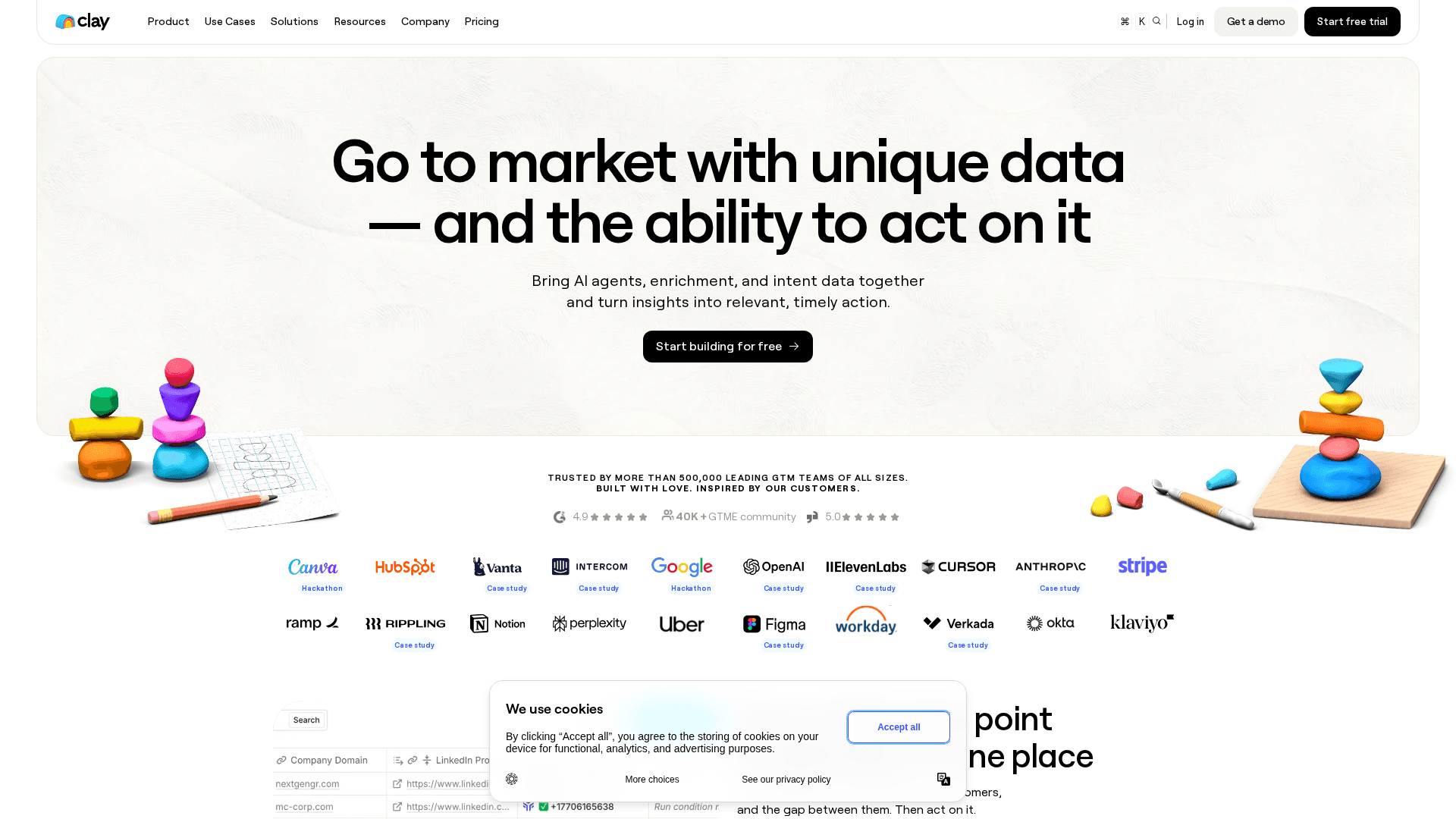
Clay has become the center of gravity for modern go-to-market stacks — and the best overall AI sales tool of 2026. Instead of betting on a single data vendor, Clay waterfalls enrichment across 100+ providers, querying each in sequence until it finds a verified email or mobile number, which consistently beats any individual database on coverage. Its Claygent AI agent then researches accounts the way a human SDR would — reading websites, news, job posts, and product pages — and turns those findings into personalization variables your sequences can actually use. The spreadsheet-style interface has a learning curve, but for teams that invest in it, Clay replaces a patchwork of enrichment subscriptions, virtual assistants, and brittle Zapier automations with one programmable GTM engine.
Key Features
- Waterfall Enrichment: Sequentially query 100+ data providers per contact until a verified email or phone is found — better coverage than any single vendor
- Claygent AI Research Agent: AI agent that browses the web to answer research questions about any account or prospect at scale
- Signals & Intent Triggers: Job changes, hiring surges, funding rounds, and tech-stack changes trigger automated workflows
- AI Formulas & Personalization: Generate first lines, custom variables, and qualification logic with built-in AI — no code required
- CRM & Sequencer Integrations: Bidirectional sync with Salesforce and HubSpot; push to Outreach, Salesloft, Instantly, and Smartlead
Pricing
| Plan | Monthly | Annual (per month) |
|---|---|---|
| Free | $0 | $0 |
| Starter | $149 | $134/mo |
| Explorer | $349 | $314/mo |
| Pro | $800 | $720/mo |
| Enterprise | Custom | Custom |
Pros
- Waterfall enrichment beats any single data vendor on coverage
- Claygent automates research that used to take SDR hours
- Replaces multiple enrichment subscriptions with one credit pool
- Massive template library and active community shorten the learning curve
Cons
- Spreadsheet-style UI intimidates non-technical users at first
- Credit-based pricing gets expensive at high enrichment volume
- Needs a downstream sequencer — Clay orchestrates, it doesn't send
Verdict: Clay is the most important tool in the 2026 outbound stack. If your team sends cold outreach at any scale, the data quality and research leverage Clay adds upstream improves everything downstream.
Visit ClayApollo.io
Best for: SMB and mid-market teams that want contact data, sequencing, dialer, and AI workflows in a single platform
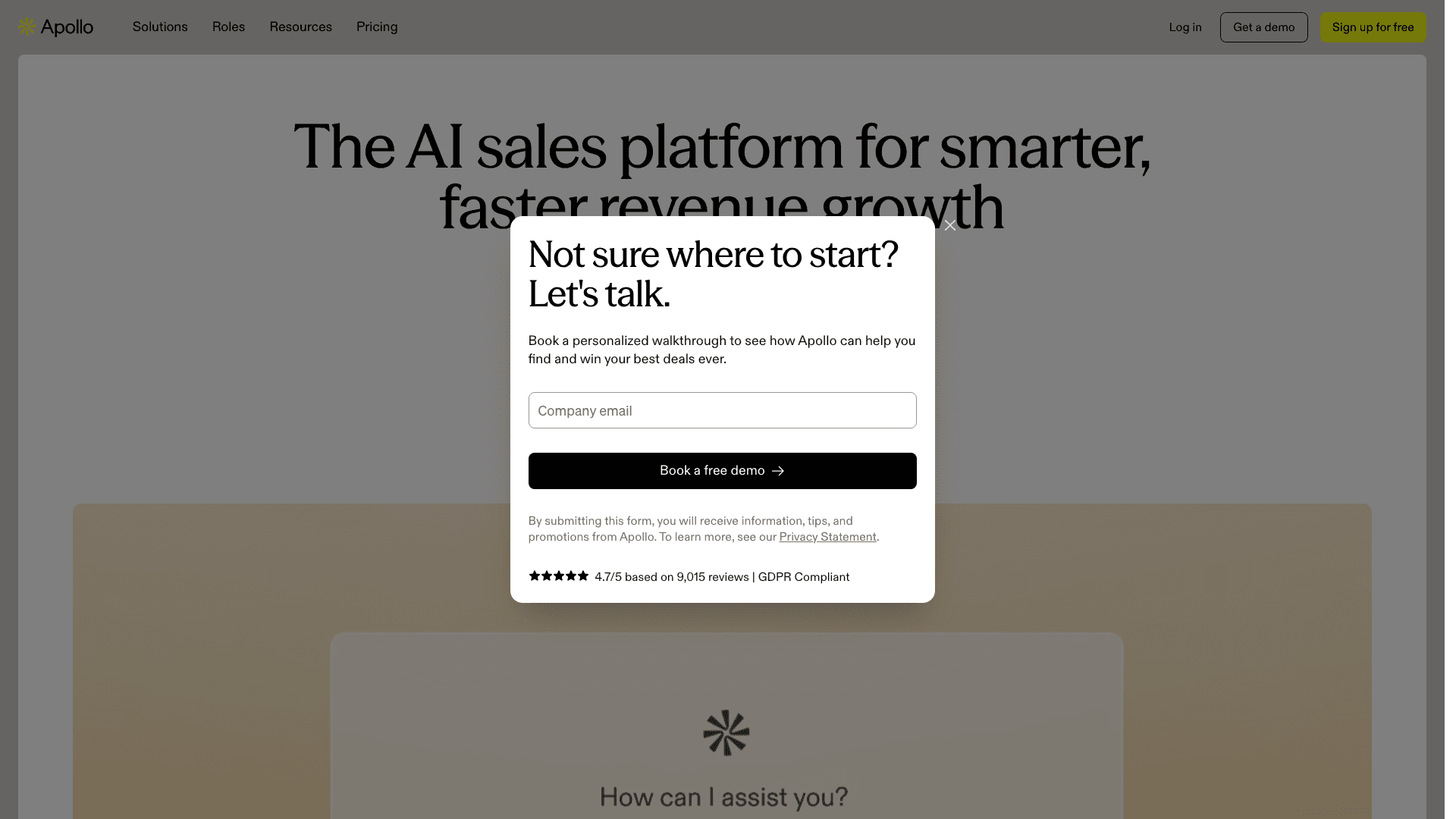
Apollo.io remains the best all-in-one lead generation platform in 2026 — a 275M+ contact database, multichannel sequencing, a dialer, buying-intent signals, and an expanding suite of AI agents in one workspace at SMB-friendly pricing. Where Clay is the power-user orchestration layer, Apollo is the pragmatic default: a rep can find a prospect, enrich the record, and start a sequence in two minutes without leaving the platform. Apollo's AI research and personalization features have closed much of the gap with specialist tools, and the free tier plus $49 Basic plan make it the lowest-friction entry point into serious outbound of any tool in this guide.
Key Features
- Contact + Company Database: 275M+ contacts and 73M+ companies with waterfall verification across emails and direct dials
- Multichannel Sequences: Email, LinkedIn, and dialer touchpoints in one cadence — replaces a standalone engagement tool for most SMBs
- Apollo AI: AI research assistant that drafts personalized openers and pulls account context automatically
- Buying Intent Signals: Built-in intent topics plus website visitor identification on higher tiers
- Chrome Extension: One-click enrichment and sequencing from LinkedIn, company sites, and your CRM
Pricing
| Plan | Monthly | Annual (per month) |
|---|---|---|
| Free | $0 | $0 |
| Basic | $49 | $39/mo |
| Professional | $79 | $59/mo |
| Organization | $119 | $99/mo |
Pros
- Best price-to-capability ratio in the category
- Database, sequencing, dialer, and AI in one bill
- Free tier is genuinely usable for early-stage teams
- Fast product velocity — AI features ship monthly
Cons
- Data accuracy on EU mobile numbers trails specialist vendors
- Sequencing depth trails Outreach and Salesloft for complex enterprise workflows
- Credit limits on lower tiers constrain high-volume teams
Verdict: If you're picking one tool to start doing outbound this quarter, pick Apollo. It covers 80% of the stack at 20% of the cost, and you can layer Clay or a dedicated engagement platform on top as you scale.
See our sales intelligence guideGong
Best for: Mid-market and enterprise teams that want deal visibility, coaching, and forecasts grounded in actual customer conversations
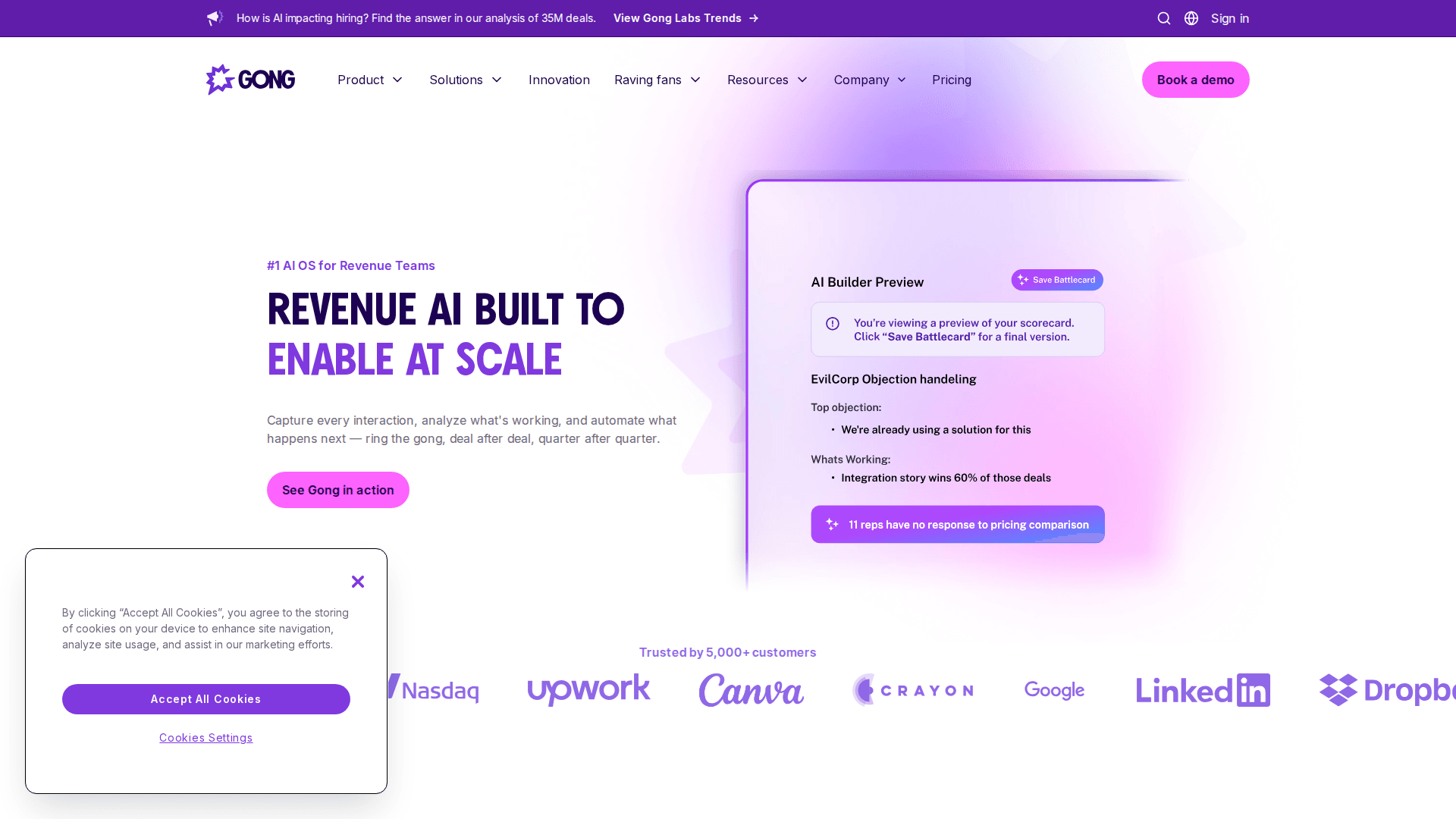
Gong invented the revenue intelligence category and still leads it in 2026. The platform records and analyzes every customer interaction — calls, emails, meetings — and turns that raw conversation data into deal warnings, coaching insights, and forecasts based on what buyers actually said rather than what reps optimistically logged. Gong's AI has expanded well beyond call transcription: Ask Anything queries your entire conversation corpus conversationally, deal boards flag at-risk opportunities with evidence, and AI agents now draft follow-ups and update CRM fields automatically. For revenue leaders who've been burned by happy-ears forecasting, Gong is the closest thing to ground truth the category offers.
Key Features
- Conversation Intelligence: Records, transcribes, and analyzes every call and email to surface what's actually happening in deals
- Deal Intelligence: AI-flagged risk indicators — single-threading, ghosting, missing next steps — with conversation evidence
- Gong Forecast: Forecasts built from conversation signals and engagement data, not just rep-entered CRM stages
- AI Coaching: Talk-ratio, topic, and objection analytics that turn every rep's calls into a coaching library
- Ask Anything & AI Agents: Query your conversation corpus in natural language; agents draft follow-ups and sync CRM automatically
Pricing
| Plan | Monthly | Annual (per month) |
|---|---|---|
| Pricing Model | Custom | Per-user + platform fee |
| Typical Investment | — | ~$1,400-$1,600/user/yr (est.) |
| Best Fit | — | Teams of 10+ reps |
Pros
- Category-defining conversation intelligence — still the best analysis quality
- Deal risk warnings backed by evidence, not gut feel
- Coaching impact is measurable and compounds across the team
- Massive integration ecosystem across CRM, engagement, and BI tools
Cons
- Custom pricing with platform fee adds up fast for small teams
- Forecasting module is strong but Clari leads on complex forecast governance
- Value depends on call volume — thin pipelines get thin insights
Verdict: Gong is the right call when you have 10+ reps and your forecast keeps surprising you. The conversation-grounded deal intelligence pays for itself in saved deals and faster ramp.
Visit GongOutreach
Best for: Enterprise sales orgs that need governed, multichannel sequencing with AI assistance across large rep teams
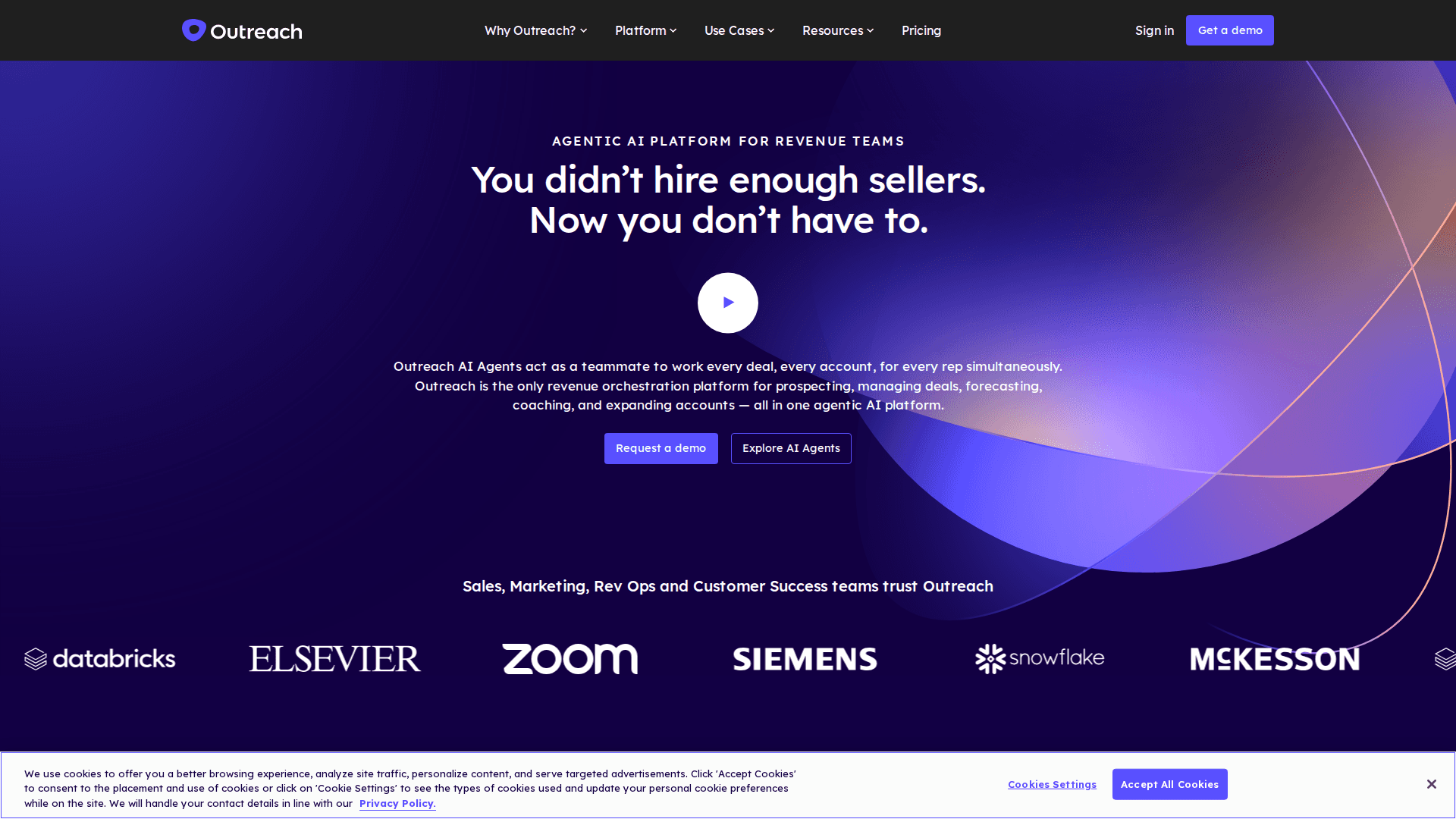
Outreach is the enterprise standard for sales engagement — the execution platform where large rep teams run sequenced, multichannel outbound with the governance, analytics, and admin controls enterprises require. The platform has pushed aggressively into AI: Kaia provides real-time meeting assistance, AI prospecting agents draft and personalize sequence steps, and smart account plans summarize everything known about a deal. Outreach's depth is also its tax — it's a heavier implementation than anything in the SMB tier — but for organizations with 25+ reps, RevOps headcount, and a Salesforce instance that's the system of record, Outreach delivers control and scale that lighter tools can't match.
Key Features
- Sequences & Playbooks: Governed multichannel cadences with A/B testing, rulesets, and team-level controls at enterprise scale
- AI Prospecting Agents: Agents that research accounts, draft personalized touches, and maintain sequence hygiene
- Kaia Real-Time Assistant: Live meeting transcription, content cards, and action-item capture during calls
- Deal Management & Forecasting: Pipeline inspection and forecast rollups built on engagement signals
- Salesforce Bidirectional Sync: Deep, configurable CRM sync with field-level mapping and conflict resolution
Pricing
| Plan | Monthly | Annual (per month) |
|---|---|---|
| Pricing Model | Custom | Annual contracts |
| Typical Investment | ~$100-$140/user/mo (est.) | Custom by tier |
| Best Fit | — | Enterprise, 25+ reps |
Pros
- Deepest engagement feature set for large, governed teams
- AI agents reduce rep admin work measurably
- Enterprise-grade admin, permissions, and compliance controls
- Strong ecosystem of certified implementation partners
Cons
- Implementation and admin overhead — needs RevOps ownership
- Per-seat cost is hard to justify under ~15 reps
- Annual contracts with limited flexibility
Verdict: Outreach is the pick for enterprise sales orgs that have outgrown lightweight sequencers. Under 15 reps, Apollo or Instantly deliver most of the value at a fraction of the cost.
Visit OutreachSalesloft
Best for: Revenue teams that want an AI-prioritized daily workflow telling every rep the next best action
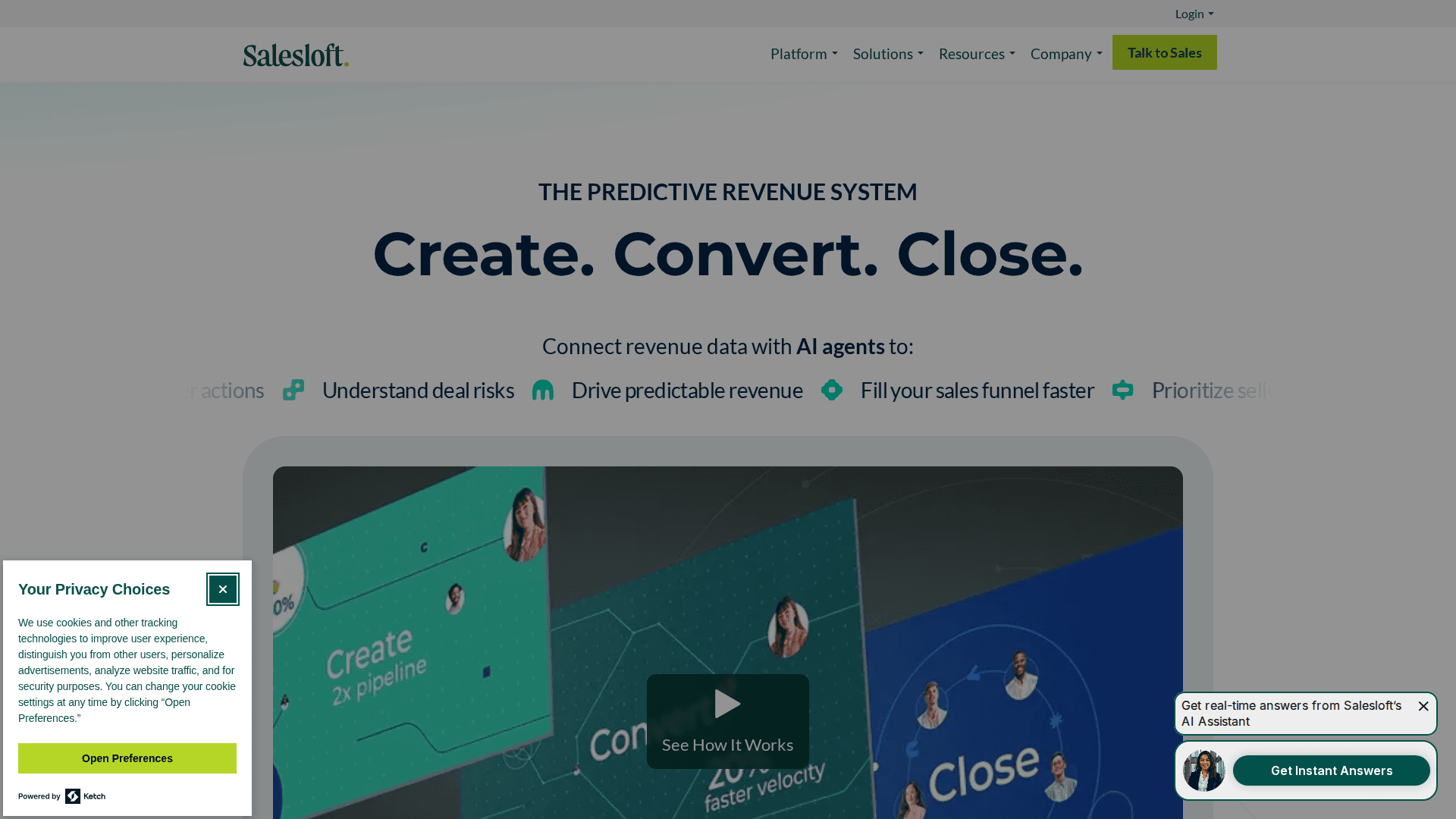
Salesloft is Outreach's closest competitor and the better fit for teams that want the platform to actively drive rep behavior rather than just host sequences. Rhythm, Salesloft's AI signal-to-action engine, ingests buyer signals from across the platform — email opens, website visits, meeting outcomes, conversation insights from its Drift acquisition — and converts them into a prioritized daily action list for each rep. The result is less time deciding what to do and more time doing it. Salesloft's cadence management, coaching tools, and forecasting have reached near-parity with Outreach, so the choice between them usually comes down to workflow philosophy: Salesloft prescribes the rep's day; Outreach gives admins more configuration surface.
Key Features
- Rhythm AI: Signal-to-action engine that turns buyer behavior into a prioritized daily workflow for every rep
- Cadence: Multichannel sequencing with templates, snippets, and team analytics
- Conversations: Call recording and AI analysis for coaching and deal review
- Deals & Forecast: Pipeline management and forecast rollups built on engagement and conversation data
- Drift Integration: Website visitor and chat signals feed directly into rep workflows post-acquisition
Pricing
| Plan | Monthly | Annual (per month) |
|---|---|---|
| Pricing Model | Custom | Annual contracts |
| Typical Investment | ~$125-$165/user/mo (est.) | Custom by tier |
| Best Fit | — | Mid-market to enterprise |
Pros
- Rhythm's prioritized daily workflow measurably lifts rep activity quality
- Buyer signals from chat, web, and calls unified in one queue
- Strong coaching and conversation intelligence built in
- Cleaner rep-facing UX than most enterprise platforms
Cons
- Custom pricing — expect enterprise procurement
- Less admin configurability than Outreach for complex orgs
- Best value requires adopting the full platform, not just cadences
Verdict: Salesloft wins when you want the platform to run the rep's day. If your reps suffer from too many tools and no prioritization, Rhythm is the strongest answer in the category.
Visit SalesloftArtisan
Best for: Teams that want an autonomous AI BDR handling top-of-funnel prospecting, personalization, and replies end to end
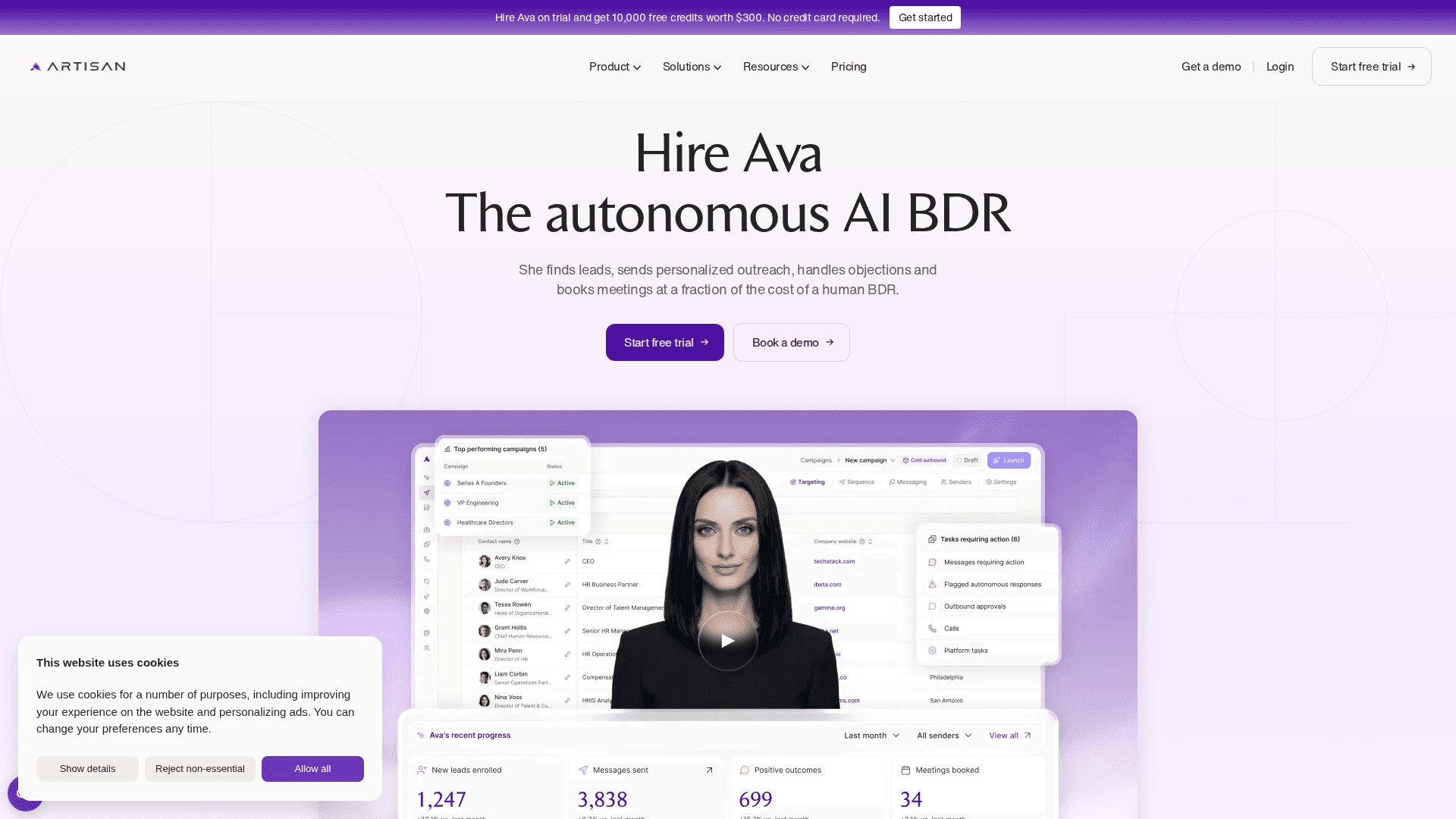
Artisan is the leading pure-play AI SDR platform in 2026. Its flagship agent, Ava, automates the entire top-of-funnel motion: she identifies prospects from a 300M+ contact database, researches them across the web, writes personalized multichannel outreach, manages deliverability, and triages replies — escalating interested prospects to human reps. What separates Artisan from the wave of AI SDR startups is consolidation: the platform bundles data, email infrastructure, warm-up, and the agent layer into one product, so you're not stitching an agent onto a separate sending stack. Ava won't replace your best SDR, but she reliably replaces the repetitive 70% of the role — list building, first touches, and follow-up persistence — at a fraction of a fully-loaded SDR cost.
Key Features
- Ava, the AI BDR: Autonomous agent that prospects, researches, personalizes, sends, and triages replies end to end
- Built-in B2B Database: 300M+ contacts with enrichment included — no separate data subscription required
- Email Deliverability Suite: Mailbox warm-up, domain health, and sending infrastructure managed inside the platform
- Personalization Waterfalls: Web research and signal-based personalization applied to every prospect automatically
- Human Handoff: Interested replies escalate to your reps with full context and conversation history
Pricing
| Plan | Monthly | Annual (per month) |
|---|---|---|
| Pricing Model | Custom | Volume-based |
| Typical Investment | ~$1K-$3K/mo (est.) | Custom by volume |
| Best Fit | — | Teams replacing 1-3 SDR seats |
Pros
- Genuinely end-to-end — data, infrastructure, and agent in one platform
- Costs a fraction of a fully-loaded SDR for top-of-funnel volume
- Deliverability management built in, not bolted on
- Fast setup compared to assembling an outbound stack manually
Cons
- Output quality depends heavily on your ICP and positioning inputs
- Less control over individual touches than a manual sequencer
- Custom pricing requires a sales conversation to scope
Verdict: Artisan is the strongest bet in the AI SDR category. Deploy Ava for volume coverage of your long-tail ICP and keep human reps focused on high-value accounts and live conversations.
Visit ArtisanRegie.ai
Best for: Sales orgs that want AI agents working inside their existing engagement stack rather than replacing it
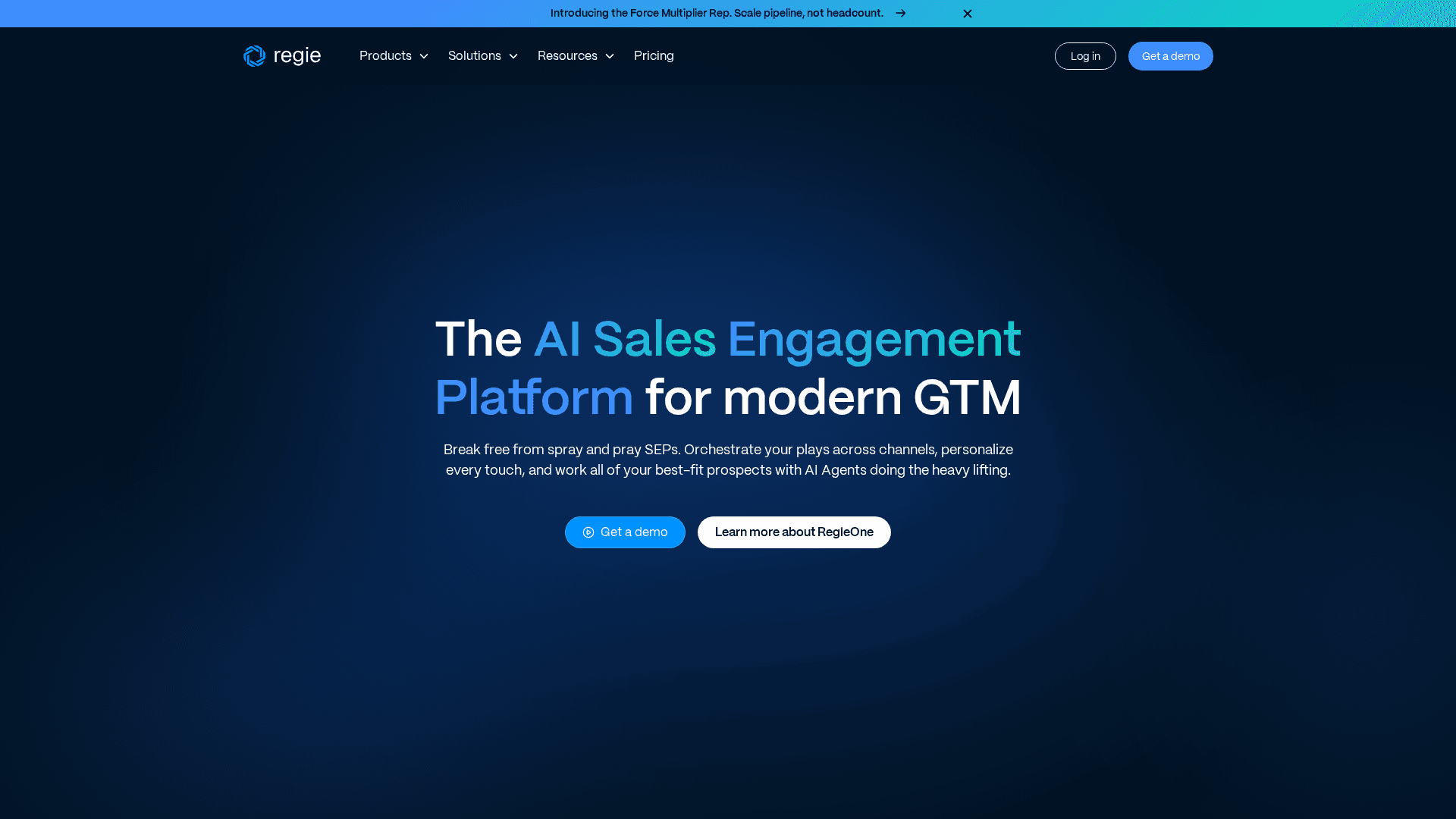
Regie.ai takes a different approach to AI prospecting than the standalone agent platforms: instead of replacing your engagement stack, its Auto-Pilot agents plug into it. The agents generate audiences, prioritize prospects using intent and engagement signals, write personalized sequences, and dynamically adjust touch cadence — sending more to engaged prospects and pausing on cold ones — all while executing through the sequencing infrastructure you already run. For teams with established Outreach, Salesloft, or HubSpot motions that want agentic leverage without ripping anything out, Regie.ai is the lowest-disruption path to AI-driven prospecting in this guide.
Key Features
- Auto-Pilot Agents: AI agents that build audiences, prioritize prospects, and generate outreach autonomously
- Dynamic Engagement Logic: Touch frequency adapts to each prospect's engagement level automatically
- Generative Sequence Writing: On-brand, persona-aware sequence copy generated and refreshed continuously
- Intent Signal Integration: Prioritization driven by intent data and engagement signals across your stack
- Works Inside Your Stack: Executes through Outreach, Salesloft, HubSpot, and Salesforce rather than replacing them
Pricing
| Plan | Monthly | Annual (per month) |
|---|---|---|
| Pricing Model | Custom | Platform-based |
| Typical Investment | — | ~$30K+/yr (est.) |
| Best Fit | — | Teams with existing engagement platforms |
Pros
- Agentic prospecting without replacing your existing stack
- Dynamic cadence logic outperforms static sequences
- Strong brand-voice controls keep AI copy on-message
- Reduces sequence-building workload for RevOps and managers
Cons
- Enterprise pricing puts it out of SMB reach
- Value depends on having an engagement platform to plug into
- Less end-to-end than Artisan if you're starting from zero
Verdict: Regie.ai is the right pick when you already run Outreach or Salesloft and want AI agents to do the audience-building and sequence work your team doesn't scale to. Greenfield teams should look at Artisan instead.
Visit Regie.aiLavender
Best for: Individual reps and teams that want every outbound email scored and improved before it's sent
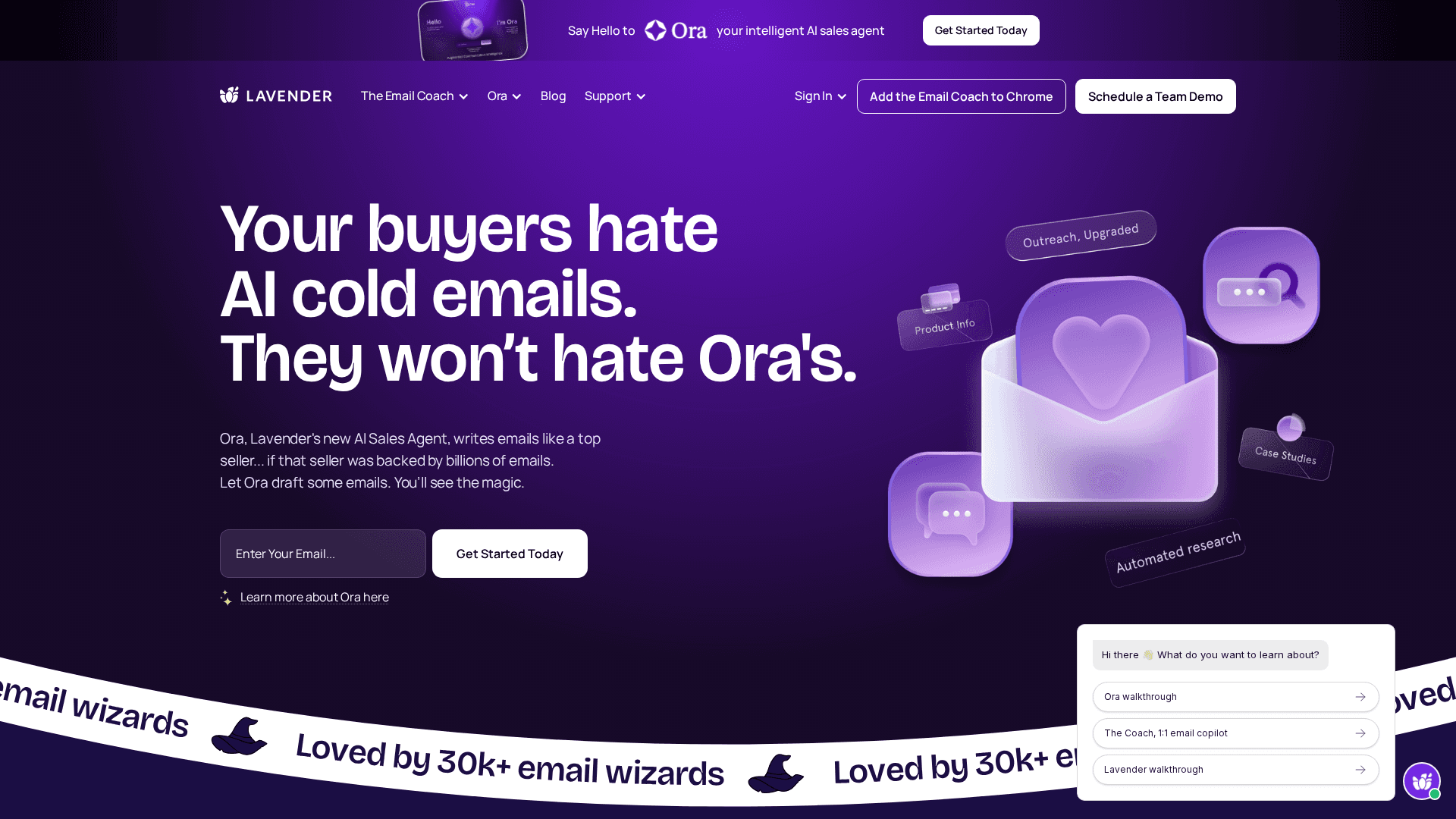
Lavender is the best AI email coach on the market — a lightweight assistant that lives inside Gmail, Outlook, Outreach, Salesloft, and HubSpot, scoring every email as you write it and suggesting specific fixes: shorten sentences, cut jargon, add personalization, improve the mobile preview. Its personalization assistant pulls prospect data, news, and social activity into the compose window so reps research without tab-switching. Where the rest of this list automates outreach, Lavender makes human-written outreach better — and for teams whose motion depends on quality over volume, that's often the higher-leverage investment. At $27/month for the starter tier, it's also the cheapest meaningful upgrade to reply rates in this guide.
Key Features
- Real-Time Email Scoring: Every email scored against reply-rate data with specific, actionable fixes
- Personalization Assistant: Prospect research — news, social, funding, tech stack — surfaced inside your compose window
- Mobile Preview & Tone Analysis: See how emails render on mobile and how tone lands before sending
- Team Coaching Analytics: Manager dashboards showing email quality trends and coaching opportunities by rep
- Works Where You Write: Native extensions for Gmail, Outlook, Outreach, Salesloft, and HubSpot
Pricing
| Plan | Monthly | Annual (per month) |
|---|---|---|
| Basic | $0 | $0 |
| Starter | $27 | $24/mo |
| Individual Pro | $45 | $36/mo |
| Team | Custom | Custom |
Pros
- Measurable reply-rate lift backed by email scoring data
- Cheapest high-impact tool in this guide
- Personalization research without leaving the inbox
- Free tier available for students and job seekers
Cons
- Coaches humans — doesn't automate sending or sequencing
- Per-seat cost adds up across large teams
- Scoring model favors short emails — occasionally over-prunes necessary context
Verdict: Lavender is the easiest yes in this guide. If your team writes outbound email by hand anywhere in the funnel, the scoring and personalization assistant pay for themselves within the first campaign.
Visit LavenderClari
Best for: Revenue leaders at mid-market and enterprise companies that need accurate forecasts and pipeline governance across segments
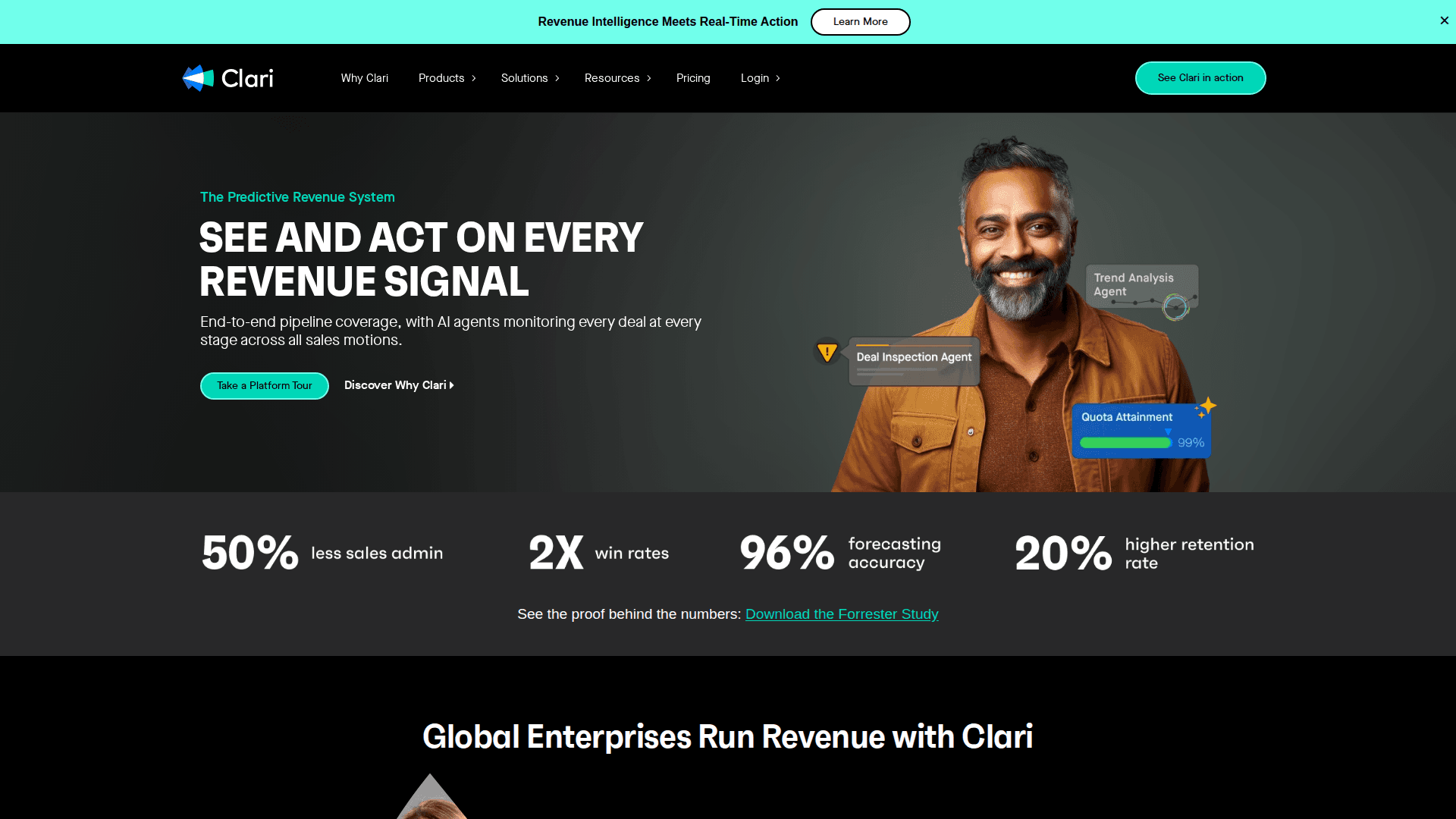
Clari is the enterprise standard for AI-driven revenue forecasting and pipeline management. The platform ingests CRM data, email and calendar activity, and conversation intelligence (via its Copilot product) to produce forecasts that consistently outperform rep-submitted numbers — and to flag the pipeline coverage gaps, slipping deals, and inspection issues that cause misses before they happen. Where Gong approaches revenue from the conversation up, Clari approaches it from the forecast down: cadenced forecast calls, roll-ups across geos and segments, and board-grade reporting are where it shines. For CROs running complex, multi-segment revenue orgs, Clari is the governance layer that makes the number predictable.
Key Features
- AI Forecasting: Machine-learned forecast projections that historically outperform rep-submitted calls
- Pipeline Inspection: Coverage analysis, slippage detection, and deal-health scoring across every segment
- Copilot Conversation Intelligence: Call recording and analysis feeding deal signals into the forecast
- RevAI Agents: AI agents that answer pipeline questions, summarize deals, and draft account plans
- Forecast Cadence & Roll-Ups: Structured forecast submission, review, and roll-up workflows across complex org hierarchies
Pricing
| Plan | Monthly | Annual (per month) |
|---|---|---|
| Pricing Model | Custom | Platform + per-user |
| Typical Investment | — | ~$50K+/yr (est.) |
| Best Fit | — | Enterprise revenue orgs |
Pros
- Best-in-class forecast accuracy and governance workflows
- Pipeline inspection catches misses quarters before they land
- Strong exec and board-level reporting
- RevAI agents make pipeline data conversationally accessible
Cons
- Enterprise pricing and deployment timeline
- Overkill for single-segment teams under ~20 reps
- Conversation intelligence is newer than Gong's and trails on analysis depth
Verdict: Clari is the pick when forecast accuracy is the problem you're hired to fix. For conversation-first deal coaching, Gong leads; for forecast governance at scale, Clari does.
Visit ClariInstantly.ai
Best for: Agencies, founders, and outbound teams running high-volume cold email who need deliverability infrastructure that scales
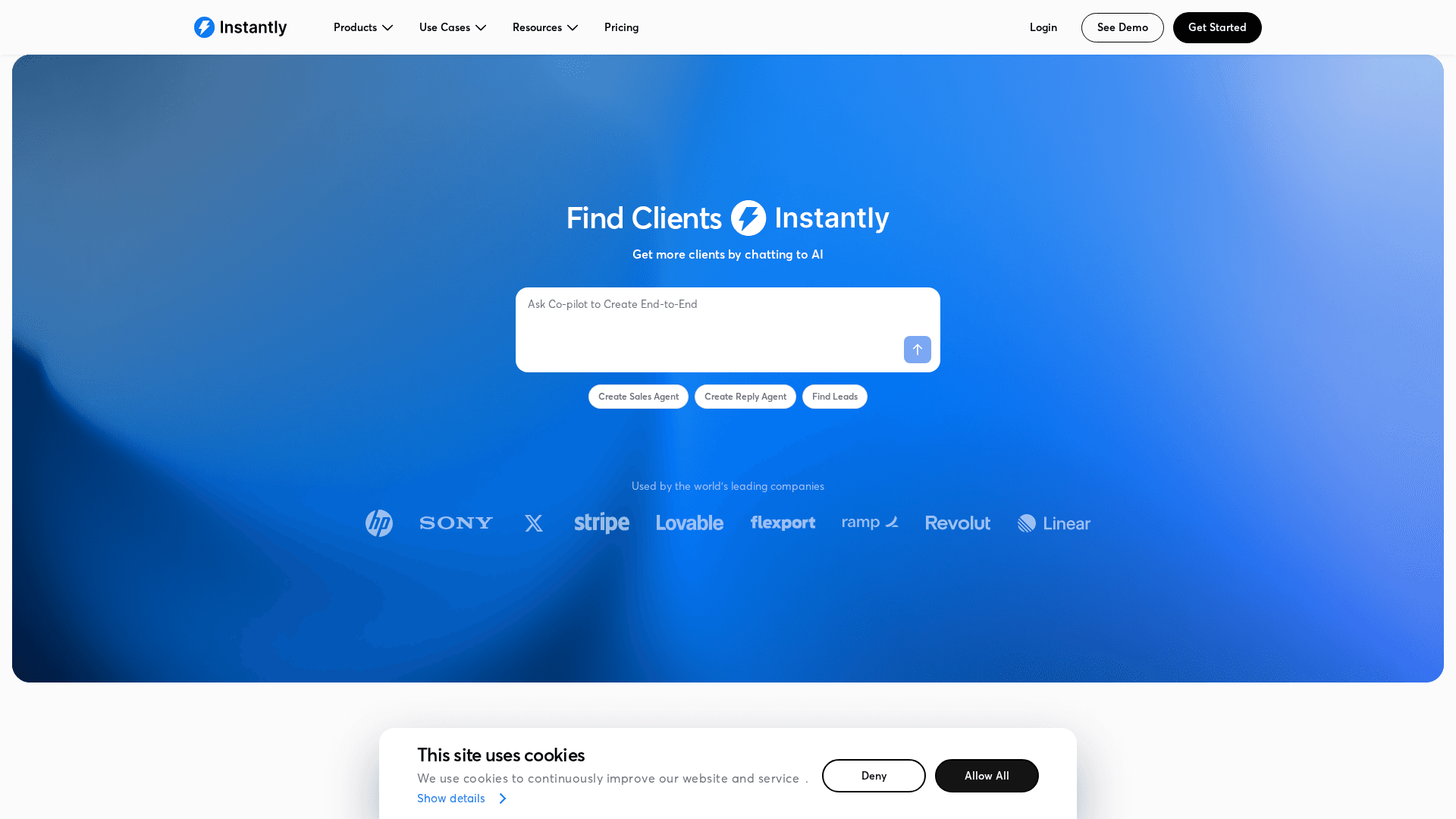
Instantly.ai is the volume king of cold email — built around the insight that deliverability, not copy, is the binding constraint on cold outbound at scale. The platform supports unlimited sending accounts on every plan, rotates sends across them automatically, and warms up every inbox continuously to protect sender reputation. A built-in B2B lead database, AI sequence writing, and a unified inbox for reply management round it out into a complete cold-email operating system. For agencies and lean outbound teams sending tens of thousands of emails monthly, Instantly's infrastructure-first approach delivers inbox placement that traditional per-seat sequencers can't match — at a price that undercuts nearly everything in this guide.
Key Features
- Unlimited Sending Accounts: Connect unlimited mailboxes and rotate sends automatically to protect deliverability
- Automated Warm-Up: Continuous inbox warm-up network keeps sender reputation healthy at scale
- B2B Lead Finder: Built-in contact database with filters for title, industry, tech stack, and funding
- AI Sequence Writer: Generate and optimize campaign copy with built-in AI and A/B testing
- Unibox: Unified inbox managing replies across every connected sending account
Pricing
| Plan | Monthly | Annual (per month) |
|---|---|---|
| Growth | $37 | $30/mo |
| Hypergrowth | $97 | $77/mo |
| Light Speed | $358 | $286/mo |
| Enterprise | Custom | Custom |
Pros
- Best deliverability infrastructure for high-volume cold email
- Unlimited sending accounts on every plan
- Aggressive pricing — full stack from $37/month
- Lead database included, reducing separate data spend
Cons
- Email-only — no LinkedIn or dialer channels
- Lead database depth trails Apollo and Clay
- High-volume sending demands disciplined list quality to protect domains
Verdict: Instantly is the right tool when cold email volume is your growth engine. Pair it with Clay for data and research, and you have the highest-leverage lean outbound stack of 2026.
Visit Instantly.aiHow to Choose for Your Team
The right stack depends on your stage, motion, and existing tools. Here's the decision framework we use when advising GTM teams:
Founder-led or first SDR hire
Start with Apollo.io ($49/mo) for data plus sequencing in one bill, and add Lavender ($27/mo) to make every hand-written email better. Total stack: under $80/month, fully operational in a day.
Scaling outbound (3-15 reps)
Add Clay as the data and research layer feeding your sequencer, and choose your execution platform by motion: Instantly for email-first volume, or Apollo/Salesloft for multichannel cadences. This is where waterfall enrichment starts paying for itself in reply rates.
Adding AI agent capacity
If you're starting from zero, Artisan bundles data, infrastructure, and the agent in one platform. If you already run Outreach or Salesloft, Regie.ai adds agentic prospecting inside the stack you have. Either way, give the agent your sharpest ICP segment first — not your leftovers.
Fixing forecast accuracy and deal visibility
With 10+ reps, pick your revenue platform of record: Gong if the problem is deal execution and coaching (conversation-up), Clari if the problem is forecast governance across segments (forecast-down). Running both is common at enterprise scale but redundant below it.
Enterprise consolidation
At 25+ reps, consolidate around Outreach or Salesloft as the governed engagement layer, Gong or Clari as revenue intelligence, and Clay upstream for data. Negotiate the engagement and intelligence contracts together — bundled renewals routinely save 15-25%.
Pro Tip
Pilot AI SDR agents against a holdout: give the agent and a human SDR the same 200-account segment for 30 days and compare meetings booked per dollar. The result tells you exactly where agents fit in your motion — and gives you negotiating leverage either way.
Frequently Asked Questions
Final Thoughts
The AI sales stack of 2026 rewards teams that buy deliberately. The pattern across every successful deployment we've seen is the same: a data and orchestration layer that feeds everything else, an execution layer matched to your motion, intelligence grounded in real conversations, and AI agents pointed at the repetitive work — in that order. Teams that buy in the opposite order (agents first, data last) automate noise.
For most teams, we recommend starting with Clay plus Apollo.io — orchestrated data feeding an all-in-one execution platform — then layering Gong once you have the call volume to mine and an AI agent (Artisan or Regie.ai) once your ICP and messaging are proven. Build incrementally; every tool in this guide gets more valuable when the layer beneath it is solid.
Related Free Tools
Keyword Extractor
Pull buyer-intent keywords from competitor pages
Long-Tail Keyword Generator
Find commercial queries your prospects search
Meta Tags Generator
Optimize SERP previews for outbound landing pages
Content Brief Generator
Build briefs for BOFU comparison and review content
SEO Content Grader
Score your category and competitor comparison pages
Content Outline Generator
Structure GTM and demand-gen content for ranking
Related Articles
Best Sales Intelligence Tools
The 10 B2B contact and intent data platforms that fill pipeline
Best Customer Service Software
The post-sale side of the customer conversation stack
Best AI SEO Tools for SaaS Companies
The 10 AI SEO tools that drive B2B SaaS pipeline
Best AI SEO Tools for Enterprises
Enterprise-grade SEO platforms for large GTM teams
About the Author

Co-Founder & SEO Execution
Co-founder of PikaSEO. 11 years in corporate tech, then bootstrapped entrepreneur. Leads SEO execution and content-led growth for SaaS companies.