
“GTM tools” used to mean a CRM and a stack of point solutions bolted around it. In 2026, AI rewrote the category: the software doesn't just chart the go-to-market motion anymore, it does the work — researching accounts, enriching data, scoring intent, writing and sending outreach, coaching reps on live calls, and forecasting the pipeline. The question isn't “what's the best sales tool?” but “which AI runs each job in my revenue motion, and how do they fit together?”
That's why “best AI GTM tool” is really a question about a stack, not a single product. The teams winning in 2026 pair an AI-native CRM at the center with a data-and-orchestration engine feeding it, an intent or signals layer on top, and revenue intelligence for coaching and forecasting — increasingly joined by autonomous AI SDRs that own the top of the funnel outright. And the ground is shifting fast: within a single year, Clari merged with Salesloft, Apollo acquired Pocus, and Zoom moved to acquire Common Room, collapsing point tools into a handful of AI-native platforms.
This guide ranks the 10 AI GTM tools we'd actually build a modern stack from in 2026, organized by the job each is best at. We evaluated every tool on four criteria: how much real work its AI automates (agentic action versus dashboards), data and signal quality (the fuel everything downstream runs on), orchestration and stack fit (how well it connects to the CRM and the rest of the motion), and value for the job (from free engines to six-figure platforms). Because AI GTM pricing increasingly meters on credits, actions, and outcomes rather than seats, we've been honest about where costs really land.
Quick Comparison: The Best AI GTM Tools at a Glance
| Tool | Best For | GTM Job | Pricing | Standout |
|---|---|---|---|---|
| Clay | Best Overall | Data & orchestration | Free + from $185/mo | Waterfall enrichment + AI |
| HubSpot Breeze | All-in-One Platform | AI-native CRM | Free CRM → tiers | AI agents across hubs |
| 6sense | Predictive Intent | Intent & ABM | Quote (5-6 figures) | AI account ID & intent |
| Gong | Revenue Intelligence | Calls & deals | Quote-based | Conversation intelligence |
| Clari | RevOps & Forecasting | Revenue orchestration | Quote-based | Forecast + Salesloft |
| Apollo.io | Prospecting & Data | All-in-one prospecting | Free + low per-seat | Database + sequences |
| Common Room | GTM Signals | Signal unification | Free tier → quote | Person-level signals |
| Agentforce | Enterprise AI Agents | Agentic CRM | Consumption + platform | Autonomous workflows |
| 11x | AI SDR Workers | Autonomous outbound | ~$50-60K/yr min | Alice + Julian agents |
| Warmly | Warm Outbound | Signal-based selling | Free tier + accessible | Visitor reveal + AI |
How We Evaluated the Best AI GTM Tools
Every vendor now claims to be “AI-powered.” We weighted the dimensions that separate real AI GTM tools from dashboards with a chatbot bolted on:
Real Work Automated
The 2026 line is agentic: does the AI take action — research accounts, write and send outreach, run multi-step workflows — or just summarize and suggest? We scored how much of the actual GTM labor each tool credibly does end to end.
Data & Signal Quality
AI is only as good as the data it runs on. We weighted the depth and accuracy of each tool's contact data, enrichment coverage, intent signals, and buyer intelligence — the fuel that determines whether the automation targets the right accounts.
Orchestration & Stack Fit
GTM is a system, not a tool. We scored how well each platform connects to the CRM and the rest of the stack — bidirectional sync, triggers, and workflows — because a tool that can't push its output where reps act is a silo, not an engine.
Value for the Job
From free engines to six-figure platforms, we judged each tool against the job it does — and flagged where pricing meters on credits, actions, or outcomes rather than seats, so the sticker rarely tells the whole story.
Pro Tip
Before you shortlist, name the bottleneck. Is your problem bad data, no intent visibility, reps drowning in manual outreach, or a forecast nobody trusts? AI GTM tools optimize for different jobs — the best fit depends far more on which bottleneck you're fixing than on any single feature list.
Pricing at a Glance
AI GTM pricing spans an enormous range — and it's increasingly metered on usage, not seats. Data-and-orchestration engines (Clay, Apollo) and signal tools (Warmly) offer free tiers and accessible entry points; all-in-one CRMs (HubSpot) publish tiers; and the enterprise platforms (6sense, Gong, Clari, Agentforce) are quote-based and run into five and six figures. At the far end, autonomous AI SDRs like 11x carry contracts of roughly $50–60K a year for a single digital worker. The chart below ranks the field by how accessible the entry point is — always model total cost including credits, seats, and per-action usage:
The AI GTM Stack, by Job
“Best AI GTM tool” only makes sense once you place each tool in the stack. Most modern teams run a CRM at the center, an enrichment-and-orchestration engine feeding it, a signals layer on top, and revenue intelligence for coaching and forecasting — with AI workers increasingly owning the outbound layer outright:
Data & orchestration tools (Clay, Apollo) are the engine — they keep everything downstream fed with clean, enriched, signal-triggered data. AI-native CRM platforms (HubSpot Breeze, Salesforce Agentforce) are the system of record with agents that now act across the whole motion. Intent & signals tools (6sense, Common Room, Warmly) tell you which accounts are in-market and who's engaging before they raise a hand. And revenue intelligence & AI workers (Gong, Clari, 11x) analyze the deals, forecast the pipeline, and — increasingly — run the outbound autonomously. You rarely need all four from day one; start where your bottleneck is and layer outward.
Clay
Best for: GTM teams that want a single data-and-orchestration engine to enrich accounts, run AI research, and trigger outreach off signals — feeding every other tool in the stack
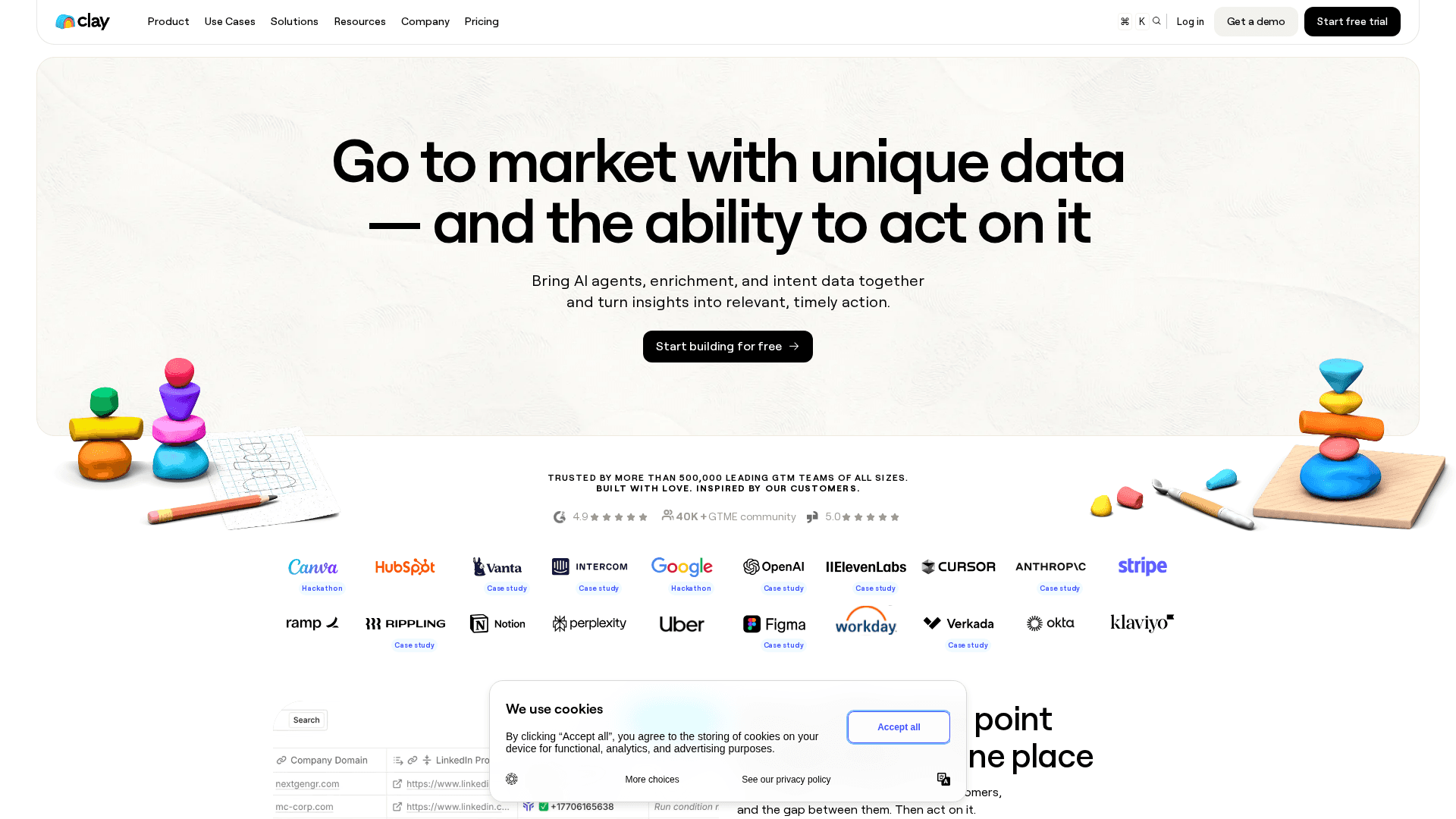
Clay earns the top spot because it sits at the center of the modern AI GTM stack and makes everything downstream better. Its signature waterfall enrichment queries 150+ data providers sequentially for each contact until it finds a verified email or phone, so coverage beats any single vendor; its Claygent AI research agent browses the web to answer any question about an account or prospect at scale; and its signal tracking fires workflows off job changes, funding rounds, hiring surges, and tech-stack changes. Around that sits genuine orchestration — AI formulas, personalization, and bidirectional CRM sync — so Clay becomes the engine that keeps your CRM and outbound tools fed with clean, complete, scored data. It's the tool GTM engineers standardize on and the one most "how did they build that outbound motion?" answers start with. The honest limits: it's powerful enough to be genuinely complex, the credit-based pricing rewards people who know what they're doing, and it's an engine, not a full CRM or engagement platform — it makes your stack better rather than replacing it.
Key Features
- Waterfall Enrichment: Sequentially queries 150+ data providers per contact until a verified email or phone is found — coverage no single vendor matches
- Claygent AI Research Agent: AI agent that browses the web to answer research questions about any account or prospect at scale
- Signals & Intent Triggers: Job changes, funding rounds, hiring surges, and tech-stack changes fire automated GTM workflows
- AI Formulas & Personalization: Generate first lines, custom variables, and qualification logic with built-in AI — no code required
- CRM & Tool Orchestration: Bidirectional sync with Salesforce and HubSpot; push enriched, scored data to Outreach, Instantly, Smartlead, and more
Pricing
| Plan | Monthly | Annual (per month) |
|---|---|---|
| Free | $0 (100 credits/mo) | Free forever |
| Launch | $185/mo | ~$166/mo (annual) |
| Growth | $495/mo | ~$446/mo (annual) |
| Enterprise | Custom | Custom (annual) |
Pros
- The data-and-orchestration engine most GTM stacks are built on
- Waterfall enrichment beats any single data provider on coverage
- Claygent runs AI research on any account at scale
- Free tier plus accessible entry pricing to start
Cons
- Powerful enough to be genuinely complex to master
- Credit-based pricing rewards experienced operators
- An engine, not a CRM or engagement platform — it complements, not replaces
Related reading: Best AI Sales Tools
Verdict: Clay is the best overall AI GTM tool in 2026. If you build one engine into your stack, make it the one that keeps everything else fed with clean, enriched, signal-triggered data.
Visit ClayHubSpot Breeze
Best for: SMB and mid-market teams that want CRM, marketing, sales, and native AI agents in one platform rather than stitching a stack together
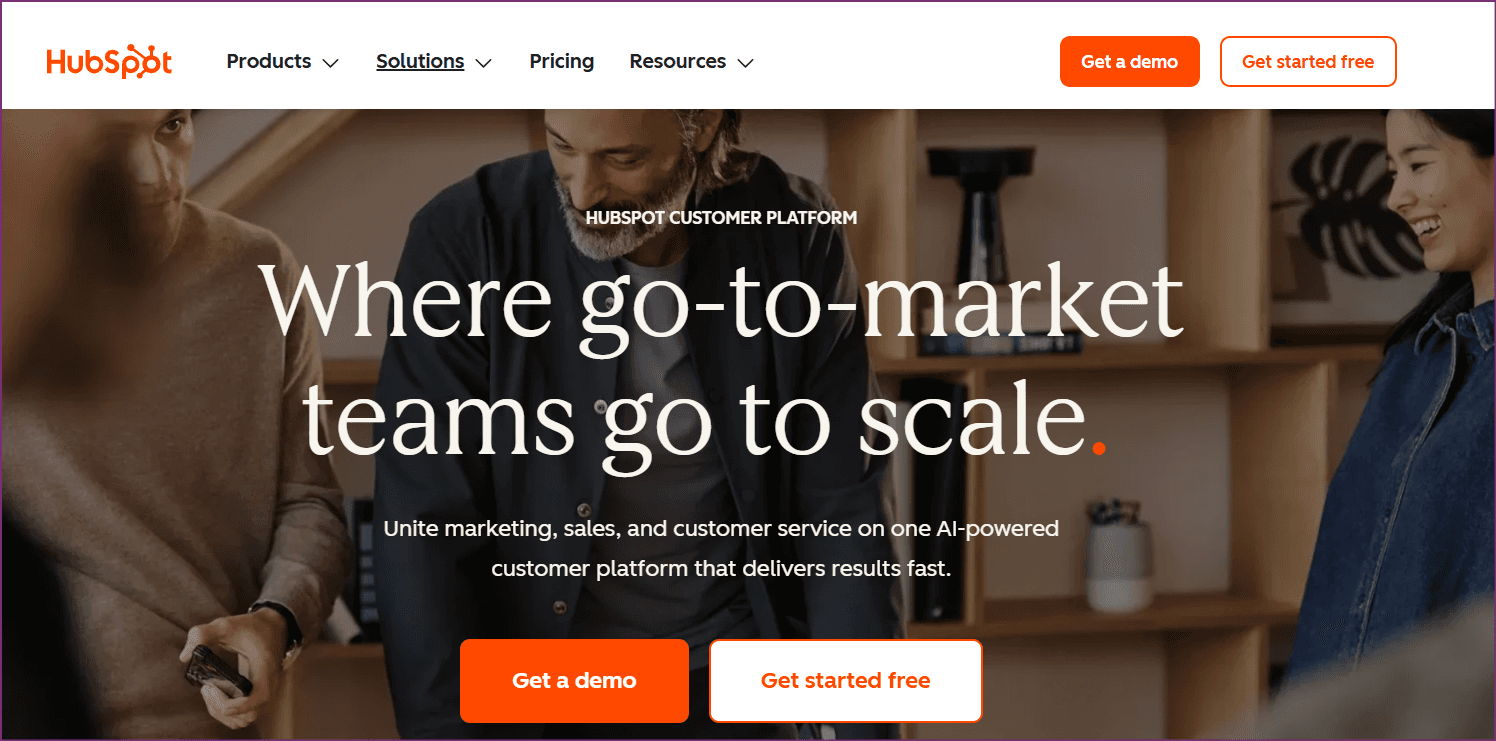
HubSpot is the closest thing to a single AI GTM platform for teams that don't want to run a dozen tools, and Breeze — its suite of AI agents woven across every hub — is what turned the CRM into an AI-native one. Breeze agents live in Marketing, Sales, Service, Content, and Operations, drafting outreach, researching accounts, qualifying leads, and answering customers, and Breeze Intelligence enriches records with company and buyer data natively. The pitch is coherence: account data, marketing automation, sales sequences, service, and AI all sit in one system of record, so a mid-market team gets a full GTM motion without integration projects. HubSpot serves 279K+ customers and has leaned into outcome-based pricing for its AI, aligning cost with results rather than seats. The trades: it's broad rather than deep, so specialist tools still beat it on pure intent data, revenue intelligence, or waterfall enrichment; costs climb as you add hubs and contacts; and enterprises with complex processes often still choose Salesforce for depth. For most SMB and mid-market teams, though, it's the highest-leverage single platform.
Key Features
- Breeze AI Agents: AI agents across Marketing, Sales, Service, Content, and Ops that draft, research, qualify, and respond — on every tier including free CRM
- Breeze Intelligence: Native enrichment of company and buyer data plus intent signals directly on CRM records
- Unified CRM & Automation: Accounts, deals, marketing automation, and sales sequences in one system of record
- Smart CRM & Reporting: AI-assisted forecasting, attribution, and dashboards built on unified GTM data
- Outcome-Based AI Pricing: Breeze increasingly meters on results rather than seats, aligning cost with GTM outcomes
Pricing
| Plan | Monthly | Annual (per month) |
|---|---|---|
| Free CRM | $0 | Free (Breeze basics included) |
| Starter | From ~$20/seat/mo | Published (annual) |
| Professional | From ~$100/seat/mo | Published (annual) |
| Enterprise | Custom | Custom (+ Breeze usage) |
Pros
- Closest thing to a single AI GTM platform for SMB and mid-market
- Breeze agents span every hub and the free CRM
- Native enrichment and intent via Breeze Intelligence
- Fast to deploy — no integration project to get a full motion
Cons
- Broad rather than deep — specialists beat it on intent, RevInt, and enrichment
- Costs climb as you add hubs and contacts
- Enterprises with complex processes often prefer Salesforce
Related reading: Best Sales Intelligence Tools
Verdict: HubSpot Breeze is the best all-in-one AI GTM platform for most SMB and mid-market teams. If you want one system of record with AI woven through it, start here and add specialists only where they clearly beat built-in.
Visit HubSpot Breeze6sense
Best for: Enterprise and upper-mid-market revenue teams that want AI-driven account identification and intent data leading their go-to-market strategy
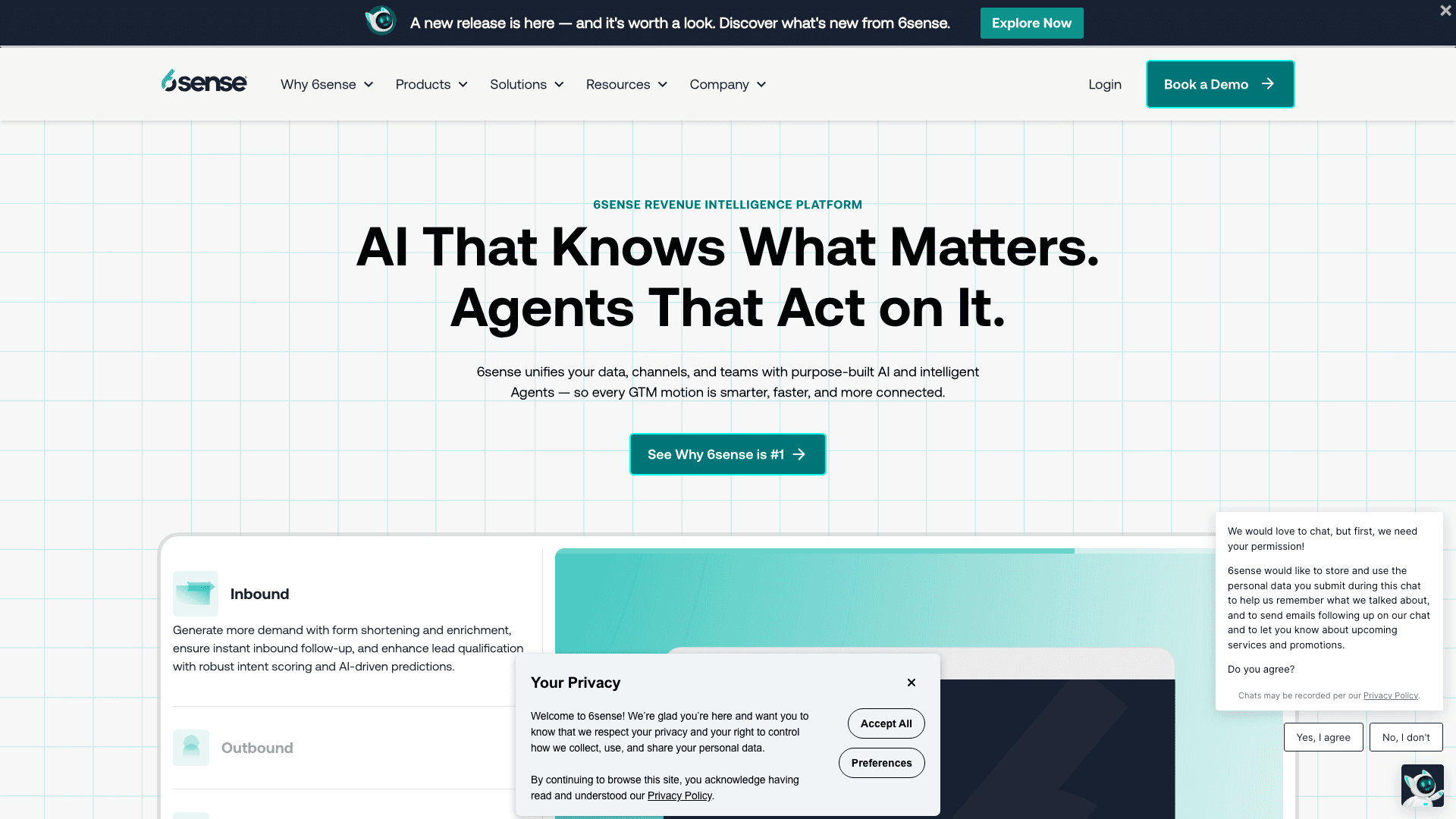
6sense is the intent-and-ABM leader of the AI GTM stack, and the tool that best answers the hardest GTM question: which accounts are in-market right now, and when should you engage? Its Revenue AI combines proprietary first- and third-party intent data, anonymous website de-anonymization, and predictive models to surface accounts that are buying before they fill out a form, then scores them by buying stage so teams can time outreach and advertising to the moment of highest intent. Around that data core sit orchestration, account-based advertising, and deep CRM sync that push intent signals into the workflows reps and marketers actually use. For enterprise GTM teams running a serious account-based motion, 6sense is the predictive engine rivals are measured against. The honest limits: it's expensive and strictly quote-based, genuinely complex to realize full value from, and overkill for small teams with short sales cycles — its ceiling is highest exactly where the program and budget are biggest.
Key Features
- AI Account Identification: De-anonymizes website visitors and predicts in-market accounts before they self-identify
- Proprietary Intent Data: First- and third-party intent scored into per-account buying-stage models
- Predictive Orchestration: Automated plays and segments triggered by intent and buying stage across channels
- Account-Based Advertising: Account-targeted display and programmatic advertising tied to intent scores
- CRM & MAP Sync: Deep Salesforce and HubSpot integration writes intent and stage back to reps and marketers
Pricing
| Plan | Monthly | Annual (per month) |
|---|---|---|
| Free / Team (limited) | $0 (limited) | Free tier available |
| Growth | Quote-based | Quote-based (annual) |
| Enterprise | Custom | Custom (often six figures) |
Pros
- Best-in-class account identification and in-market timing
- Proprietary intent data with strong predictive accuracy
- Orchestration and account-based advertising in one platform
- The enterprise standard sales and marketing align around
Cons
- Expensive and strictly quote-based at scale
- Complex — real value needs dedicated ops and onboarding
- Overkill for small teams with short sales cycles
Related reading: Best ABM Platforms
Verdict: 6sense is the best AI GTM tool for predictive intent and ABM. If knowing which accounts to engage and when should lead your strategy — and you can resource the program — its data edge is the highest in the category.
Visit 6senseGong
Best for: Revenue teams that want AI to capture and analyze every customer conversation — turning calls, emails, and deals into coaching, forecasting, and pipeline insight
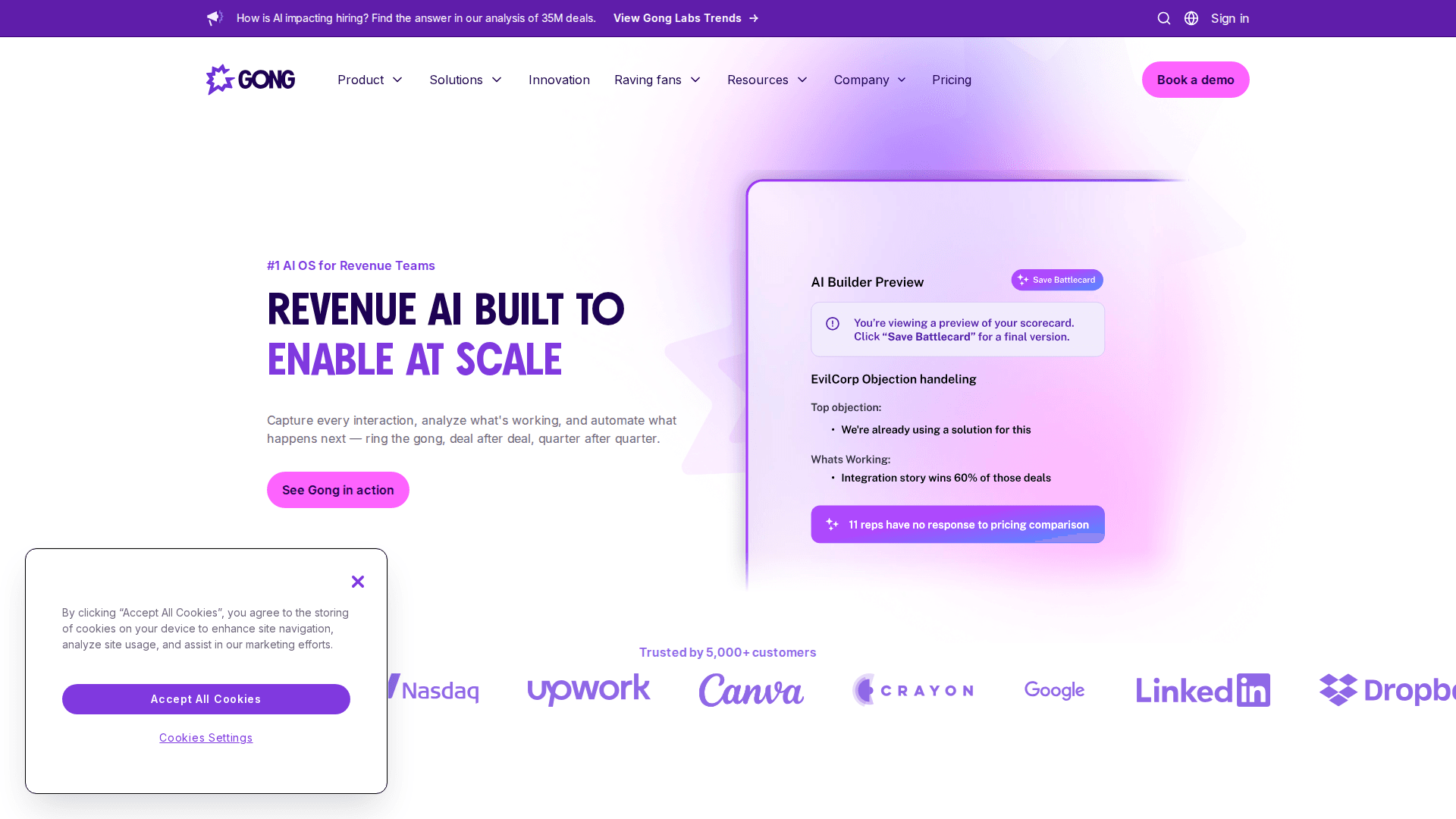
Gong is the revenue-intelligence standard and the part of the AI GTM stack that tells you what's actually happening in your deals. It records, transcribes, and analyzes every call and email, then uses AI to surface deal risk — single-threading, ghosting, missing next steps — with the conversation evidence behind it. Its forecasting is built from real engagement and conversation signals rather than rep-entered CRM stages, which is why leaders trust it over gut-feel pipeline reviews. AI coaching turns every rep's calls into a searchable library of what works, and its "Ask Anything" and AI agents let teams query the conversation corpus in natural language and auto-draft follow-ups and CRM updates. For any team where deals are won and lost on calls, Gong is the visibility layer that makes coaching and forecasting evidence-based. The trades: it's an enterprise-priced, quote-based platform; it's most valuable for teams with real call volume; and it observes and analyzes the motion rather than executing outbound itself.
Key Features
- Conversation Intelligence: Records, transcribes, and analyzes every call and email to surface what's really happening in deals
- Deal Intelligence: AI-flagged risk indicators — single-threading, ghosting, missing next steps — with conversation evidence
- Forecasting: Forecasts built from conversation and engagement signals, not just rep-entered CRM stages
- AI Coaching: Talk-ratio, topic, and objection analytics that turn every rep's calls into a coaching library
- Ask Anything & AI Agents: Query your conversation corpus in natural language; agents draft follow-ups and update the CRM
Pricing
| Plan | Monthly | Annual (per month) |
|---|---|---|
| Platform | Quote-based | Quote (per-seat + platform fee) |
| Add-on Modules | Quote-based | Forecast, Engage add-ons (annual) |
| Enterprise | Custom | Custom (annual) |
Pros
- The revenue-intelligence standard for call-driven teams
- Deal risk and forecasting grounded in real conversation evidence
- AI coaching turns every call into a repeatable playbook
- Ask Anything makes the conversation corpus queryable in plain language
Cons
- Enterprise-priced and quote-based
- Most valuable for teams with real call volume
- Analyzes the motion rather than executing outbound itself
Related reading: Best AI Sales Tools
Verdict: Gong is the best AI GTM tool for revenue intelligence. If your deals are won and lost on calls, it's the visibility layer that makes coaching and forecasting evidence-based instead of anecdotal.
Visit GongClari
Best for: RevOps and revenue leaders who want AI-driven forecasting, pipeline inspection, and end-to-end revenue orchestration across the funnel
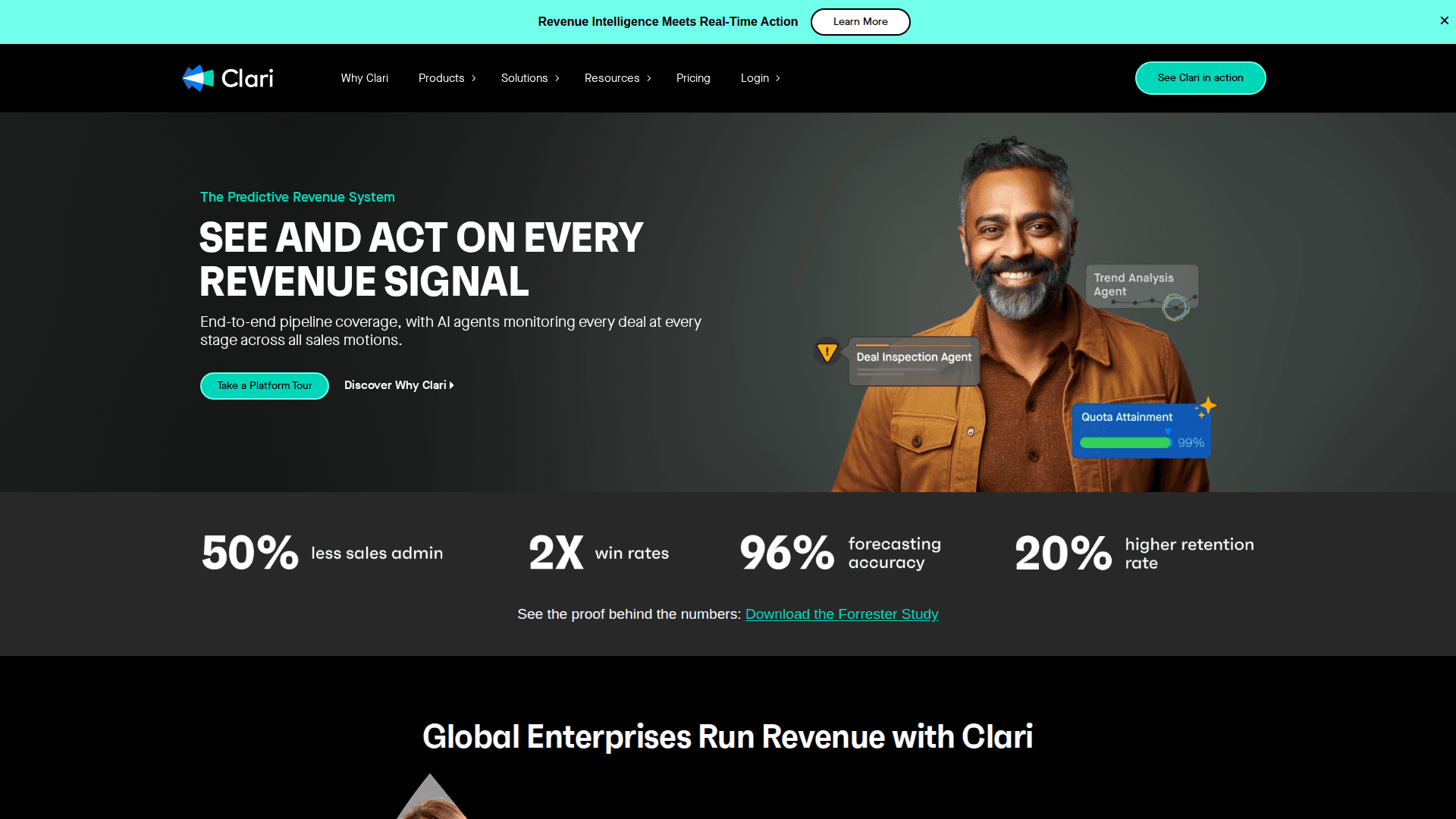
Clari is the enterprise standard for revenue forecasting and pipeline visibility, and after its December 2025 merger with Salesloft it now spans a full "revenue orchestration" platform — from engagement at the top of the funnel through forecasting and revenue analytics at the bottom. Its AI ingests activity, engagement, and CRM data to produce forecasts leaders actually trust, flags at-risk deals and pipeline gaps before the quarter slips, and gives RevOps a single place to inspect the funnel end to end. The Salesloft combination adds cadence-driven engagement and Rhythm's signal-to-action workflow to the forecasting core, positioning the combined platform (roughly $450M ARR) as a challenger to run more of the revenue motion in one system. For RevOps teams whose job is forecast accuracy and pipeline hygiene, Clari is the category leader. The trades: it's enterprise-priced and quote-based, it delivers the most value when your CRM data is clean and your process is mature, and the post-merger platform is still consolidating two products into one motion.
Key Features
- AI Forecasting: Forecasts built from activity, engagement, and CRM signals that leaders trust over gut-feel pipeline reviews
- Pipeline Inspection: Deal- and pipeline-level risk flags that surface gaps and slipping deals before the quarter closes
- Revenue Orchestration: End-to-end funnel coverage from engagement to forecast after the Salesloft merger
- Salesloft Cadence & Rhythm: Multichannel engagement plus a signal-to-action workflow feeding the forecasting core
- Revenue Analytics: Cross-funnel analytics and reporting on conversion, velocity, and forecast accuracy
Pricing
| Plan | Monthly | Annual (per month) |
|---|---|---|
| Clari Forecast | Quote-based | Quote (per-seat, annual) |
| Revenue Orchestration | Quote-based | Forecast + Salesloft (annual) |
| Enterprise | Custom | Custom (annual) |
Pros
- The enterprise standard for forecast accuracy and pipeline visibility
- AI flags at-risk deals before the quarter slips
- Salesloft merger extends it into full revenue orchestration
- Single place for RevOps to inspect the funnel end to end
Cons
- Enterprise-priced and quote-based
- Value depends on clean CRM data and a mature process
- Post-merger platform still consolidating two products into one
Related reading: Best AI Sales Tools
Verdict: Clari is the best AI GTM tool for RevOps and forecasting. If forecast accuracy and pipeline hygiene are your job, it's the category leader — and the Salesloft merger makes it a serious bid to orchestrate more of the revenue motion.
Visit ClariApollo.io
Best for: SMBs and mid-market teams that want an accessible all-in-one prospecting platform — database, sequences, dialer, and AI — without an enterprise contract
Apollo is the most accessible all-in-one AI GTM platform for teams that want to go from data to outreach in one place. Its 275M+ contact and 73M+ company database with waterfall verification covers the data job; native multichannel sequences (email, LinkedIn, dialer) replace a standalone engagement tool for most SMBs; and Apollo AI drafts personalized openers and pulls account context automatically. Built-in intent signals and website visitor identification on higher tiers add a light signals layer, and its March 2026 acquisition of Pocus folded signal-based selling deeper into the platform. The whole thing is unusually affordable — a free tier plus low per-seat pricing — which is why it's the default GTM starting stack for a huge number of startups and SMBs. For teams that want breadth and value over best-in-class depth, it's the pragmatic pick. The trades: data accuracy and intent depth trail specialist vendors, it's a jack-of-all-trades rather than a master, and heavy senders should watch deliverability and data hygiene as they scale.
Key Features
- Contact + Company Database: 275M+ contacts and 73M+ companies with waterfall verification across emails and direct dials
- Multichannel Sequences: Email, LinkedIn, and dialer touchpoints in one cadence — replaces a standalone engagement tool for most SMBs
- Apollo AI: AI research assistant that drafts personalized openers and pulls account context automatically
- Buying Intent & Signals: Built-in intent topics, website visitor identification, and signal-based selling deepened by the Pocus acquisition
- Chrome Extension: One-click enrichment and sequencing from LinkedIn, company sites, and your CRM
Pricing
| Plan | Monthly | Annual (per month) |
|---|---|---|
| Free | $0 | Free (limited credits) |
| Basic | ~$49/seat/mo | ~$39/seat/mo (annual) |
| Professional | ~$79/seat/mo | ~$59/seat/mo (annual) |
| Organization | ~$119/seat/mo | ~$99/seat/mo (annual) |
Pros
- The most accessible all-in-one prospecting platform
- Database, sequences, dialer, and AI in one place
- Free tier plus low per-seat pricing
- Pocus acquisition deepens signal-based selling
Cons
- Data accuracy and intent depth trail specialist vendors
- Jack-of-all-trades rather than best-in-class
- Watch deliverability and data hygiene as you scale sending
Related reading: Best Sales Intelligence Tools
Verdict: Apollo is the best AI GTM tool for accessible all-in-one prospecting. For SMBs and mid-market teams that want breadth and value from data to outreach, it's the pragmatic starting stack.
Visit Apollo.ioCommon Room
Best for: GTM teams that want to unify fragmented buyer signals — product, community, web, and social — into person-level intelligence and activate it with AI
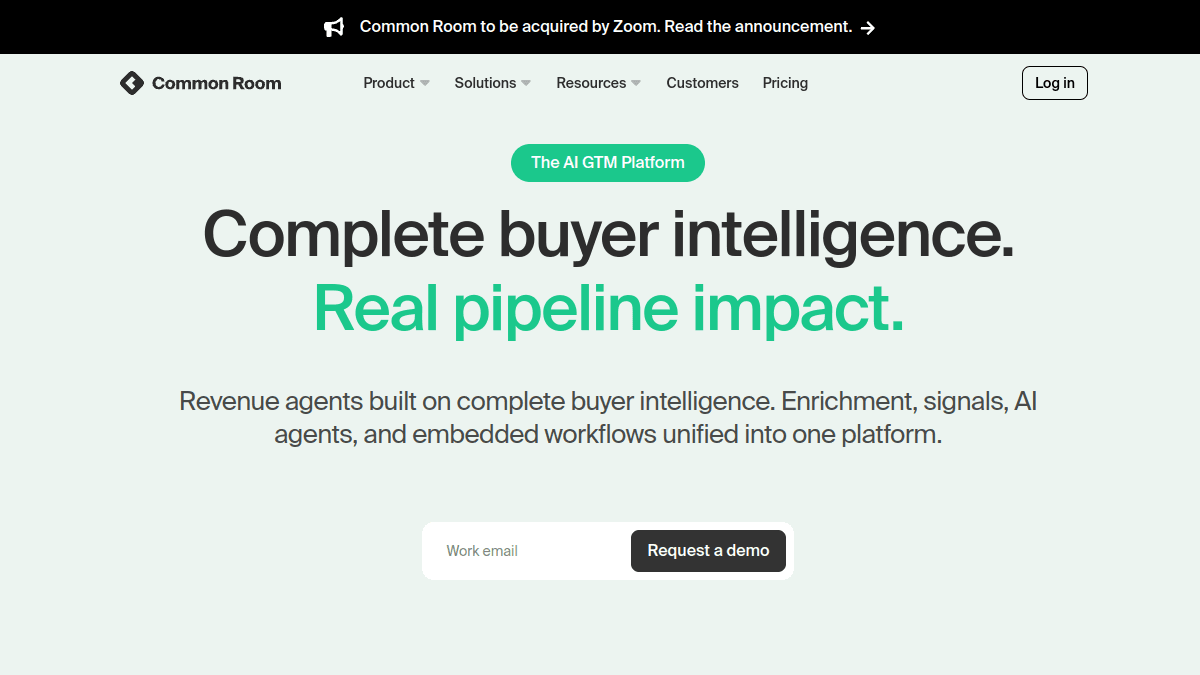
Common Room is the AI-native GTM signal platform that turns the messiest part of go-to-market — fragmented signals scattered across product usage, community, social, web, and CRM — into complete, person-level buyer intelligence, then activates it with AI agents rather than just charting it. Where intent tools score anonymous accounts, Common Room's strength is stitching real people and their behavior across sources into a single view, so GTM teams can see who's engaging, tie it to accounts, and trigger the right play automatically. It's trusted by GTM teams at Atlassian, Anthropic, Notion, Okta, and Snowflake, and its signal-to-action workflow is a template for signal-based selling. In July 2026, Zoom agreed to acquire Common Room to fold its buyer-signal intelligence into Zoom's revenue platform — a strong validation of the category and a signal of where standalone signal tools are heading. The trades: it shines for product-led and community-led motions where those signals exist, its full value needs clean source integrations, and the Zoom acquisition means buyers should weigh where the product lands next.
Key Features
- Signal Unification: Stitches product, community, social, web, and CRM signals into complete person-level buyer intelligence
- Person-Level Identity: Ties fragmented behavior to real people and accounts — beyond anonymous account-level intent
- AI Signal Activation: AI agents turn buyer signals into the right play automatically instead of just surfacing them
- Product & Community Signals: Purpose-built for product-led and community-led GTM motions where engagement lives outside the CRM
- CRM & Workflow Integrations: Routes enriched signals and plays into Salesforce, HubSpot, and rep workflows
Pricing
| Plan | Monthly | Annual (per month) |
|---|---|---|
| Free / Starter | $0 (limited) | Free tier available |
| Team | Quote-based | Quote-based (annual) |
| Enterprise | Custom | Custom (annual) |
Pros
- Best at unifying fragmented signals into person-level intelligence
- AI activates signals into plays, not just dashboards
- Purpose-built for product-led and community-led GTM
- Trusted by leading GTM teams (Atlassian, Anthropic, Notion, Okta)
Cons
- Value concentrated in product-led and community-led motions
- Full value needs clean integrations across signal sources
- Being acquired by Zoom (2026) — weigh where the product lands
Related reading: Best Sales Intelligence Tools
Verdict: Common Room is the best AI GTM tool for signals. If your buyers reveal intent across product, community, and social before they ever fill out a form, it turns that scatter into person-level plays.
Visit Common RoomSalesforce Agentforce
Best for: Enterprises that want autonomous AI agents executing multi-step GTM workflows on top of Salesforce's data and customization depth
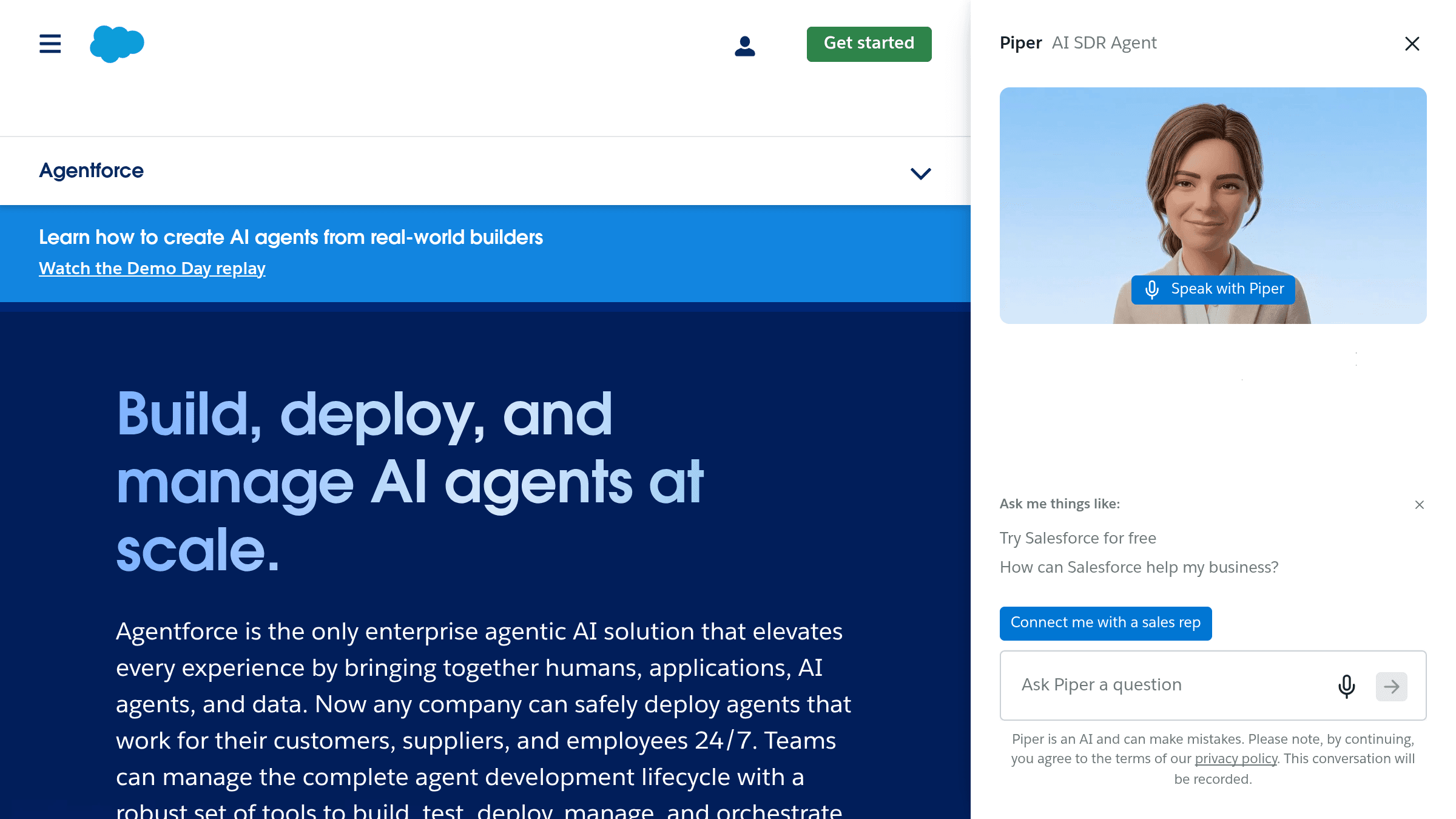
Agentforce is Salesforce's autonomous-agent platform and the most capable enterprise AI GTM layer for teams already anchored on Salesforce. Rather than a copilot that drafts suggestions, Agentforce deploys agents that execute multi-step, cross-system GTM workflows — qualifying and routing leads, researching accounts, answering prospects, and taking action across clouds — powered by Data Cloud and governed by the Einstein Trust Layer. The enterprise case is depth and control: agents act on the full Salesforce system of record with the customization, governance, and cross-cloud reach large organizations require. By 2026 Agentforce reached ~18,500 customers and $540M ARR, making it the clear enterprise-scale bet for agentic GTM. For big revenue orgs with complex processes already on Salesforce, it's the natural place to run AI agents. The trades: it assumes you're on Salesforce and willing to invest in Data Cloud and configuration; it's genuinely complex and consumption-priced, so costs need modeling; and smaller teams get faster time-to-value from HubSpot Breeze's lighter, more prescriptive agents.
Key Features
- Autonomous AI Agents: Agents execute multi-step, cross-system GTM workflows — qualifying, routing, researching, and acting across clouds
- Data Cloud Foundation: Agents act on unified customer data across the Salesforce system of record
- Einstein Trust Layer: Governance, grounding, and guardrails for enterprise-grade AI actions
- Cross-Cloud Reach: Agents operate across Sales, Service, Marketing, and Commerce clouds in one platform
- Customization & Governance: Deep configurability and controls large, complex revenue orgs require
Pricing
| Plan | Monthly | Annual (per month) |
|---|---|---|
| Agentforce (add-on) | Consumption-based | Per-action / per-conversation |
| Platform + Data Cloud | Quote-based | Quote-based (annual) |
| Enterprise | Custom | Custom (annual) |
Pros
- Most capable enterprise agentic GTM platform on Salesforce
- Agents execute real multi-step workflows, not just suggestions
- Governed by the Einstein Trust Layer for enterprise control
- Proven scale — ~18,500 customers and $540M ARR by 2026
Cons
- Assumes you're on Salesforce with Data Cloud invested
- Complex and consumption-priced — model total cost carefully
- Smaller teams get faster time-to-value from HubSpot Breeze
Related reading: Best AI Sales Tools
Verdict: Salesforce Agentforce is the best AI GTM tool for enterprise AI agents. If you're anchored on Salesforce and want autonomous agents running real workflows on your system of record, nothing matches its depth.
Visit Salesforce Agentforce11x
Best for: Mid-market and enterprise teams that want autonomous AI "digital workers" to run outbound prospecting end to end across email, LinkedIn, and phone
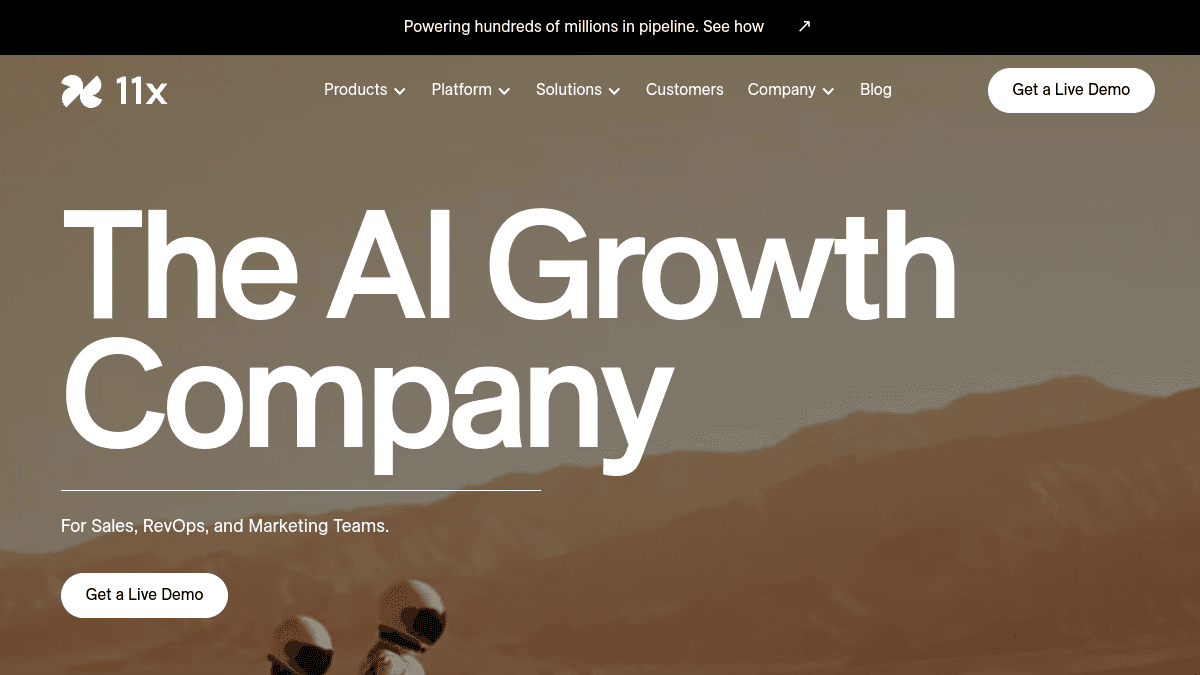
11x is the highest-profile of the autonomous AI SDR companies, and it represents the most aggressive edge of AI GTM: not a tool reps use, but a "digital worker" that owns a function. Alice, its AI SDR, runs outbound prospecting end to end — building audiences, researching accounts, writing personalized outreach, sending across email and LinkedIn, and triaging replies — while Julian, its AI phone agent, handles verbal conversations like inbound qualification. The pitch is a workforce model: deploy an agent to absorb the highest-volume, lowest-judgment part of sales development so human reps focus on deals. For teams with the pipeline targets and budget to run it, 11x can genuinely multiply outbound reach. The honest trades are real: it's expensive, with entry around $5,000/month and minimum first-year contracts of roughly $50–60K for a single worker; autonomous outbound needs real oversight to stay on-brand and protect deliverability; and results depend heavily on your data, offer, and targeting. It's the clearest bet on the AI-worker future — evaluate it against more affordable AI SDRs and against simply scaling Clay-plus-sequencer motions before committing.
Key Features
- Alice — AI SDR: Autonomous agent that builds audiences, researches, personalizes, sends across email and LinkedIn, and triages replies
- Julian — AI Phone Agent: Handles verbal conversations such as inbound qualification as a second digital worker
- End-to-End Outbound: Owns the top of the funnel as a workforce model rather than a tool reps operate
- Research & Personalization: Per-account web research and signal-based personalization applied automatically at scale
- Human Handoff: Interested replies escalate to reps with full context and conversation history
Pricing
| Plan | Monthly | Annual (per month) |
|---|---|---|
| Alice (entry) | ~$5,000/mo | ~$50–60K/yr min (annual) |
| Alice (email + LinkedIn) | ~$6,500–8,500/mo | Quote (annual) |
| Enterprise multi-channel | $10,000+/mo | Custom (annual) |
Pros
- The clearest bet on the autonomous AI-worker future
- Alice runs outbound prospecting end to end
- Julian adds AI phone conversations as a second worker
- Can genuinely multiply outbound reach for well-resourced teams
Cons
- Expensive — ~$50–60K/yr minimum for a single digital worker
- Autonomous outbound needs oversight for brand and deliverability
- Results depend heavily on your data, offer, and targeting
Related reading: Best AI Sales Tools
Verdict: 11x is the best AI GTM tool for autonomous SDR digital workers. If you have the pipeline targets and budget, Alice can multiply outbound reach — but weigh it against cheaper AI SDRs and a Clay-plus-sequencer motion first.
Visit 11xWarmly
Best for: SMB and mid-market teams that want the easiest on-ramp to signal-based selling — de-anonymize visitors and trigger warm, AI-assisted outbound
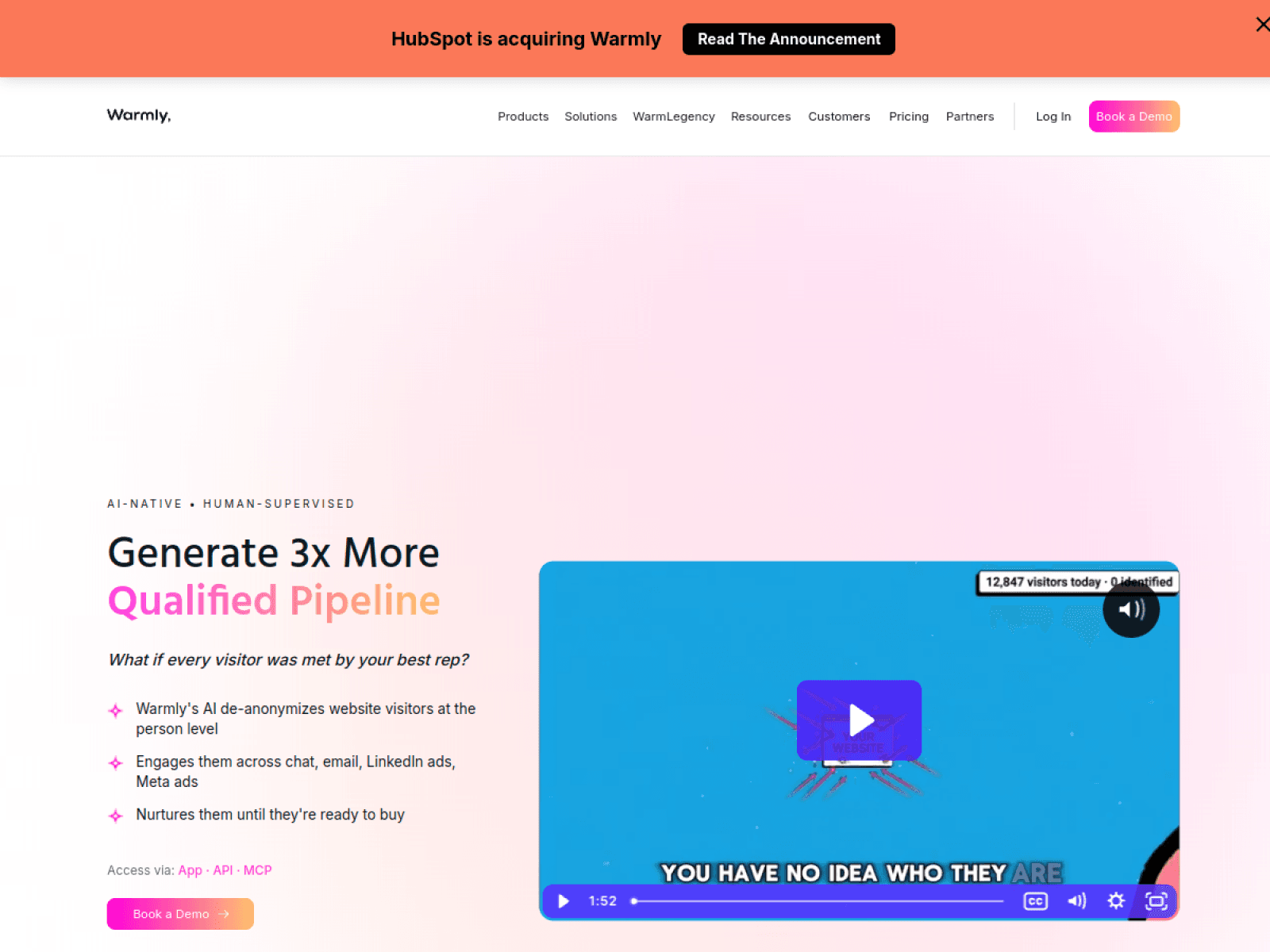
Warmly is the most approachable signal-based GTM tool and the easiest on-ramp to warm outbound for teams without an enterprise budget. It de-anonymizes website visitors, ties them to accounts and buying signals, and triggers warm, AI-assisted outreach the moment an account shows intent — turning anonymous traffic and third-party signals into pipeline in real time. The appeal is speed and accessibility: a free starting tier and lower, more transparent pricing than the enterprise intent platforms, with orchestration across Slack alerts, chat, and outbound so small teams can act on signals immediately rather than standing up a heavyweight ABM program. For SMB and mid-market teams that want the intent-to-action loop without a six-figure contract, Warmly is the pragmatic pick. The trades: its data depth and predictive modeling don't match 6sense at the enterprise end, value concentrates on teams with enough inbound traffic and signal volume to act on, and larger orgs running serious ABM will still want a heavier platform underneath.
Key Features
- Website De-Anonymization: Identifies anonymous visitors and ties them to accounts and buying signals in real time
- Signal-Based Triggers: First- and third-party intent signals fire warm outreach the moment an account heats up
- AI-Assisted Outbound: AI drafts and orchestrates warm outreach so small teams act on signals immediately
- Slack & Chat Orchestration: Real-time visitor alerts and live chat route warm accounts to reps instantly
- Accessible Pricing: Free starting tier and transparent plans — no enterprise contract required
Pricing
| Plan | Monthly | Annual (per month) |
|---|---|---|
| Free | $0 | Free (limited reveals) |
| Startup / Business | From ~$700/mo | Published (annual) |
| Enterprise | Custom | Custom (annual) |
Pros
- Easiest on-ramp to signal-based warm outbound
- Free tier and transparent, accessible pricing
- Real-time visitor reveal plus AI-assisted outreach
- Acts on signals immediately without a heavyweight ABM program
Cons
- Data depth and prediction trail 6sense at the enterprise end
- Value concentrates on teams with enough traffic and signal volume
- Serious ABM orgs still want a heavier platform underneath
Related reading: Best ABM Platforms
Verdict: Warmly is the best AI GTM tool for accessible signal-based outbound. For SMB and mid-market teams that want the intent-to-action loop without a six-figure contract, it's the fastest way to turn traffic into warm pipeline.
Visit WarmlyHow to Choose the Best AI GTM Tools for Your Team
The decision isn't “which one tool?” — it's “which layer do I fix first?” Here's the framework by the bottleneck that actually decides it:
If you want the fewest vendors — start with an AI-native CRM
HubSpot Breeze is the pragmatic single platform for SMB and mid-market teams — CRM, marketing, sales, and AI agents in one system with fast time-to-value. Salesforce Agentforce is the enterprise choice when you need autonomous agents running complex, cross-cloud workflows on deep, customizable data. Either becomes the center; you add specialists only where built-in clearly loses.
If your bottleneck is data and outbound volume
Clay is the engine — waterfall enrichment, AI research, and signal triggers that keep your whole stack fed with clean, scored data. Apollo is the accessible all-in-one when you want database, sequences, and dialer in one affordable place. Both pair naturally with our guides to the best AI sales tools and best sales intelligence tools.
If you can't see who's in-market
Add an intent or signals layer. 6sense is the enterprise pick for predictive intent and account-based orchestration; Common Room unifies product, community, and web signals into person-level intelligence for product-led motions; and Warmly is the accessible on-ramp that de-anonymizes visitors and triggers warm outreach without a six-figure contract. For the full account-based picture, see our guide to the best ABM platforms.
If deals slip and the forecast isn't trusted
Gong is the revenue-intelligence standard — conversation intelligence that grounds coaching and deal risk in what actually happened on calls. Clari (now merged with Salesloft) is the RevOps pick for forecast accuracy, pipeline inspection, and end-to-end revenue orchestration. Both are enterprise-priced but earn their keep the moment forecast misses cost you.
If you want to scale outbound without hiring
11x is the boldest bet — Alice runs outbound prospecting end to end as an autonomous “digital worker,” with Julian handling phone conversations. It's expensive (~$50–60K/yr minimum) and needs oversight, so weigh it against cheaper AI SDRs and a Clay-plus-sequencer motion first. This is the frontier of AI GTM — powerful, but earn the fundamentals before you automate the whole funnel.
Pro Tip
Don't buy the whole stack at once. Fix one layer, prove it lifts pipeline or forecast accuracy, then layer outward. And given the 2026 consolidation wave — Clari + Salesloft, Apollo + Pocus, Zoom + Common Room — favor tools with platform gravity or orchestration flexibility over standalone point solutions that may be features of something bigger within a year.
Frequently Asked Questions
Final Thoughts
The best AI GTM tool of 2026 isn't a single product — it's the right stack for your motion. Clay is our best-overall pick because, as the data-and-orchestration engine, it makes everything downstream better and anchors the modern GTM stack. But the honest answer runs down the list: HubSpot Breeze or Salesforce Agentforce as the AI-native CRM at the center, 6sense, Common Room, or Warmly for intent and signals, Gong and Clari for revenue intelligence and forecasting, Apollo for accessible prospecting, and 11x if you're ready to let AI workers run the outbound.
Whatever you assemble: name your bottleneck and fix one layer first, insist on deep bidirectional CRM sync so AI output reaches reps in context, model total cost including credits and usage rather than the sticker, and watch the consolidation — 2026 proved that today's standalone tool can be tomorrow's platform feature. AI GTM is a system, not a shopping list. The stack only earns its keep if it measurably moves pipeline at the accounts you most want to win.
Related Free SEO Tools
Content Brief Generator
Generate SERP-grounded briefs for your category content
SEO Content Grader
Score your comparison and alternative pages
Meta Tags Generator
Optimize SERP previews for landing pages
Long-Tail Keyword Generator
Find low-competition commercial queries
Keyword Search Volume
Size demand for your product category
SERP Checker
See who ranks for your target keywords today
Related Articles
About the Author

Co-Founder & SEO Execution
Co-founder of PikaSEO. 11 years in corporate tech, then bootstrapped entrepreneur. Leads SEO execution and content-led growth for SaaS companies.