Rank tracking sounds simple until you try to buy it. One vendor counts a keyword once; another counts every device, location, language, and search engine as a separate unit. One updates daily; another shows a low entry price but refreshes weekly. A third bundles ranking data into an entire SEO platform, which is either excellent value or expensive shelfware depending on what your team already uses.
The right tool does more than tell you that a keyword moved from position eight to six. It preserves a consistent measurement environment, shows whether visibility changed across a meaningful group of queries, captures the SERP features around those results, and makes the next investigation obvious. Individual positions are noisy. Trends, page groups, share of voice, and competitor movement create the context needed to make decisions.
This guide focuses on the seven platforms that best match the rank-tracker comparison cluster we are building: AccuRanker, SE Ranking, Keyword.com, Semrush, Nightwatch, Wincher, and Mangools SERPWatcher. If your priority is map-grid visibility for physical locations, pair it with our broader guide to the best local SEO tools.
How we evaluated the best rank tracking tools
We compared current vendor documentation and published pricing as of September 14, 2026. We did not award points for unsupported claims of universal accuracy: personalized search means there is no single rank that every user sees. Instead, we evaluated whether each product can produce consistent, explainable measurements for the buyer it targets.
Measurement quality
Location, device, language, engine, SERP depth, competitor context, and access to snapshots or on-demand checks.
Cadence and history
Daily versus weekly refreshes, historical retention, annotations, alerts, and the ability to investigate a change quickly.
Operational workflow
Tags, groups, permissions, exports, scheduled reports, white-label delivery, integrations, API access, and user limits.
Real cost
The usable keyword allowance after multiplying locations and devices, plus add-ons, seats, reporting features, and billing terms.
Rank tracking software compared
| Tool | Best fit | Entry price | Key distinction |
|---|---|---|---|
| AccuRanker | Best Dedicated Tracker | From $224/month | Daily ranking data with fast on-demand keyword refreshes |
| SE Ranking | Best Overall Value | From €109/month | 2,000 daily tracked keywords on the entry Core plan |
| Keyword.com | Best Affordable Specialist | From $4/month | Low entry price with keyword bundles that scale by volume and cadence |
| Semrush Position Tracking | Best Integrated Suite | From $139/month | Daily tracking connected to Semrush research and competitive data |
| Nightwatch | Best for Local & AI | From €79/month billed annually | Daily tracking across six traditional and map-search engines |
| Wincher | Easiest to Use | From €49/month | Daily ranking updates on every paid plan |
| Mangools SERPWatcher | Best for Beginners | From $49/month | Friendly interface with an understandable Performance Index |
Prices are published starting points checked September 14, 2026. Currency, billing period, tracked-keyword configuration, and plan limits differ, so the figures are not direct cost-per-keyword comparisons.
What rank tracking really costs
Start with configurations, not phrases. Tracking 250 phrases on desktop and mobile in two cities can consume 1,000 keyword units: 250 × two devices × two locations. Add a second search engine and the same list may double again. Vendors describe these multipliers differently, so build a small spreadsheet before comparing plan cards.
Cadence is the second multiplier. Weekly data is perfectly reasonable for a stable small-business site and monthly client reporting. It is a handicap during a migration, launch, algorithm update, or fast publishing cycle. If a plan is dramatically cheaper, check whether it refreshes daily, weekly, or only when credits are spent.
Finally, price the workflow around the data. An inexpensive tracker can become costly if every client report must be rebuilt by hand. A higher-priced tool may save money when it includes unlimited users, white-label dashboards, Looker Studio, API access, automated exports, and history long enough to show year-over-year progress.
AccuRanker
Best for: Agencies and in-house SEO teams that need fast refreshes, precise segmentation, and high-volume reporting
AccuRanker is built around rank tracking rather than treating it as one tab in a larger marketing suite. That focus shows up in its filters, tags, share-of-voice views, competitor tracking, reporting, and on-demand refresh workflow. It is especially useful when a team needs to slice thousands of keywords by market, page type, intent, device, or client and then turn those segments into repeatable reports. The tradeoff is straightforward: the entry price is high if you only monitor one small website, and it does not replace a full backlink, content, or technical-audit platform.
AccuRanker
Best Dedicated Tracker
Where it shines
- Daily ranking data with fast on-demand keyword refreshes
- Advanced tagging, filtering, share of voice, and competitor segmentation
- Google Search Console, Google Analytics, Looker Studio, and API workflows
- Unlimited users and domains on enterprise configurations
Consider before buying
- •The $224 entry point is difficult to justify for small sites
- •Focused rank tracker rather than a complete SEO research suite
- •API and advanced data features depend on the selected tier
Our verdict: Choose AccuRanker when ranking data is an operating system for your SEO program—not an occasional report. Its price buys speed, segmentation, and workflow depth rather than a wider collection of SEO tools.
Pricing: From $224/month
Professional starts with 2,000 tracked keywords; annual billing is discounted. Larger Expert and Enterprise configurations scale by keyword volume.
SE Ranking
Best for: Growing teams and agencies that want daily rank tracking plus research, audits, backlinks, local SEO, and GEO features
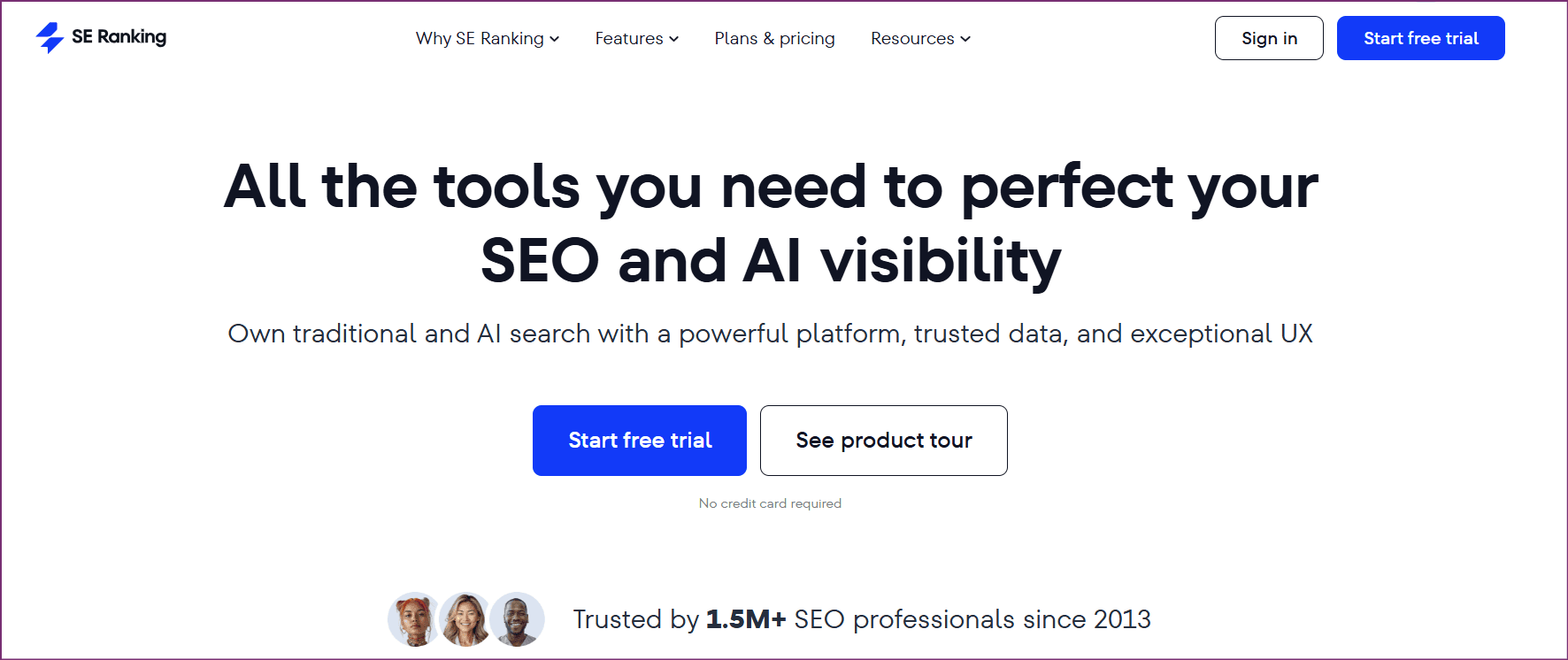
SE Ranking delivers unusually generous daily keyword capacity inside a broader SEO and GEO platform. Its Core plan combines rank tracking with keyword and competitor research, website auditing, backlink monitoring, local marketing allowances, reporting, and integrations. That makes it the practical default for a small team that would otherwise need to assemble several subscriptions. Dedicated trackers offer more specialized segmentation or reporting controls, but SE Ranking is easier to justify when ranking data must sit beside audits, research, and client deliverables.
Where it shines
- 2,000 daily tracked keywords on the entry Core plan
- Broad toolkit covering research, audits, backlinks, local SEO, and GEO
- Google Top 100 tracking, share of voice, and project reporting
- Agency Pack, API, extra keywords, and additional seats available as add-ons
Consider before buying
- •Plan and add-on structure takes time to price accurately
- •Some agency features require the separately priced Agency Pack
- •Teams needing only rank tracking may pay for tools they do not use
Our verdict: SE Ranking is the best value for most growing SEO teams because the tracking allowance is useful on day one and the surrounding tools remove the need for several separate subscriptions.
Pricing: From €109/month
The Core plan includes 2,000 keywords tracked daily across 10 projects; annual billing was listed at €87.20 per month when checked.
Keyword.com
Best for: Consultants and agencies that want flexible keyword-based pricing, unlimited projects, and shareable client reports
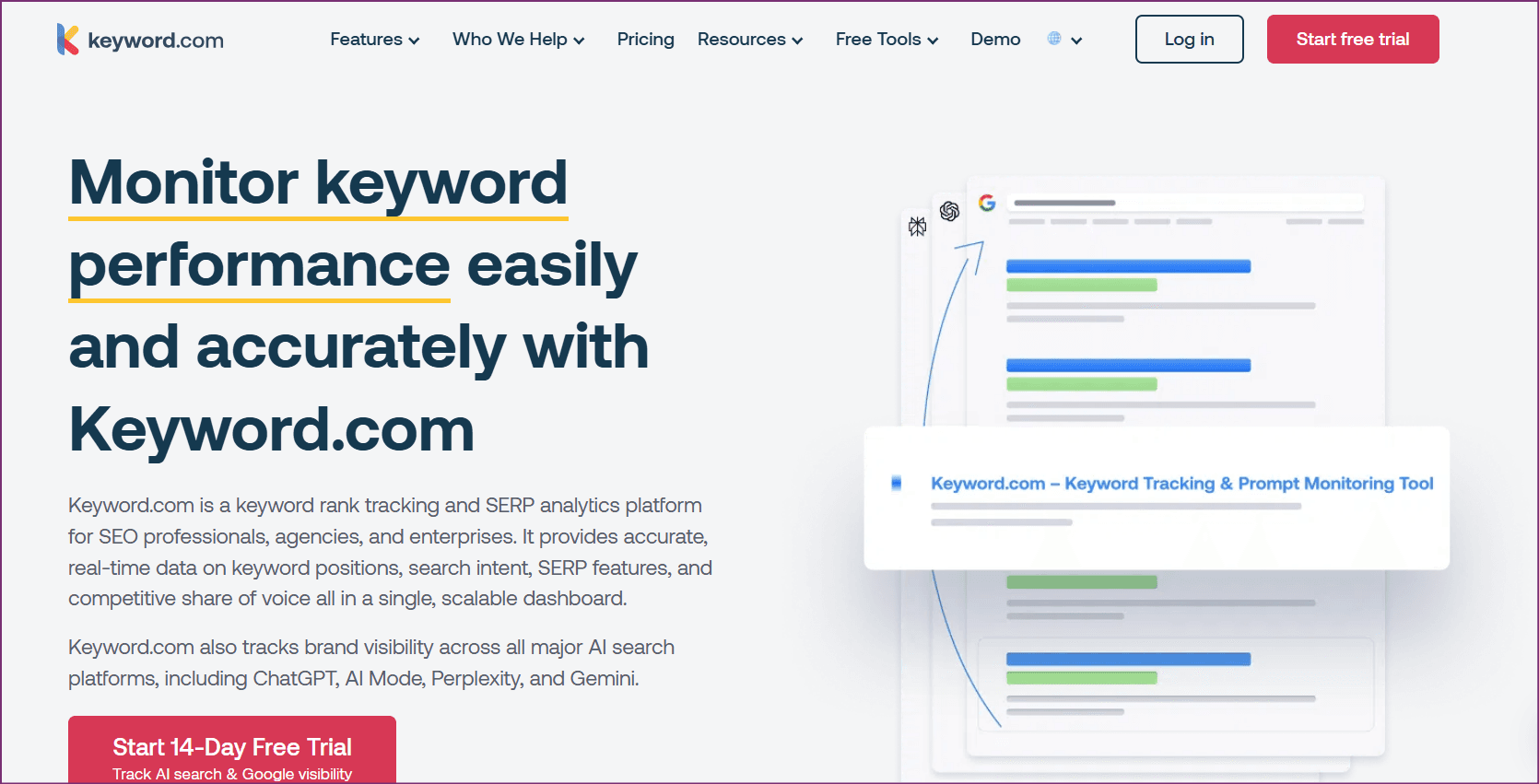
Keyword.com is a specialist rank tracker with a much lower point of entry than most agency platforms. Even the Google-focused Search Visibility product includes unlimited domains, SERP history, local and mobile tracking, reporting, integrations, API access, and an MCP server; higher packages add more keywords, faster schedules, branded reporting options, and AI visibility. Its configurable pricing deserves attention: the attractive headline number represents a small keyword package, so buyers should compare the exact number of daily or weekly checks they need rather than the starting price alone.
Where it shines
- Low entry price with keyword bundles that scale by volume and cadence
- Unlimited projects, domains, and users
- Local, mobile, Google Maps, SERP-feature, and on-demand tracking
- Live ViewKey reports, Looker Studio, API, and MCP access
Consider before buying
- •The cheapest package covers a limited keyword allowance
- •Google-focused SERP tracking rather than a full SEO suite
- •White-label domains and AI visibility may require higher plans or add-ons
Our verdict: Keyword.com is the best entry point for buyers who want a real specialist tracker without a three-figure subscription. Model your actual keyword count and cadence before choosing a bundle.
Pricing: From $4/month
Search Visibility starts at $4 monthly or $3 per month billed annually. Price and refresh frequency scale with the selected keyword package.
Semrush Position Tracking
Best for: Marketing teams already using Semrush for keyword research, competitors, backlinks, and site audits
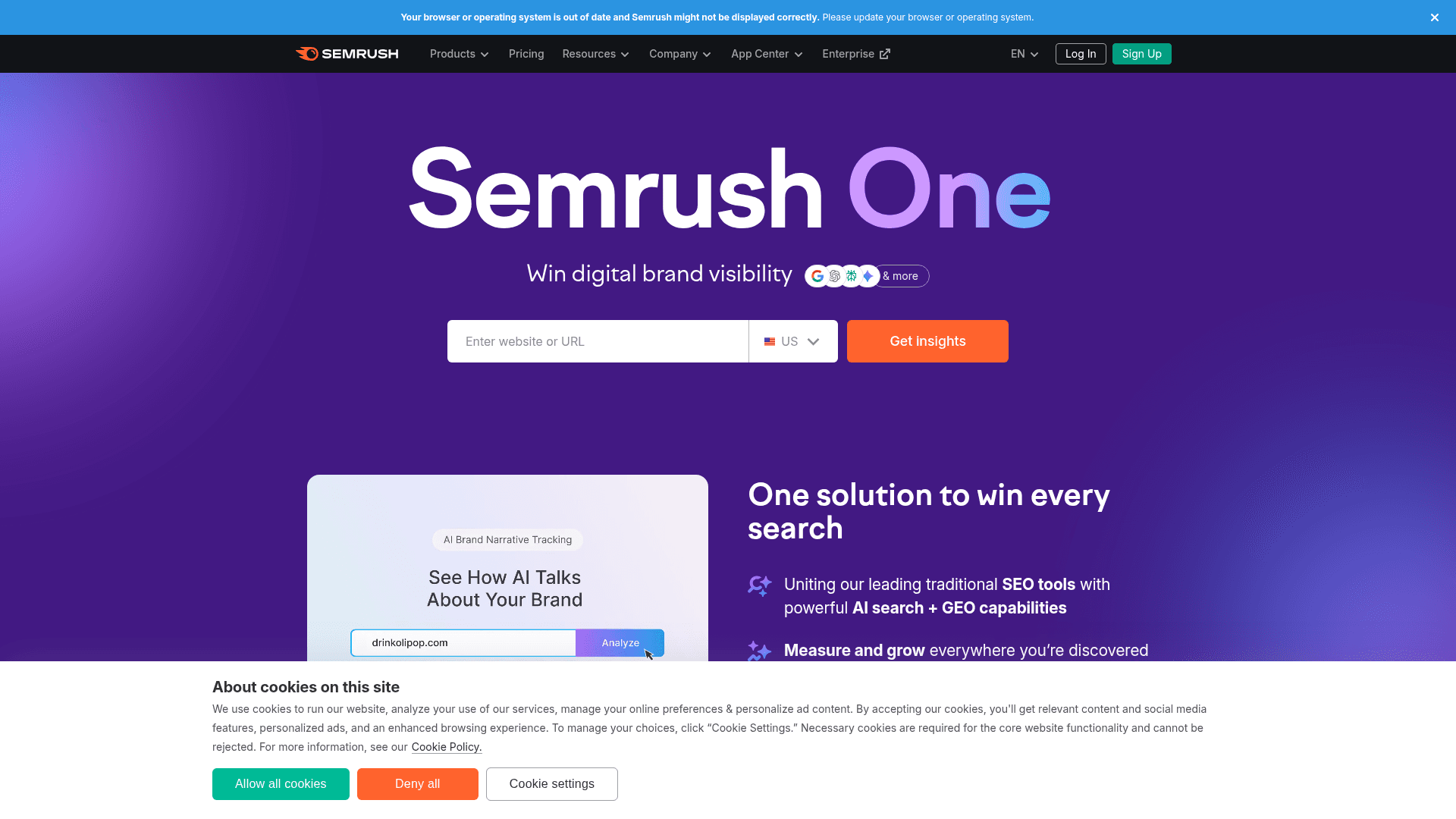
Semrush Position Tracking is compelling because ranking movements can be investigated without leaving the same ecosystem. A drop can lead directly into keyword research, competitor analysis, backlink data, a site audit, or a content workflow. Tracking supports locations down to postal-code level, desktop and mobile targets, competitors, SERP features, and visibility metrics. In 2026, Semrush also documents tracking across Google, Bing, Baidu, ChatGPT Search, and Google AI Mode, although AI prompt tracking requires an eligible AI Visibility or Semrush One subscription. As a pure rank tracker it is expensive; as one part of a used-every-day Semrush stack, it is efficient.
Where it shines
- Daily tracking connected to Semrush research and competitive data
- Postal-code targeting, device targeting, competitor discovery, and SERP features
- Cannibalization, tags, device, and location reports on higher tiers
- Tracks traditional search plus supported AI-search surfaces
Consider before buying
- •High price if Position Tracking is the only module you need
- •Pro is limited to one target per monitored website
- •AI prompt tracking requires another eligible subscription
Our verdict: Pick Semrush Position Tracking when Semrush is already your SEO command center. If you only need ranking data, a dedicated tracker will usually provide more capacity or specialization per dollar.
Pricing: From $139/month
SEO Toolkit Pro tracks 500 keywords daily across five websites. Guru increases the allowance to 1,500 and unlocks multi-targeting and advanced reports.
Nightwatch
Best for: Teams that need granular local rankings, multiple search engines, AI visibility, and unlimited seats in one package
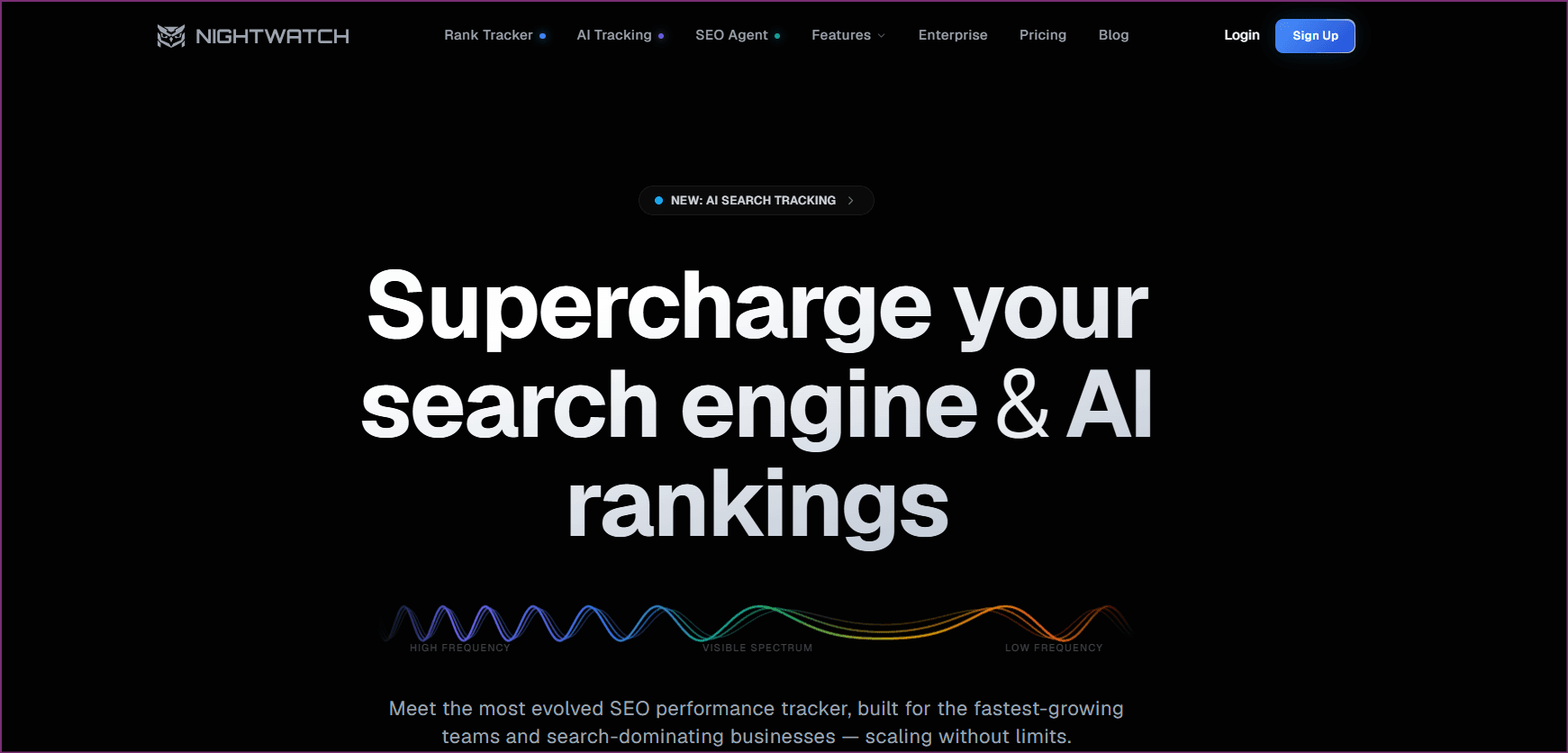
Nightwatch has evolved beyond conventional blue-link monitoring into a combined search and AI visibility platform. Every paid tier includes daily keyword tracking across Google, YouTube, Bing, Yahoo, DuckDuckGo, and Google Maps, plus monitoring for major AI answer surfaces. Its location and language controls remain the main reason to shortlist it for businesses that care about regional performance. The 2026 pricing is no longer a budget outlier, but unlimited seats and a broad included toolkit improve the economics for teams that would otherwise pay for extra users or a separate AI tracker.
Where it shines
- Daily tracking across six traditional and map-search engines
- Granular location and language targeting with on-demand checks
- AI prompt, citation, sentiment, and answer-engine visibility features
- No per-seat fees; professional tiers add API and white-label reports
Consider before buying
- •Current entry pricing is higher than older Nightwatch reviews suggest
- •Starter excludes Looker Studio, API access, and white-label reporting
- •Broader feature set can be unnecessary for simple Google-only tracking
Our verdict: Nightwatch is the best fit when traditional, local, and AI visibility need to live together. It is less attractive for a solo buyer who only wants a short daily Google rank list.
Pricing: From €79/month billed annually
Starter includes 500 daily tracked keywords, five websites, five competitors per site, and 50 AI prompts. A 14-day trial is available.
Wincher
Best for: Small teams that want dependable daily Google tracking without an enterprise-grade interface
Wincher keeps the core workflow simple: add a domain, import keywords, track daily changes, compare competitors, and send understandable reports. The entry tier is sized well for a small business or focused content team, while Standard removes website limits and adds the reporting and integration features an agency is more likely to need. Wincher is less suitable when you need multiple search engines, deep SERP forensics, or large-scale data pipelines. Its value is clarity—people who do not live in SEO software can understand the dashboard and act on meaningful gains and losses.
Wincher
Easiest to Use
Where it shines
- Daily ranking updates on every paid plan
- Simple dashboards, competitor tracking, and landing-page views
- Keyword research and on-page guidance alongside rank tracking
- Higher tiers add white-label reports, Looker Studio, and API access
Consider before buying
- •Entry plan is limited to one user and ten websites
- •Google-centric compared with multi-engine specialists
- •On-demand updates and agency integrations require a higher tier
Our verdict: Wincher is an easy recommendation for a small team that values adoption over maximum configurability. Upgrade calculations matter once you need multiple users, integrations, or agency reporting.
Pricing: From €49/month
The entry plan starts with 500 keywords and up to 10 websites. Higher tiers add on-demand updates, API access, Looker Studio, and white-label reports.
Mangools SERPWatcher
Best for: Freelancers and site owners who want approachable rank tracking bundled with keyword, SERP, backlink, and site research
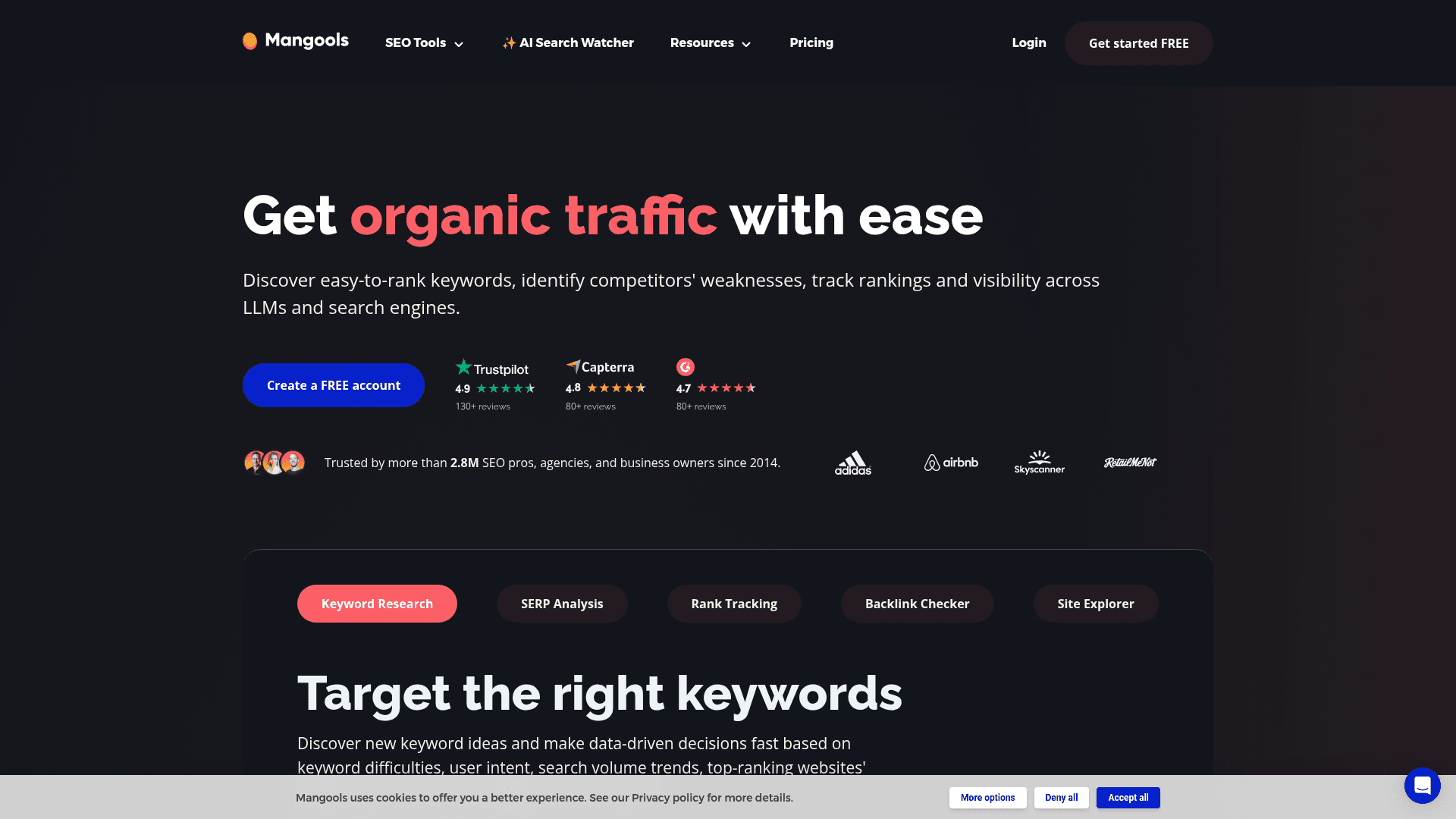
SERPWatcher is the rank-tracking component of the five-tool Mangools suite. Its interface emphasizes a readable Performance Index, estimated visits, position distribution, gainers and losers, alerts, and interactive shared reports. Buyers also get KWFinder, SERPChecker, LinkMiner, and SiteProfiler, which makes the package appealing to someone assembling a first SEO toolkit. The central limitation is cadence: current Mangools documentation says Basic and Premium update rankings weekly, while daily refreshes are reserved for the Agency plan. That is adequate for monthly reporting but a poor fit for teams diagnosing changes every morning.
Where it shines
- Friendly interface with an understandable Performance Index
- Includes four additional SEO tools in the subscription
- Desktop, mobile, local, competitor, alert, and shared-report workflows
- More than 65,000 supported locations for localized tracking
Consider before buying
- •Basic and Premium rank updates are weekly rather than daily
- •Tracking desktop and mobile consumes separate keyword allowances
- •Lower plans have modest tracking limits for growing portfolios
Our verdict: SERPWatcher is the easiest way for a beginner to add rank tracking to a broader, affordable SEO toolkit. Choose another product if daily data is non-negotiable and the Agency tier is beyond budget.
Pricing: From $49/month
Mangools Basic is commonly listed at $49 monthly or $29.90 per month billed annually and includes 200 tracked keywords. Check the live checkout for regional pricing.
How to choose a rank tracker
1. Define the decisions the data must support
Write down what happens after an alert. Content teams may need page groups and cannibalization signals. Agencies need scheduled, branded reports. Local businesses need city, ZIP, Maps, and mobile views. Enterprise teams need permissions, exports, and API stability.
2. Count every configuration
List keywords by location, device, language, engine, and competitor. Ask the vendor to confirm exactly how those combinations consume credits or keyword units. Leave at least 20% headroom for new pages and campaigns.
3. Choose the slowest acceptable cadence
Do not pay for daily updates if nobody reviews them. Do not accept weekly data if the team is responsible for launches, migrations, news, ecommerce inventory, or rapid experimentation. Confirm whether on-demand refreshes are included or metered.
4. Audit the reporting path
Recreate the report your manager or client actually receives. Check tags, annotations, date comparisons, scheduled delivery, white labeling, view-only access, exports, Looker Studio, and whether historical data survives a plan change.
5. Trial two finalists with the same set
Use branded and non-branded terms, mobile and desktop, two locations, a few SERP features, and at least one volatile query. Compare setup time, clarity, troubleshooting evidence, and reporting—not whether two tools show an identical position at one moment.
Free rank tracking vs paid software
Start with Search Console when…
You manage one small site, need actual clicks and impressions, and can work with aggregated average positions.
Search Console is also indispensable for discovering queries you never added to a tracker. Use those real impressions to decide which keyword set deserves controlled monitoring.
Pay for a tracker when…
You need fixed locations and devices, daily history, competitor positions, SERP features, alerts, or reports that other people can consume.
A paid tracker is also necessary when you must monitor terms before they generate enough impressions to appear reliably in Search Console.
Use our free SERP checker for one-off result checks and the keyword search volume checker when you are deciding which terms merit ongoing tracking.
Final verdict
Choose AccuRanker if rank tracking is a core operational system and your team will use its segmentation, on-demand refreshes, integrations, and reports. It is our top dedicated pick, but not the default for every budget.
Choose SE Ranking if you want the best overall value across rank tracking and a wider SEO workflow. Choose Keyword.com if you want a focused tracker with a very low starting point and flexible reporting. Existing Semrush customers should use Position Tracking before adding another subscription.
Nightwatch is the most interesting shortlist addition for teams combining local, multi-engine, and AI visibility. Wincher is the easiest daily tracker for a small team to adopt. Mangools SERPWatcher remains a friendly first toolkit, provided weekly updates on its lower plans match your reporting rhythm.
Frequently asked questions
Product details and published pricing were checked against vendor documentation on September 14, 2026. Plans and regional pricing can change; use the vendor links above to confirm the final configuration before purchasing.