
Email is still the highest-ROI channel in marketing — but "email marketing software" now spans everything from a simple newsletter sender to an enterprise platform orchestrating email, SMS, push, and in-app messaging across millions of users. The right choice depends far less on which tool has the most features and far more on the job you're hiring it for: sending beautiful broadcasts, driving ecommerce revenue, nurturing B2B leads into pipeline, or triggering lifecycle messaging off in-product behavior.
We evaluated the leading platforms across the metrics that actually matter: automation depth (can it react to behavior, not just send blasts?), deliverability (does mail actually land in the inbox?), data and integrations (does it plug into your store or CRM?), and total cost (including how aggressively the pricing model scales with your list).
The 10 platforms below are ranked and, more importantly, mapped to use cases. Whether you're a creator sending your first newsletter, a Shopify store scaling flows, or a B2B team wiring email into a CRM, there's a clear pick for you here.
Quick Comparison
| Platform | Best For | Starting Price | Free Plan |
|---|---|---|---|
| HubSpot Marketing Hub | All-in-One B2B | $20/mo | |
| Klaviyo | Ecommerce | $20/mo | |
| ActiveCampaign | Automation | $19/mo | |
| Brevo | Value / Email + SMS | $9/mo | |
| Mailchimp | Beginners | $13/mo | |
| Customer.io | Product-Led SaaS | $100/mo | |
| Braze | Enterprise Cross-Channel | Custom | |
| MailerLite | Creators / Simplicity | $10/mo | |
| GetResponse | Funnels & Webinars | $19/mo | |
| Omnisend | Ecommerce Value | $16/mo |
Email Marketing vs. Marketing Automation
The category label hides a real distinction. Buying the wrong side of it means either paying for automation you'll never configure or hitting a wall the moment you need behavior-driven messaging. Four factors decide which side you're actually on:
Broadcast vs. Triggered
If you mostly send newsletters and campaigns to segments, an email-first tool (MailerLite, Mailchimp, Brevo) is plenty. If messages should fire off behavior — signups, purchases, feature usage — you need an automation platform (ActiveCampaign, Customer.io, HubSpot).
Store & CRM Data
Ecommerce revenue lives on store data — Klaviyo and Omnisend are built for it. B2B pipeline lives on CRM data — HubSpot and ActiveCampaign tie email to contacts and deals. Generic senders can't segment on data they don't ingest.
Cross-Channel Needs
If email is your only channel, keep it simple. If you need to coordinate email with SMS, push, and in-app — one message, many channels — that's where Braze and Customer.io justify their price over single-channel tools.
Pricing Model
Contact-based pricing (Klaviyo, Mailchimp, ActiveCampaign) punishes large, low-engagement lists. Send-based pricing (Brevo) rewards them. The same list can cost 3x more on the wrong model — match it to how often you actually email.
Pro Tip
The most common overspend in this category is buying an enterprise automation platform before you have the behavioral data to feed it. Start with a tool that fits your list today; you can always graduate when triggered, cross-channel messaging becomes a real need.
Pricing at a Glance
Here's how all 10 platforms compare on entry-level starting price for a small list. Remember that the pricing model matters as much as the sticker price — a $9 send-based plan can be cheaper or pricier than a $20 contact-based plan depending on your list size and send frequency:
HubSpot Marketing Hub
Best for: B2B teams that want email, automation, and CRM unified in one platform with pipeline attribution
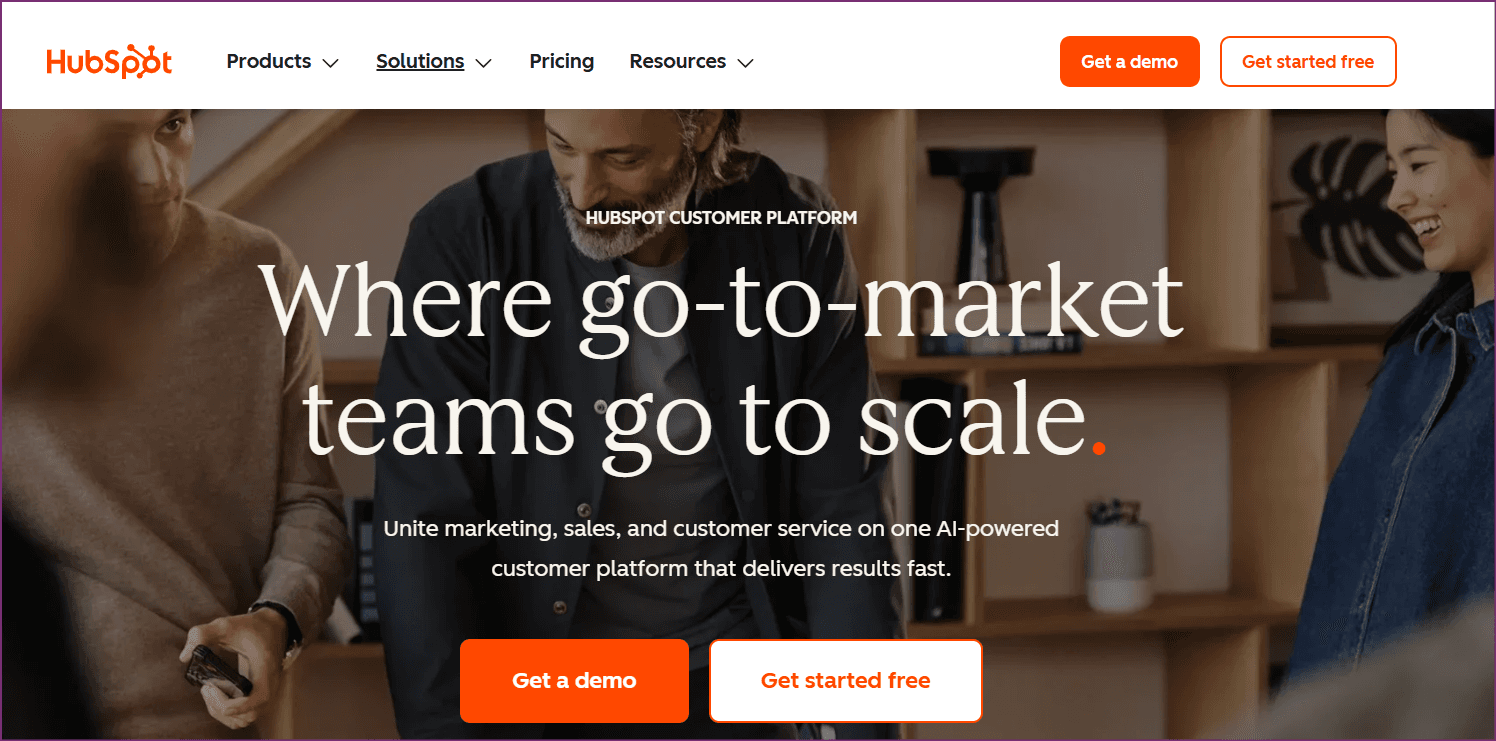
HubSpot Marketing Hub is the best overall pick because it's the only platform here where email, marketing automation, lead scoring, and the CRM are genuinely one system — not integrations bolted together. For B2B teams, that unification is the whole point: every send, open, and click is attached to a contact record the sales team already works, so marketing-to-sales handoff and closed-loop revenue attribution are native rather than a reporting project. The email tools themselves are solid rather than best-in-class, but the surrounding ecosystem — forms, landing pages, workflows, reporting — is what makes it hard to leave once you're on it.
Key Features
- Unified CRM: Every email interaction lives on the contact record — the foundation for lead scoring and sales handoff
- Visual Workflows: Branching automation for nurture sequences, lead routing, and lifecycle stages
- Smart Content: Personalize email and landing pages by lifecycle stage, list membership, or contact property
- Campaign Attribution: Tie organic and email touches through to MQLs and closed-won revenue
- AI Email Assistant: Draft subject lines and body copy grounded in your CRM and brand voice
Pricing
| Plan | Monthly | Annual (per month) |
|---|---|---|
| Marketing Starter | $20 | $15/mo |
| Professional | $890 | $800/mo |
| Enterprise | $3,600 | Custom |
Pros
- Only true email + automation + CRM in one system
- Best-in-class pipeline and revenue attribution
- Deep ecosystem of forms, landing pages, and integrations
- AI assistant is genuinely CRM-aware
Cons
- Professional tier is a steep jump from Starter
- Contact-based pricing scales aggressively
- Email design tools less flexible than Klaviyo or Mailchimp
Verdict: If you're a B2B team that wants one system for the whole funnel — and values attribution over pixel-perfect email design — HubSpot is worth the price. Just start on Starter and only upgrade to Professional when you need real automation.
Visit HubSpot Marketing HubKlaviyo
Best for: Online stores that want email and SMS driven by store data and revenue reporting
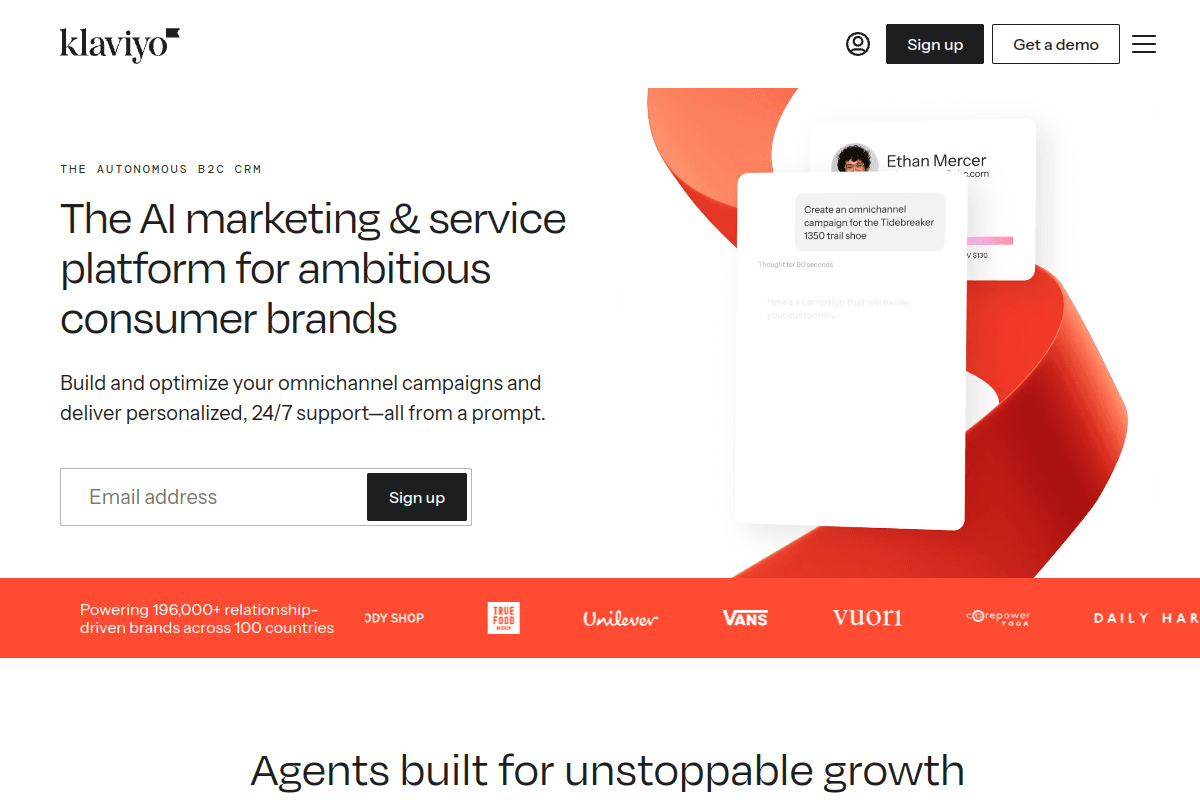
Klaviyo is the ecommerce standard, and for good reason: it's built around store data rather than treating it as an afterthought. Deep native integrations with Shopify, BigCommerce, and WooCommerce mean every order, browse, and cart event flows in automatically and becomes a segmentation and automation trigger. Where generic email tools show you opens and clicks, Klaviyo shows you revenue per recipient and predicted customer lifetime value — the metrics that actually run an ecommerce email program. It's not the cheapest, but for stores doing real revenue, it consistently pays for itself.
Key Features
- Ecommerce Integrations: Native, real-time sync with Shopify, BigCommerce, WooCommerce, and Magento
- Predictive Analytics: Predicted CLV, churn risk, and next-order date drive smarter segmentation
- Revenue Reporting: Attribute revenue per campaign, flow, and recipient — not just opens and clicks
- Pre-Built Flows: Cart abandonment, browse abandonment, and post-purchase automations out of the box
- Email + SMS: Coordinate email and SMS in the same flows and segments
Pricing
| Plan | Monthly | Annual (per month) |
|---|---|---|
| Free | $0 | $0 |
| Email (500 contacts) | $20 | $20/mo |
| Email + SMS | $35 | $35/mo |
Pros
- Best-in-class ecommerce data and segmentation
- Revenue-per-recipient reporting is uniquely actionable
- Predictive analytics genuinely improve targeting
- Deep Shopify integration is the gold standard
Cons
- Contact-based pricing climbs fast as lists grow
- Overkill for non-ecommerce use cases
- SMS billed separately on top of email
Verdict: For any store doing meaningful revenue, Klaviyo is the obvious pick — the store-data depth and revenue reporting are worth the premium. If you're a small store watching spend, look at Omnisend first.
Visit KlaviyoActiveCampaign
Best for: Businesses that want powerful behavior-driven automation and a lightweight CRM without HubSpot's price
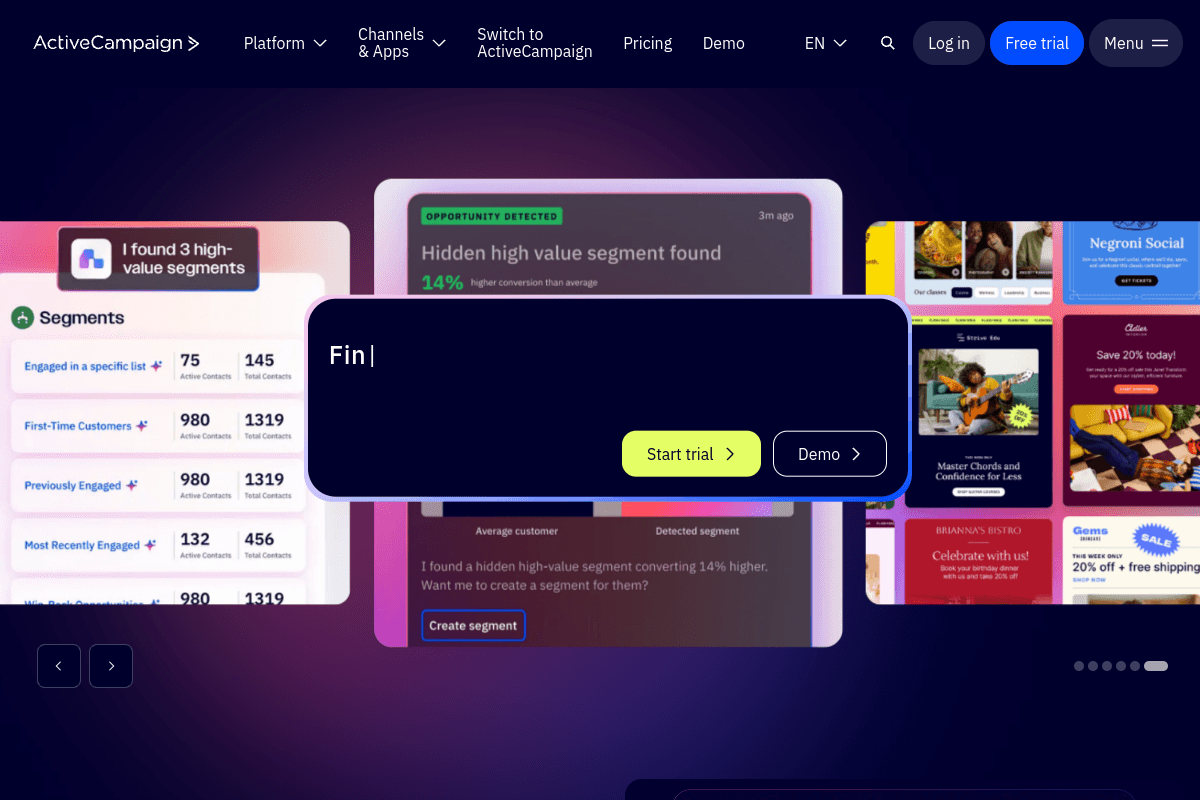
ActiveCampaign is the platform to pick when automation is the point rather than a feature. Its visual automation builder is the most capable at this price point — branching logic, conditional waits, goal tracking, and event triggers let you build genuinely sophisticated nurture journeys that would require an enterprise tool elsewhere. The built-in CRM and lead scoring make it a real contender for B2B teams that need a sales follow-up motion but aren't ready for HubSpot's Professional tier. It's the sweet spot between simple email senders and heavyweight automation platforms.
Key Features
- Visual Automation Builder: Branching, conditional logic, and goal tracking that rival enterprise platforms
- Lead Scoring: Score contacts on engagement and attributes to prioritize sales follow-up
- Built-in CRM: Lightweight sales CRM with pipelines and task automation included
- Site & Event Tracking: Trigger automations off on-site behavior and custom events
- Predictive Sending: AI picks the optimal send time per contact for higher engagement
Pricing
| Plan | Monthly | Annual (per month) |
|---|---|---|
| Starter | $19 | $15/mo |
| Plus | $49 | $49/mo |
| Pro | $79 | $79/mo |
| Enterprise | $145 | $145/mo |
Pros
- Most powerful automation at its price point
- Built-in CRM and lead scoring included
- Excellent deliverability track record
- Better value than HubSpot for automation-first teams
Cons
- Steeper learning curve than Mailchimp or MailerLite
- Email design editor feels dated
- Higher tiers needed to unlock CRM and attribution
Verdict: ActiveCampaign is the best call when behavior-driven journeys matter more than broadcasts. For most growing B2B and service businesses, it delivers 90% of HubSpot's automation at a fraction of the cost.
Visit ActiveCampaignBrevo
Best for: Businesses with large lists that email infrequently, or teams that want email and SMS in one account
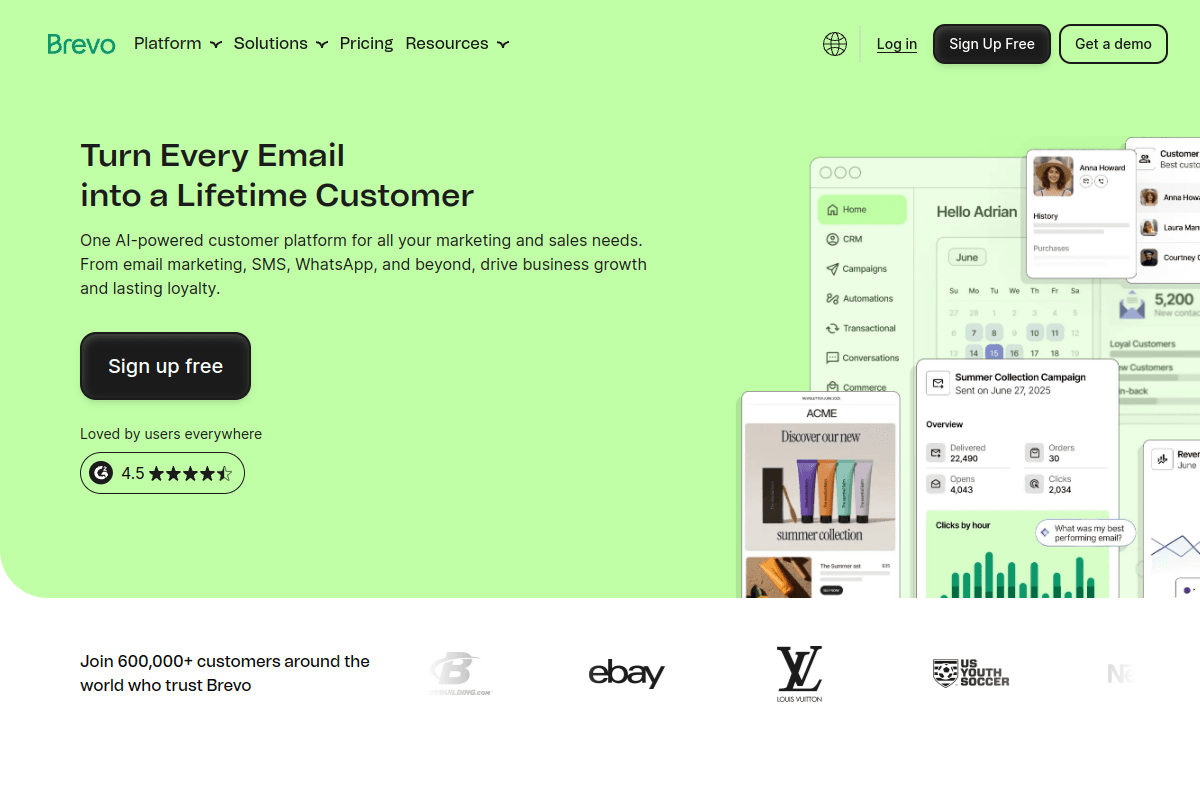
Brevo (formerly Sendinblue) is the best-value platform because of its pricing model: you pay by emails sent, not contacts stored. For a business with a large list that emails a few times a month, that inverts the economics — you can store 100,000 contacts for free and pay only for the volume you actually send, where Klaviyo or Mailchimp would charge you for every contact. On top of that, Brevo bundles transactional email, SMS, WhatsApp, and a basic CRM into one account, making it a genuinely complete communications platform at a startup-friendly price.
Key Features
- Send-Based Pricing: Pay per email sent with unlimited contact storage — ideal for big, low-frequency lists
- Email + SMS + WhatsApp: Multi-channel messaging from a single account
- Transactional Email: Reliable transactional API alongside marketing sends — no second vendor needed
- Automation Workflows: Visual builder for welcome series, abandonment, and lead nurturing
- Built-in CRM: Lightweight CRM and pipeline management included at no extra cost
Pricing
| Plan | Monthly | Annual (per month) |
|---|---|---|
| Free | $0 | $0 |
| Starter | $9 | $8/mo |
| Business | $18 | $16/mo |
Pros
- Send-based pricing rewards large, infrequent lists
- Email, SMS, and transactional in one platform
- Genuinely useful free tier (unlimited contacts)
- Lowest entry price of any full-featured platform here
Cons
- Daily send limits on free and low tiers
- Automation less sophisticated than ActiveCampaign
- Email template library is smaller than competitors
Verdict: Brevo is the smart-money pick for businesses with big lists they email occasionally, and for anyone who wants email and SMS without juggling two vendors. The pricing model alone saves real money at scale.
Visit BrevoMailchimp
Best for: Small businesses and first-time senders who want an all-in-one marketing dashboard with a familiar brand
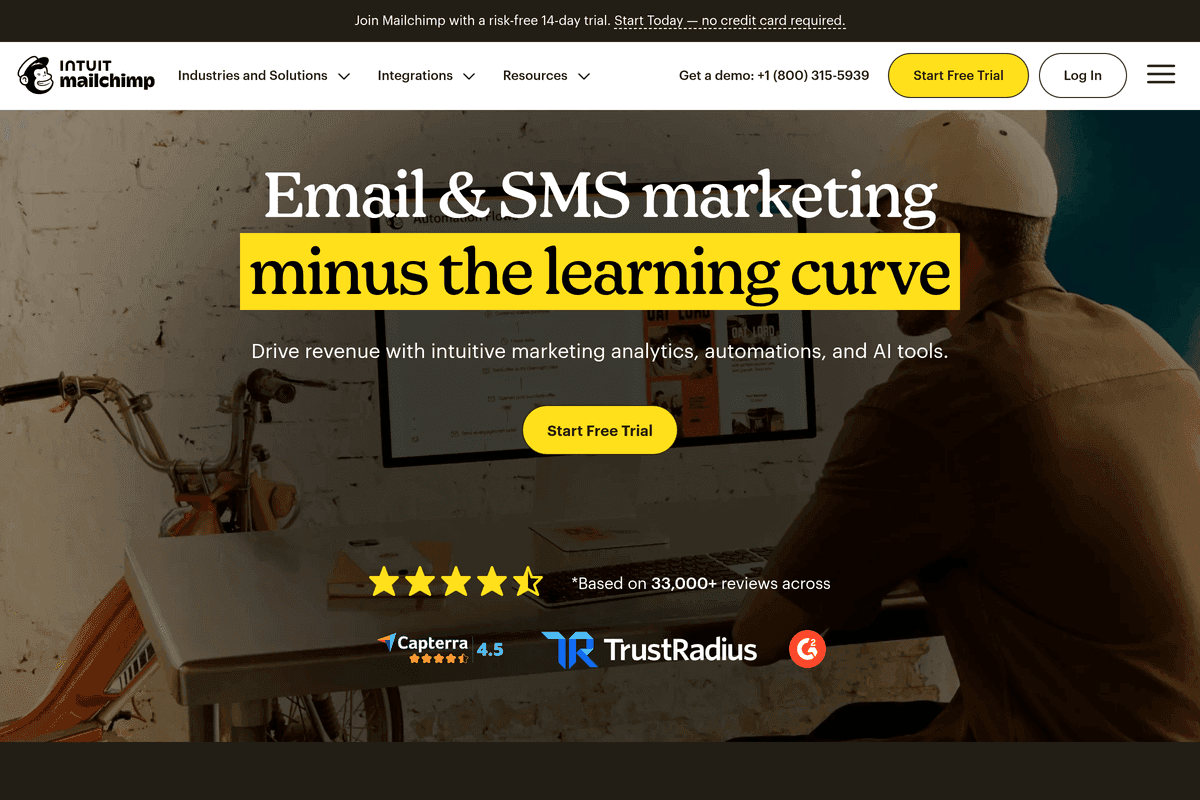
Mailchimp remains the most recognizable name in email marketing, and for beginners that familiarity translates into a genuinely gentle on-ramp. The drag-and-drop builder, template library, and all-in-one marketing dashboard (email, landing pages, social, basic automation) make it easy to get a good-looking campaign out the door on day one. Since the Intuit acquisition it has leaned into being a broader small-business marketing platform rather than a pure email tool. The tradeoff is that its automation is lighter than ActiveCampaign's and its contact-based pricing climbs steeply once your list grows.
Key Features
- Drag-and-Drop Builder: One of the most polished and beginner-friendly email editors available
- All-in-One Dashboard: Email, landing pages, social posts, and basic automation in one place
- Customer Journeys: Visual automation builder for welcome series and basic behavioral triggers
- Content Optimizer: AI-driven suggestions on subject lines, copy, and send timing
- Audience Insights: Segmentation and predictive demographics on your contact list
Pricing
| Plan | Monthly | Annual (per month) |
|---|---|---|
| Free | $0 | $0 |
| Essentials | $13 | $13/mo |
| Standard | $20 | $20/mo |
| Premium | $350 | $350/mo |
Pros
- Easiest platform to get started with
- Polished template library and email editor
- Recognizable brand your team already knows
- All-in-one marketing dashboard beyond email
Cons
- Contact-based pricing climbs steeply at scale
- Automation weaker than ActiveCampaign or HubSpot
- Free tier has grown notably more limited
Verdict: Mailchimp is still the best starting point for small businesses that value ease over automation depth. Just plan to reassess once your list crosses a few thousand contacts, where the pricing and automation limits start to bite.
Visit MailchimpCustomer.io
Best for: Product-led SaaS teams that trigger messaging off in-product behavior and event data
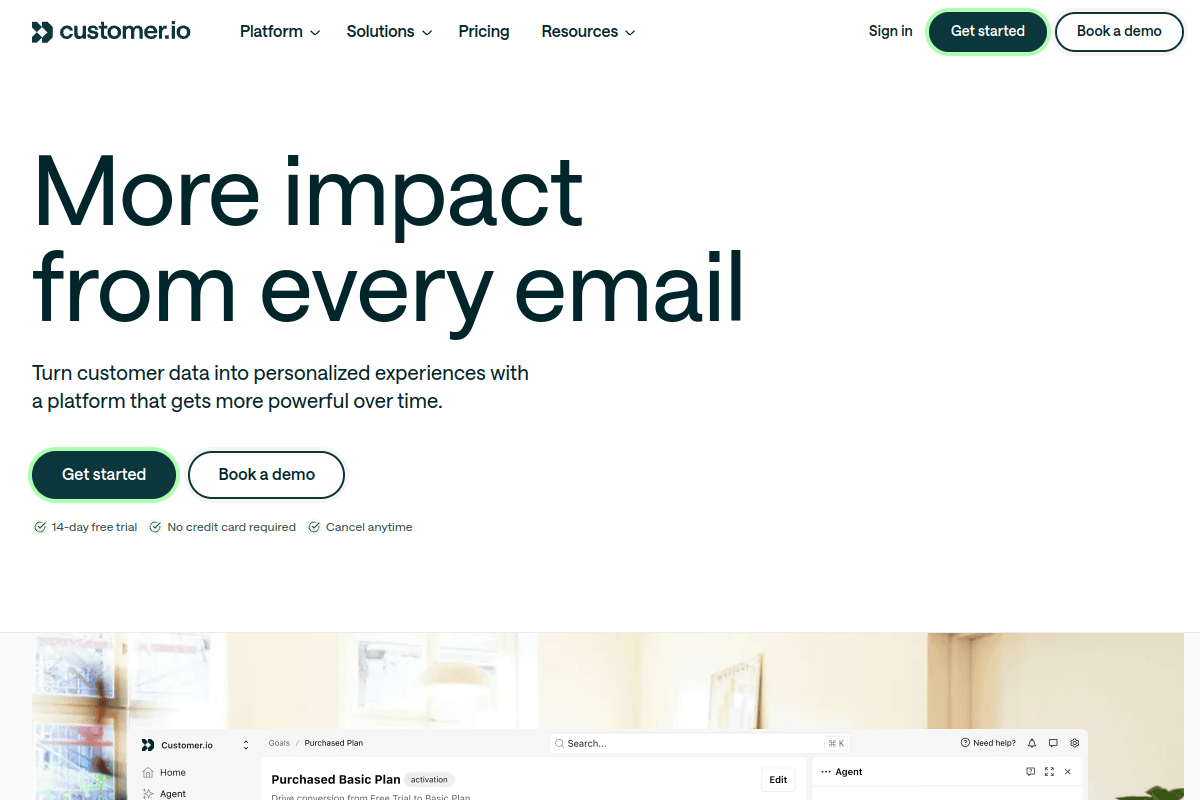
Customer.io is the platform for teams whose messaging should be driven by what users do inside a product, not what forms they fill out. Instead of list uploads and broadcasts, it ingests event streams — sign-ups, feature usage, upgrades, churn signals — and lets you build lifecycle messaging that reacts to real behavior in real time. For product-led SaaS, that's the difference between a generic drip and an onboarding sequence that adapts to whether someone actually activated. It's a developer-friendly, data-first tool that rewards teams with clean event tracking and frustrates those without it.
Key Features
- Event-Triggered Messaging: Fire messages off in-product events, not just list membership or form fills
- Data Pipelines: Ingest and route behavioral data across your stack (CDP-style capabilities)
- Cross-Channel: Email, push, in-app, SMS, and webhooks orchestrated from one journey
- Liquid Personalization: Deep, code-level personalization for teams that want full control
- Journey Builder: Visual, branching lifecycle journeys built on live event data
Pricing
| Plan | Monthly | Annual (per month) |
|---|---|---|
| Essentials | $100 | $100/mo |
| Premium | Custom | Custom |
| Enterprise | Custom | Custom |
Pros
- Best-in-class behavioral and event-triggered messaging
- Developer-friendly with deep personalization control
- True cross-channel orchestration (email, push, in-app, SMS)
- Scales with product-led growth motions
Cons
- Requires clean event tracking to deliver value
- Overkill for broadcast newsletters
- Higher entry price than list-based tools
Verdict: Customer.io is the right pick for product-led SaaS with real event data to act on. If your messaging should react to in-product behavior, nothing on this list does it better; if you just need newsletters, it's the wrong tool.
Visit Customer.ioBraze
Best for: Enterprise teams orchestrating high-volume, cross-channel messaging across email, push, and in-app
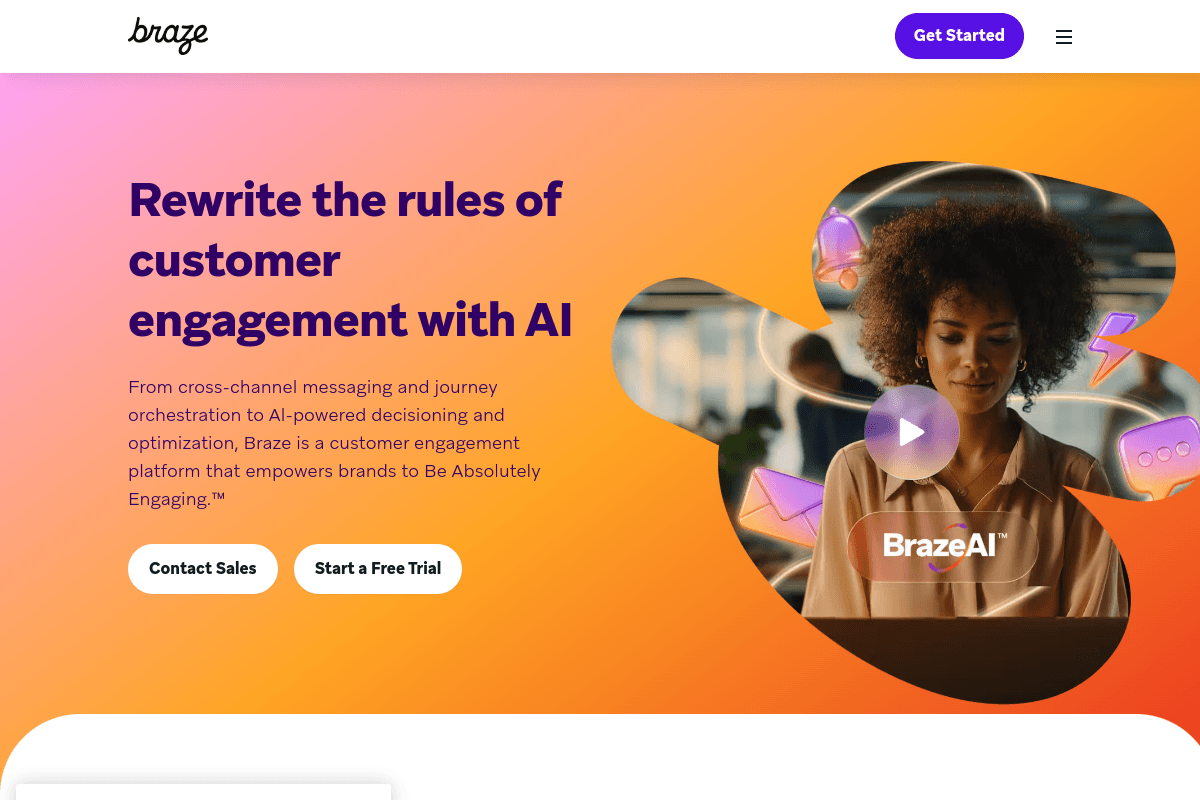
Braze is the enterprise cross-channel platform used by large consumer brands to orchestrate messaging at massive scale. Email is one channel among many — push, in-app, SMS, WhatsApp, and content cards are all first-class citizens, coordinated through a single journey canvas (Canvas Flow) that can react to real-time streaming data. Where mid-market tools automate sequences, Braze is built for sophisticated, personalized lifecycle messaging across millions of users with the deliverability, governance, and support that enterprises require. It's quote-based and priced accordingly — this is a platform you buy when messaging is a core revenue channel.
Key Features
- Canvas Flow: Enterprise journey orchestration across every channel from one canvas
- Real-Time Streaming: React to live user data and events at scale for timely messaging
- Cross-Channel Native: Email, push, in-app, SMS, WhatsApp, and content cards as equal channels
- AI Personalization: Sagexchange and AI-driven send-time and content optimization
- Enterprise Governance: Role controls, compliance tooling, and dedicated deliverability support
Pricing
| Plan | Monthly | Annual (per month) |
|---|---|---|
| Quote-Based | Custom | Custom |
| Enterprise | Custom | Custom |
Pros
- Best cross-channel orchestration at enterprise scale
- Real-time data handling for millions of users
- Deep personalization and AI optimization
- Enterprise-grade governance and support
Cons
- Quote-based pricing runs into five or six figures annually
- Significant implementation effort and technical resources
- Far more than most SMB and mid-market teams need
Verdict: Braze is the enterprise standard when messaging is a core channel across email, push, and in-app at scale. For everyone below the enterprise tier, it's more platform — and more cost — than the job requires.
Visit BrazeMailerLite
Best for: Creators, bloggers, and small lists that want simplicity, clean design, and the best free tier
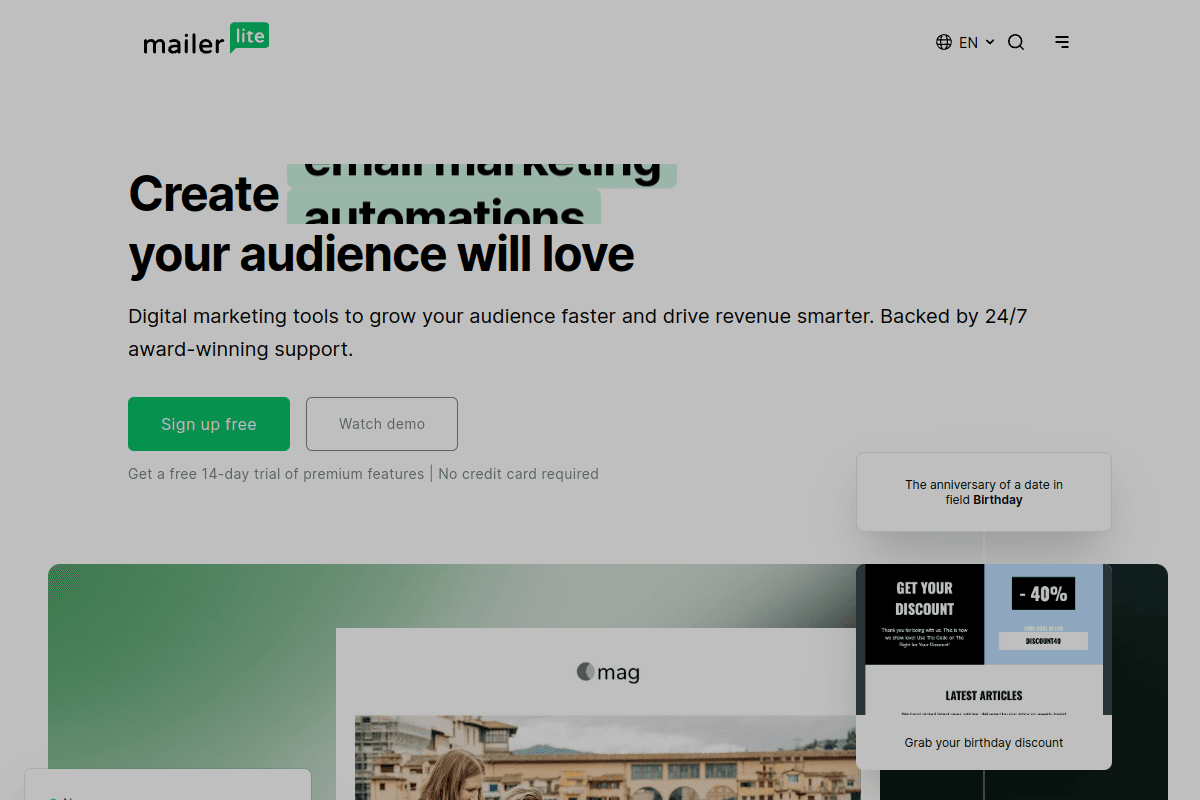
MailerLite is the platform that wins on doing less, better. Its editor is the cleanest and least cluttered on this list, its automations cover everything a creator or small business actually needs, and its free tier — up to 1,000 subscribers with automation and landing pages included — is the most generous long-term free option available. It deliberately skips the CRM sprawl and enterprise features that inflate other tools, and that focus is exactly why creators, newsletter writers, and small businesses love it. If you want to send beautiful, well-delivered emails without wading through features you'll never use, MailerLite is hard to beat.
Key Features
- Clean Drag-and-Drop Editor: The least cluttered, most intuitive email builder in this roundup
- Automation: Trigger-based welcome, nurture, and re-engagement sequences included on all plans
- Landing Pages & Sites: Build landing pages, signup forms, and simple websites in-platform
- Paid Newsletters: Charge subscribers with built-in paid newsletter and digital-product tools
- Generous Free Tier: Up to 1,000 subscribers with automation and landing pages at no cost
Pricing
| Plan | Monthly | Annual (per month) |
|---|---|---|
| Free | $0 | $0 |
| Growing Business | $10 | $9/mo |
| Advanced | $20 | $18/mo |
Pros
- Best long-term free tier for small lists
- Cleanest, most beginner-friendly editor
- Strong value on paid plans
- Built-in paid newsletters and digital products
Cons
- Automation less advanced than ActiveCampaign
- No built-in CRM for sales follow-up
- Fewer native integrations than larger platforms
Verdict: MailerLite is the best pick for creators and small lists that value simplicity and price over automation depth. For most newsletters and small businesses, it's all the email platform you'll ever need.
Visit MailerLiteGetResponse
Best for: Marketers who want email, landing pages, webinars, and conversion funnels in one platform
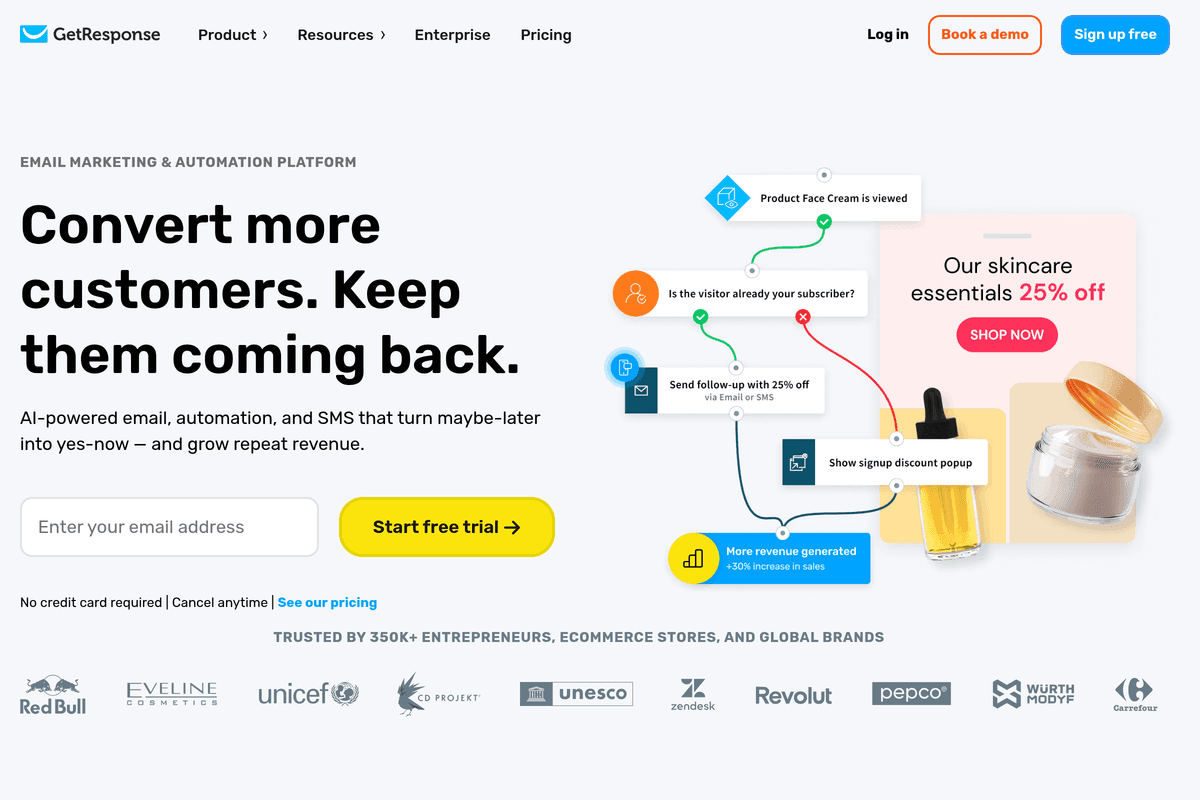
GetResponse earns its place as the most complete conversion-funnel platform on this list. Beyond email and automation, it bundles landing pages, webinars, paid ads, and pre-built conversion funnels into a single tool — so a solo marketer or small team can run an entire lead-gen-to-sale motion without stitching five products together. The webinar functionality in particular is rare among email platforms and genuinely useful for coaches, course creators, and B2B teams that sell through live sessions. It's a jack-of-all-trades that does more than most, at a price that stays reasonable.
Key Features
- Conversion Funnels: Pre-built funnels connecting landing pages, emails, and sales in one flow
- Built-in Webinars: Host webinars natively — rare among email platforms and great for lead gen
- Automation Builder: Visual, condition-based automation for nurture and abandonment sequences
- Landing Pages & Ads: Build landing pages and run paid social ads without leaving the platform
- AI Email Generator: Generate campaigns and subject lines with built-in AI tools
Pricing
| Plan | Monthly | Annual (per month) |
|---|---|---|
| Email Marketing | $19 | $16/mo |
| Marketing Automation | $59 | $48/mo |
| Ecommerce Marketing | $119 | $97/mo |
Pros
- Most all-in-one funnel toolkit here (email + pages + webinars)
- Native webinars are a genuine differentiator
- Reasonable pricing for the feature breadth
- Good fit for course creators and coaches
Cons
- Jack-of-all-trades — few features are best-in-class
- Automation locked to higher tier
- Interface can feel busy with so many tools
Verdict: GetResponse is the pick when you want one platform to run funnels, webinars, and email together. For course creators and solo marketers selling through live sessions, the bundled toolkit is excellent value.
Visit GetResponseOmnisend
Best for: Small and mid-size stores that want email and SMS with ecommerce automations at a lower price than Klaviyo
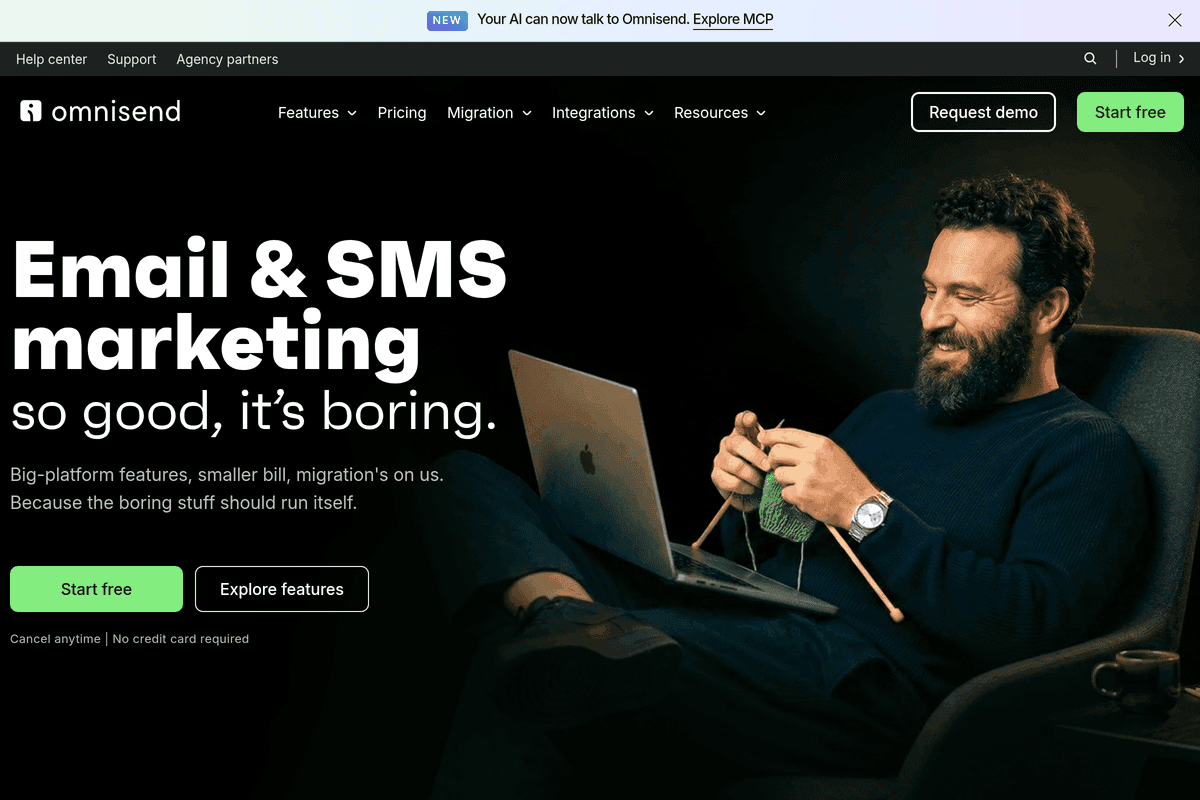
Omnisend is the value alternative to Klaviyo for ecommerce, delivering the automations that actually drive store revenue — cart abandonment, browse abandonment, order and shipping follow-ups — with email and SMS bundled together at a friendlier entry price. It integrates cleanly with Shopify, BigCommerce, and WooCommerce, and its pre-built ecommerce workflows mean a small store can turn on revenue-generating automations in an afternoon. It doesn't match Klaviyo's predictive analytics or data depth, but for smaller stores where 80% of the value comes from a handful of proven flows, Omnisend captures it for meaningfully less.
Key Features
- Ecommerce Automations: Pre-built cart, browse, and post-purchase flows ready out of the box
- Email + SMS Bundled: Both channels included together rather than billed separately
- Store Integrations: One-click connect to Shopify, BigCommerce, WooCommerce, and Wix
- Product Picker: Drop live products with pricing and images straight into emails
- Segmentation: Behavior- and purchase-based segments for targeted campaigns
Pricing
| Plan | Monthly | Annual (per month) |
|---|---|---|
| Free | $0 | $0 |
| Standard | $16 | $16/mo |
| Pro | $59 | $59/mo |
Pros
- Email and SMS bundled at a lower price than Klaviyo
- Pre-built ecommerce flows are fast to launch
- Clean store integrations and product picker
- Generous free tier for small stores
Cons
- Less predictive analytics depth than Klaviyo
- Best suited to ecommerce specifically
- Reporting less granular than the premium options
Verdict: Omnisend is the smart pick for small and mid-size stores that want Klaviyo-style automations without the Klaviyo bill. It captures most of the revenue upside of the category leader for a fraction of the cost.
Visit OmnisendBest Platform by Use Case
Rather than crown a single winner, the honest answer is that the best platform depends entirely on what you're building. Here's the fastest way to map your situation to a pick:
Small business & creators should start with MailerLite or Mailchimp for simplicity, or Brevo for large infrequent lists. Ecommerce should default to Klaviyo, or Omnisend for better value. B2B & automation teams want HubSpot or ActiveCampaign. Enterprise and product-led teams orchestrating cross-channel messaging at scale need Braze or Customer.io.
How to Choose Your Platform
Beyond use case, the right pick usually comes down to your single biggest constraint. Here's the decision framework:
If you're just getting started or run a small list...
Choose MailerLite for the cleanest editor and best free tier, or Mailchimp if you want a familiar all-in-one dashboard.
If you run an online store...
Choose Klaviyo for best-in-class store data and revenue reporting, or Omnisend for most of the value at a lower price.
If automation and lead nurturing are the point...
Choose ActiveCampaign for the most powerful automation at its price, or HubSpot if you want email, automation, and CRM unified.
If you have a large list you email infrequently...
Choose Brevo. Its send-based pricing and unlimited contacts make it dramatically cheaper than contact-based tools at scale.
If your messaging should react to in-product behavior...
Choose Customer.io. For product-led SaaS with clean event data, nothing here does behavioral messaging better.
If you're orchestrating messaging at enterprise scale...
Choose Braze. When email, push, and in-app must coordinate across millions of users, it's the enterprise standard.
Pro Tip
Whichever platform you pick, prioritize deliverability from day one: authenticate your domain (SPF, DKIM, DMARC), warm up new sending domains gradually, and prune non-openers regularly. The best automation in the world is worthless if your mail lands in spam.
Frequently Asked Questions
Final Thoughts
There's no single best email marketing platform — there's a best platform for your list size, your data, and the job you need it to do. The teams that get the most out of email are the ones that match the tool to the motion: simple senders for newsletters, store-native tools for ecommerce, automation platforms for behavior-driven nurture, and enterprise platforms only when cross-channel scale genuinely demands it.
For most teams, we'd start with ActiveCampaign if automation matters, Klaviyo if you're in ecommerce, and MailerLite or Brevo if you want the best value for a growing list. Upgrade to HubSpot, Customer.io, or Braze only when unified CRM, product-triggered messaging, or enterprise cross-channel orchestration becomes the binding constraint.
Related Free SEO Tools
Meta Tags Generator
Optimize landing page previews that convert email clicks
Content Brief Generator
Plan content that feeds your email nurture programs
Blog Ideas Generator
Generate newsletter and content topics at scale
Keyword Search Volume
Find topics your audience is actively searching for
SEO Content Grader
Score landing pages linked from your campaigns
Content Outline Generator
Structure long-form content for lead magnets
Related Articles
Best AI GTM Tools
The full go-to-market stack beyond email
Best ABM Platforms
Account-based marketing for B2B revenue teams
Best AI Sales Tools
Tools that turn email engagement into pipeline
Best AI SEO Tools for SaaS
Fill the top of the funnel that feeds your list
Browse All Articles
Explore our complete library of guides and reviews
About the Author

Co-Founder & SEO Execution
Co-founder of PikaSEO. 11 years in corporate tech, then bootstrapped entrepreneur. Leads SEO execution and content-led growth for SaaS companies.