
Spend management became the consolidation battleground of the finance stack. Card platforms added accounts payable; AP vendors added cards; procurement suites added both; and a new species — intake orchestration — appeared on top of all of them. The prize is the same from every direction: one approval engine, one audit trail, and one sync to the general ledger for every dollar of non-payroll spend, replacing the three-to-five point tools most finance teams still stitch together.
The convergence makes buying harder, not easier: every vendor now claims the whole category, but each is still strongest at the job it started with. So this guide ranks the 10 spend management platforms we'd actually shortlist in 2026 by the job each one wins — all-in-one consolidation, free card-first control, invoice and payables automation, or procurement discipline — with honest pricing across a range that runs from interchange-funded free to six-figure enterprise programs.
We evaluated each platform on four criteria: spend coverage (how much of the intake-to-payment lifecycle it genuinely owns versus bolts on), control point (whether policy acts before commitment, at swipe, or after the invoice arrives — earlier is better), payment and global rails (currencies, countries, tax compliance, and supplier onboarding), and close impact (ERP sync depth and the reconciliation work that actually disappears).
Quick Comparison: The Best Spend Management Platforms at a Glance
| Platform | Best For | Pricing | Core Strength | Company Size |
|---|---|---|---|---|
| Airbase | Best Overall | Quote-based | All spend, one approval engine | Mid-market |
| Coupa | Enterprise BSM | Six figures/yr typical | Source-to-pay + benchmarking | Enterprise |
| Tipalti | AP & Global Payables | From ~$99/mo + transactions | Global payouts + tax compliance | SMB → mid-market |
| BILL Spend & Expense | Free for SMBs | $0 (interchange) | Budget-first cards | SMB |
| Payhawk | Multi-Entity Global | From ~€299/mo | Entities, currencies, local cards | Mid-market groups |
| Zip | Procurement Intake | Quote-based | One front door + orchestration | Mid-market → enterprise |
| Stampli | AI Invoice Processing | Quote-based | AP on your existing ERP | SMB → enterprise |
| Procurify | Mid-Market P2P | Quote (~$1k+/mo typical) | Budget-aware POs | Mid-market |
| Pleo | European SMBs | Free; paid from ~€39/mo | Smart cards + local depth | SMB (Europe) |
| Mesh Payments | Virtual Card Controls | $0 core | Per-vendor card isolation | SMB → mid-market |
How We Evaluated the Best Spend Management Platforms
Every vendor demos dashboards and claims AI. We weighted the dimensions that separate platforms once real invoices, cards, and purchase requests flow through them:
Spend Coverage, Honestly Scored
Every platform claims intake-to-payment. We scored what each genuinely owns versus bolts on — card controls, invoice processing, PO matching, procurement intake — because the bolted-on modules are where implementations disappoint.
Control Point
The earlier policy acts, the more it saves: pre-commitment intake (Zip, Airbase) beats at-swipe budgets (BILL, Pleo, Mesh) beats post-invoice review. We ranked each platform by where its controls actually engage.
Payment & Global Rails
Paying a US vendor by ACH is solved; paying 400 international suppliers with tax forms, sanctions screening, and local rails is not. We weighted countries, currencies, supplier onboarding, and compliance-inside-payments.
Close Impact
The ROI shows up at month-end: ERP sync depth (NetSuite as the mid-market bar), touchless invoice rates, amortization handling, and audit trails that survive SOX testing without manual evidence-gathering.
Pro Tip
Ask every AP vendor one number: their touchless invoice rate for customers your size in your industry — the percentage of invoices processed with zero human touches. It's the single most predictive metric in the category, and vendors who quote AI features instead of that number are telling you something.
Pricing at a Glance
The category spans the widest price range in B2B finance software: BILL Spend & Expense and Mesh Payments are free (interchange-funded), Pleo and Tipalti start at SMB-friendly monthly fees, the mid-market platforms price by quote, and Coupa deals are commonly six figures. The meters differ too — per entity, per invoice, per module — so evaluate AP tools on cost per invoice processed and card platforms on whether your spend actually moves to their cards:
The Best Spend Management Software, by Category
“Spend management” hides four different products. Before reading reviews, find the quadrant where your money actually leaks — it narrows ten platforms to a shortlist of two or three:
All-in-one platforms (Airbase, Payhawk) win when you'd otherwise buy two or more point tools within a year — one approval engine beats three integrated ones. Card-first SMB tools (BILL Spend & Expense, Pleo, Mesh Payments) win when card spend is the wild west and free software makes the decision easy. AP and payables engines (Tipalti, Stampli) win when invoices are the bottleneck — the fastest, most measurable payback in the category. Procurement and BSM platforms (Coupa, Zip, Procurify) win when commitments happen before finance sees them and approval needs to move to the front of the process. Mature companies often run one platform from the first or second quadrant plus one from the third or fourth.
Airbase
Best for: Mid-market companies (roughly 100-2,000 employees) that want procurement, AP, cards, and expenses consolidated on one approval engine with serious ERP automation
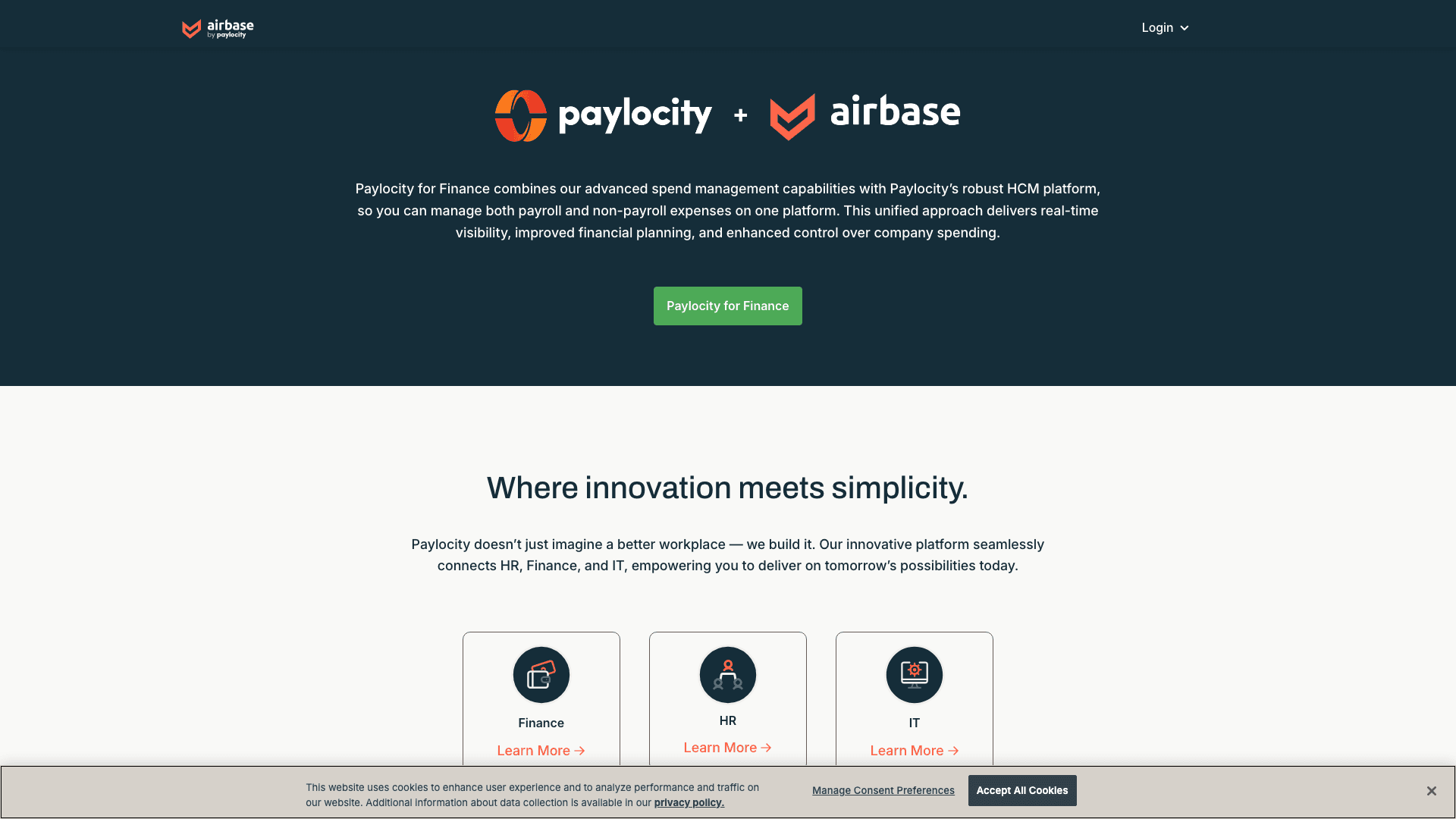
Airbase, now a Paylocity company, is the most complete answer to the question spend management actually asks: how does every dollar of non-payroll spend get approved once, recorded correctly, and closed quickly? Guided procurement gives employees one intake path — describe the purchase in plain language and the platform routes budget, legal, and security approvals before a commitment exists. AP automation handles invoices with PO matching and multi-subsidiary awareness; corporate cards (physical and virtual) carry pre-approved spend with receipts auto-matched; and employee reimbursements ride the same policy engine. The accounting layer is the moat — NetSuite and Sage Intacct sync with amortization schedules, auto-categorization, and audit trails that controllers describe as close-changing. The trades: quote-based pricing with a genuine implementation project, and if your only problem is receipts, it's more platform than you need.
Key Features
- One Approval Engine for All Spend: Procurement requests, invoices, cards, and reimbursements share routing, policy, and audit trail
- Guided Procurement Intake: Plain-language requests route budget, legal, and security approvals before commitment
- AP with PO Matching: Invoice capture, 2/3-way matching, and multi-subsidiary bill pay
- Deep ERP Automation: NetSuite/Sage Intacct sync with amortization schedules and auto-categorization
- Pre-Approved Corporate Cards: Physical and virtual cards tied to budgets, vendors, and policies
Pricing
| Plan | Monthly | Annual (per month) |
|---|---|---|
| Standard | Quote-based | Quote-based |
| Premium | Quote-based | Quote-based |
| Enterprise | Custom | Custom |
Pros
- Closest thing to one system for all non-payroll spend
- Best-in-class NetSuite automation in the mid-market
- Approvals move before spend, not after
- Paylocity ownership deepens the HR-data connection
Cons
- Quote-based pricing and real implementation lift
- Heavier than SMB card-first tools for simple needs
- US-centered; multi-entity international depth trails Payhawk
Related reading: Best Expense Management Tools
Verdict: Airbase is the best spend management platform for mid-market consolidation. When the goal is every dollar approved once and closed fast, it's the strongest single system in the category.
Visit AirbaseCoupa
Best for: Large enterprises that need sourcing, procurement, invoicing, expenses, and supplier risk unified into one governed business spend management program
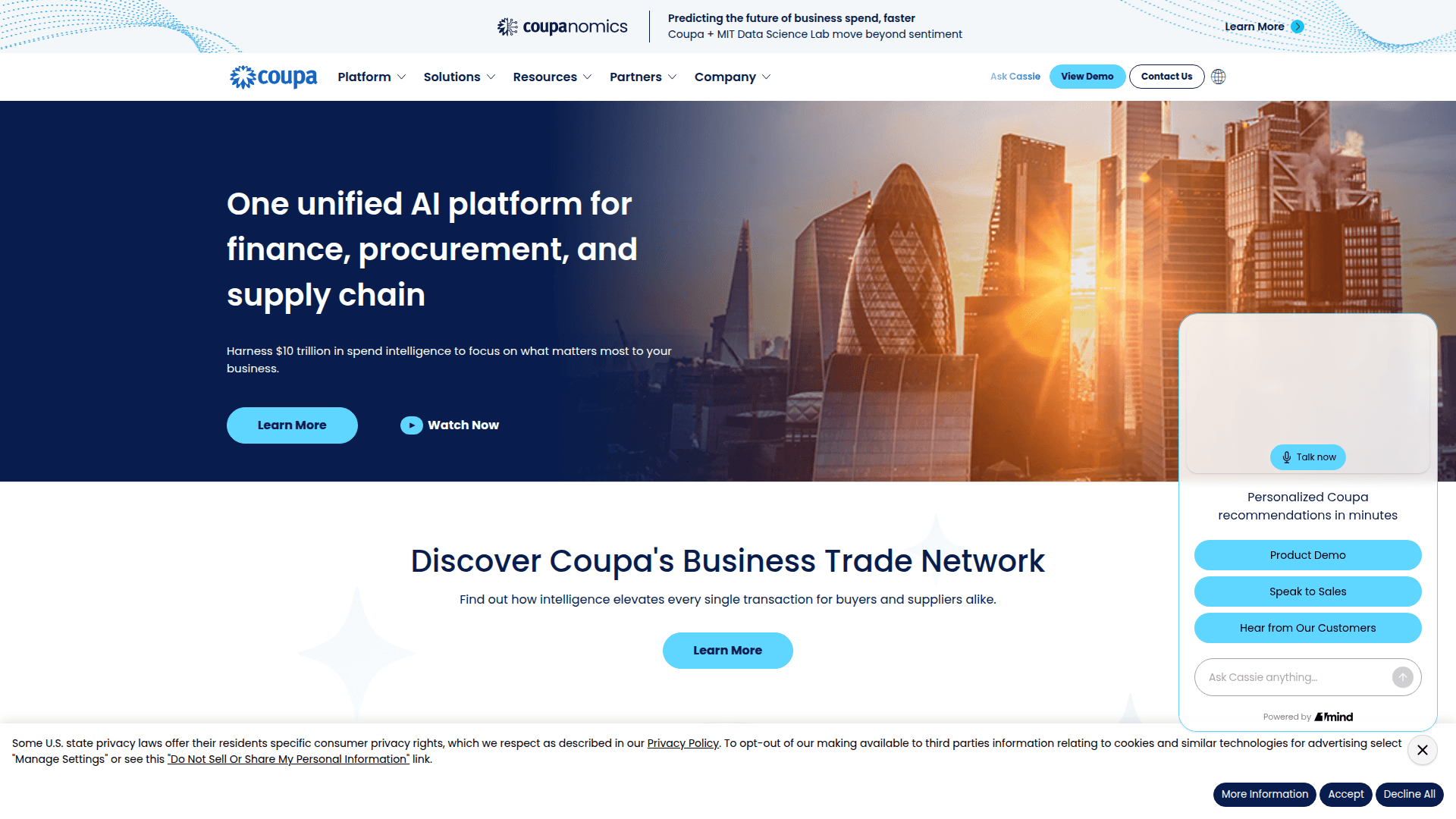
Coupa defined the category it leads — Business Spend Management — and at enterprise scale it remains the reference platform. The suite spans strategic sourcing (RFPs, auctions, contract lifecycle), procure-to-pay (requisitions, POs, receiving, invoicing), expense management, payments, and supplier management with risk scoring. The differentiator no challenger matches is community intelligence: Coupa benchmarks your prices, payment terms, and process KPIs against anonymized data drawn from trillions of dollars in cumulative transaction spend flowing through the platform, and its AI layer turns that into prescriptive recommendations — which suppliers to consolidate, which terms to renegotiate, where fraud risk concentrates. The costs are equally enterprise-grade: six-figure annual commitments are normal, implementations run months with partner involvement, and the platform assumes a procurement function exists to wield it. Below roughly 1,000 employees, the mid-market tools on this list deliver faster payback.
Key Features
- Full Source-to-Pay Suite: Sourcing, contracts, procurement, invoicing, expenses, and payments in one platform
- Community Benchmarking AI: Prices, terms, and KPIs benchmarked against trillions in anonymized community spend
- Supplier Risk & Performance: Onboarding, risk scoring, and monitoring across the supplier base
- Enterprise Controls: Delegation-of-authority matrices, SoD, and SOX-ready audit trails
- Deep ERP Ecosystem: Mature SAP, Oracle, and NetSuite integrations with a large partner network
Pricing
| Plan | Monthly | Annual (per month) |
|---|---|---|
| Platform (modular) | Quote-based | Typically six figures/yr |
| Implementation | — | Partner-led, quarter-plus |
Pros
- The enterprise BSM standard with the broadest suite
- Community data turns benchmarking into a real advantage
- Supplier risk and sourcing depth challengers lack
- Governance architecture built for audit and SOX
Cons
- Six-figure costs and long implementations
- Requires procurement maturity to exploit
- Heavy for companies that just need AP or cards fixed
Verdict: Coupa is the enterprise pick. When spend management means a governed program across sourcing, procurement, and payables — not a tool — it's the benchmark everything else is measured against.
Visit CoupaTipalti
Best for: Companies paying many suppliers — especially internationally — that want invoice-to-payment automation with tax compliance built in
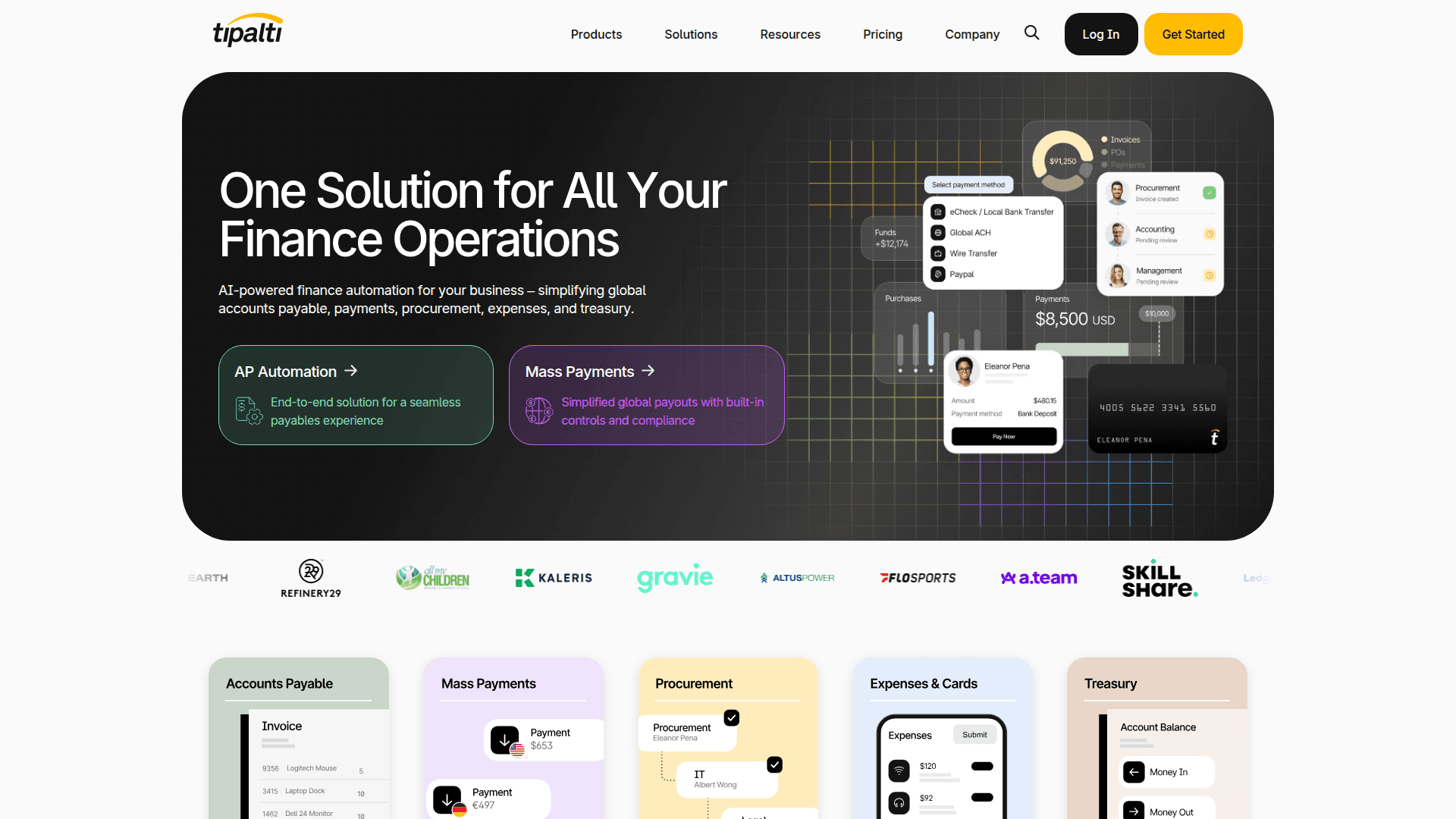
Tipalti owns the hardest slice of spend management: actually paying people, everywhere, correctly. The platform automates the full payables cycle — supplier self-onboarding through a white-labeled portal (with W-9/W-8 tax form collection and validation), invoice capture with AI coding, 2- and 3-way PO matching, approval routing, and payment execution to 190+ countries in 120 currencies across methods from ACH and wires to PayPal and local rails. Tax compliance is the quiet killer feature: 1099 and 1042-S preparation, withholding calculations, and screening happen inside the payment flow rather than as a year-end scramble. Fraud controls validate bank-account changes and screen against sanctions lists continuously. Multi-entity support and NetSuite/ERP sync round out the mid-market fit, with cards and expenses available as extensions. The trades: pricing stacks platform fees (from roughly $99/month) with per-transaction costs, and it's payables-first — procurement intake and card controls are add-ons, not the core.
Key Features
- Global Payment Execution: 190+ countries, 120 currencies, and 50+ payment methods from one payables run
- Supplier Self-Onboarding: White-labeled portal collects banking details and W-9/W-8 tax forms with validation
- AI Invoice Processing: Capture, GL coding, and 2/3-way PO matching with touchless approval routing
- Built-In Tax Compliance: 1099/1042-S preparation and withholding handled inside the payment flow
- Payment Fraud Controls: Bank-change validation and continuous sanctions screening
Pricing
| Plan | Monthly | Annual (per month) |
|---|---|---|
| Starter platform fee | From ~$99 | From ~$99/mo + transaction fees |
| Advanced modules | Quote-based | Quote-based |
| Enterprise | Custom | Custom |
Pros
- Best global payout rails in the category
- Tax compliance built into payables, not bolted on
- Supplier portal removes onboarding busywork
- Strong multi-entity and NetSuite support
Cons
- Platform + transaction pricing needs modeling at your volume
- Payables-first — cards and procurement are extensions
- Overkill for domestic-only, low-volume AP
Verdict: Tipalti is the AP and global payables pick. If you pay hundreds of suppliers across borders, its compliance-inside-payments design removes risk no domestic AP tool addresses.
Visit TipaltiBILL Spend & Expense
Best for: Small and mid-size businesses that want budget-first spend control and corporate cards at zero software cost
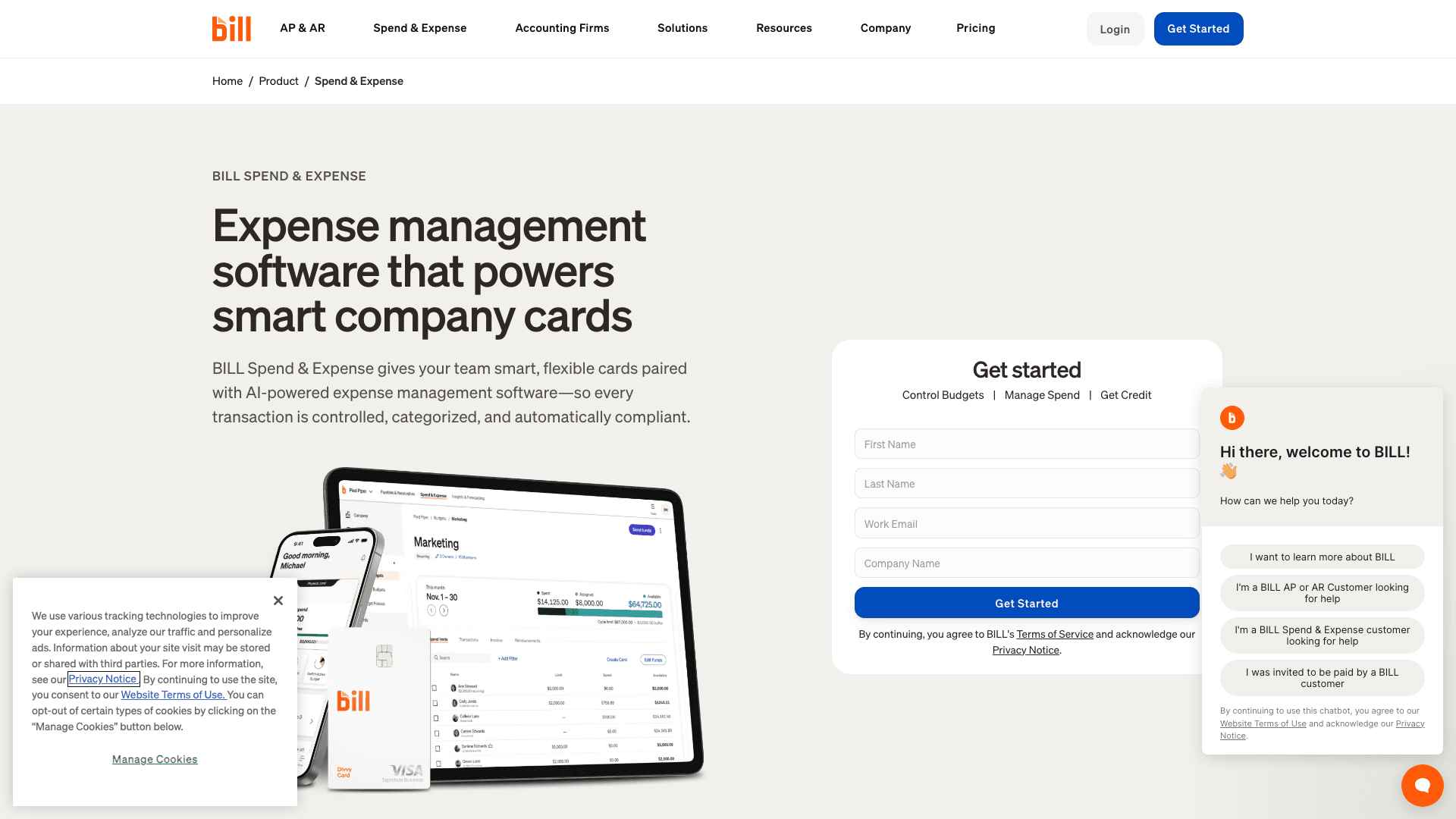
BILL Spend & Expense (formerly Divvy) is where SMB spend management starts, because the price removes the excuse: budgets, physical and virtual cards, receipt capture, approval flows, and accounting sync, entirely free, funded by interchange when your team spends on its cards. The budget-first architecture is the real product — funds are allocated to budgets before anyone spends, cards draw from those budgets, and overspend becomes structurally impossible rather than a month-end discovery. Virtual cards per vendor and per subscription kill the shared-card-number problem, and real-time dashboards replace statement archaeology. It connects into the broader BILL platform when payables automation becomes the next problem, making the growth path clean. The trades: it's a charge-card program with underwriting (not every business qualifies or wants one), reimbursements are secondary to card spend, and procurement intake, PO matching, and multi-entity depth belong to the platforms above it on this list.
Key Features
- Free Software: Budgets, cards, capture, approvals, and sync — interchange-funded, no seat fees
- Budget-First Controls: Cards draw from pre-allocated budgets, making overspend structurally impossible
- Virtual Cards Per Vendor: Unique numbers and limits for every vendor and subscription
- Real-Time Visibility: Live dashboards by budget, team, and merchant
- BILL Platform Path: Clean upgrade into BILL AP/AR when payables automation is next
Pricing
| Plan | Monthly | Annual (per month) |
|---|---|---|
| Spend & Expense | $0 | $0 (interchange-funded) |
| BILL AP/AR (optional) | From ~$45/user | From ~$45/user/mo |
Pros
- Free at any team size — hard to argue with
- Budget model prevents spend problems instead of reporting them
- Virtual card hygiene for subscriptions and vendors
- Natural growth path into BILL payables
Cons
- Requires adopting its charge card (underwriting applies)
- No procurement intake or PO matching
- Reimbursements and international depth are secondary
Related reading: Best Corporate Cards for Startups
Verdict: BILL Spend & Expense is the free SMB pick. For card-centric spend control it competes with paid platforms, and the price makes it the default first step into the category.
Visit BILL Spend & ExpensePayhawk
Best for: International companies running multiple entities that want one spend system with locally issued cards, local compliance, and consolidated group visibility
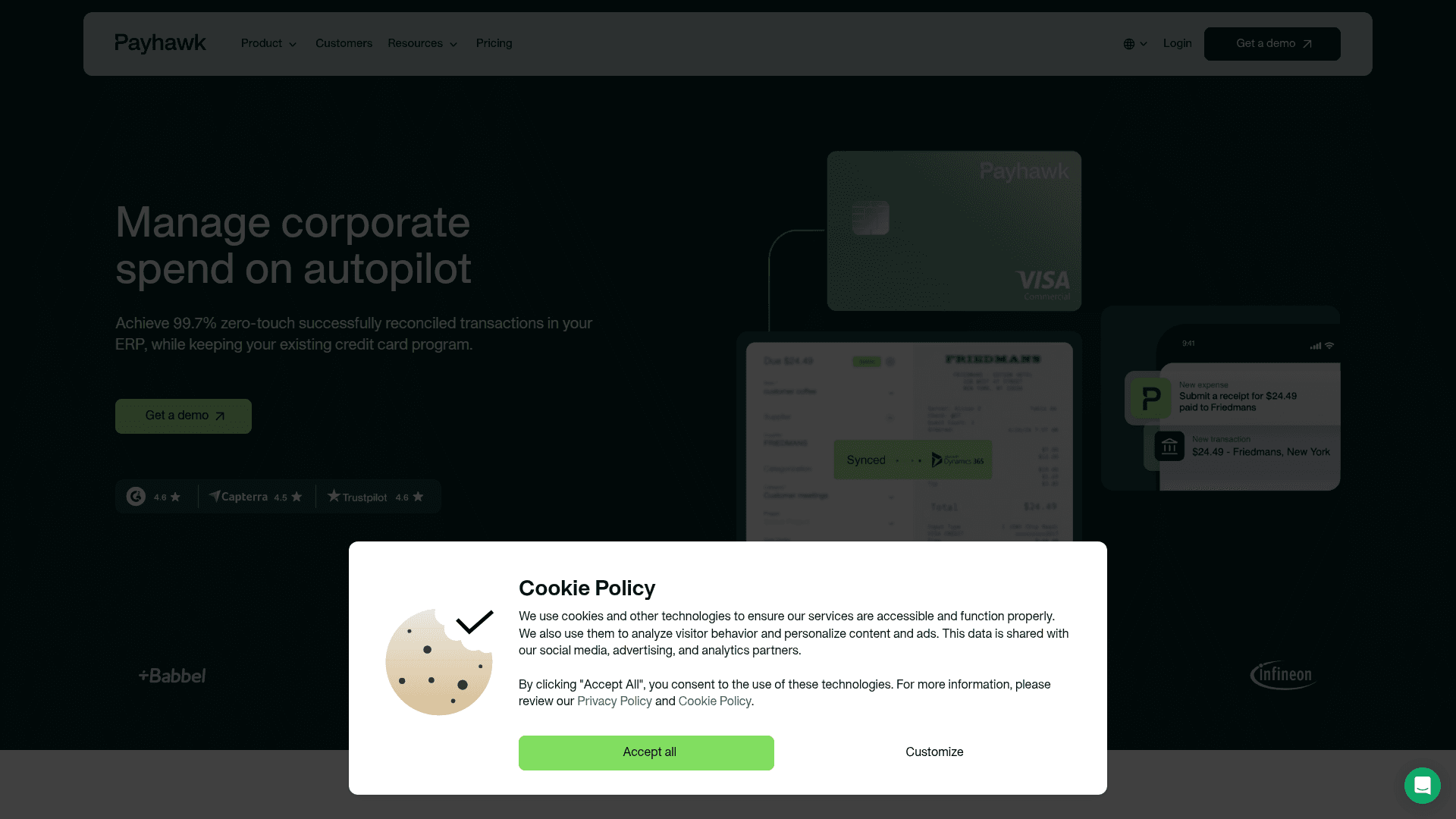
Payhawk, headquartered in London with deep European roots, is built for the company US-first platforms strain to serve: five entities, four currencies, three VAT regimes, one finance team. Corporate Visa cards issue locally across 30+ countries under central policy control; expense capture follows local per-diem and mileage rules; AP automation and procurement workflows extend the platform beyond cards; and the multi-entity architecture gives group finance consolidated visibility while each entity closes its own books to its own ERP — NetSuite, Microsoft Dynamics, Xero, DATEV among them. It has expanded aggressively into the US, but its compliance depth remains strongest in EMEA, which is precisely why internationally distributed mid-market groups choose it over domestic-first rivals. The trades: quote-based pricing from roughly €299/month scales with entities and modules, and single-entity domestic companies are buying capability they won't use.
Key Features
- Multi-Entity Architecture: Consolidated group visibility with per-entity books, currencies, and ERP connections
- Locally Issued Cards, 30+ Countries: Visa corporate cards under central policy with local issuance
- European Compliance Depth: VAT handling, statutory per diems, and mileage rules per market
- AP & Procurement Workflows: Invoice processing and purchase approvals alongside card spend
- Broad ERP Coverage: NetSuite, Dynamics, Xero, and DATEV sync per entity
Pricing
| Plan | Monthly | Annual (per month) |
|---|---|---|
| Premium cards + expense | From ~€299 | Quote-based |
| All-in-one spend | Quote-based | Quote-based |
| Enterprise | Custom | Custom |
Pros
- Best multi-entity model in the category
- Local card issuance and compliance across Europe
- Cards, expense, AP, and procurement in one system
- Consolidated group reporting without spreadsheet stitching
Cons
- Entry pricing excludes small teams
- US footprint younger than its EMEA core
- Single-entity companies overbuy
Verdict: Payhawk is the multi-entity international pick. If month-end means consolidating across countries, its entity architecture is the difference between a close and a reconciliation project.
Visit PayhawkZip
Best for: Companies where purchases commit money before finance sees them — Zip puts one intake front door and orchestrated approvals in front of every buy
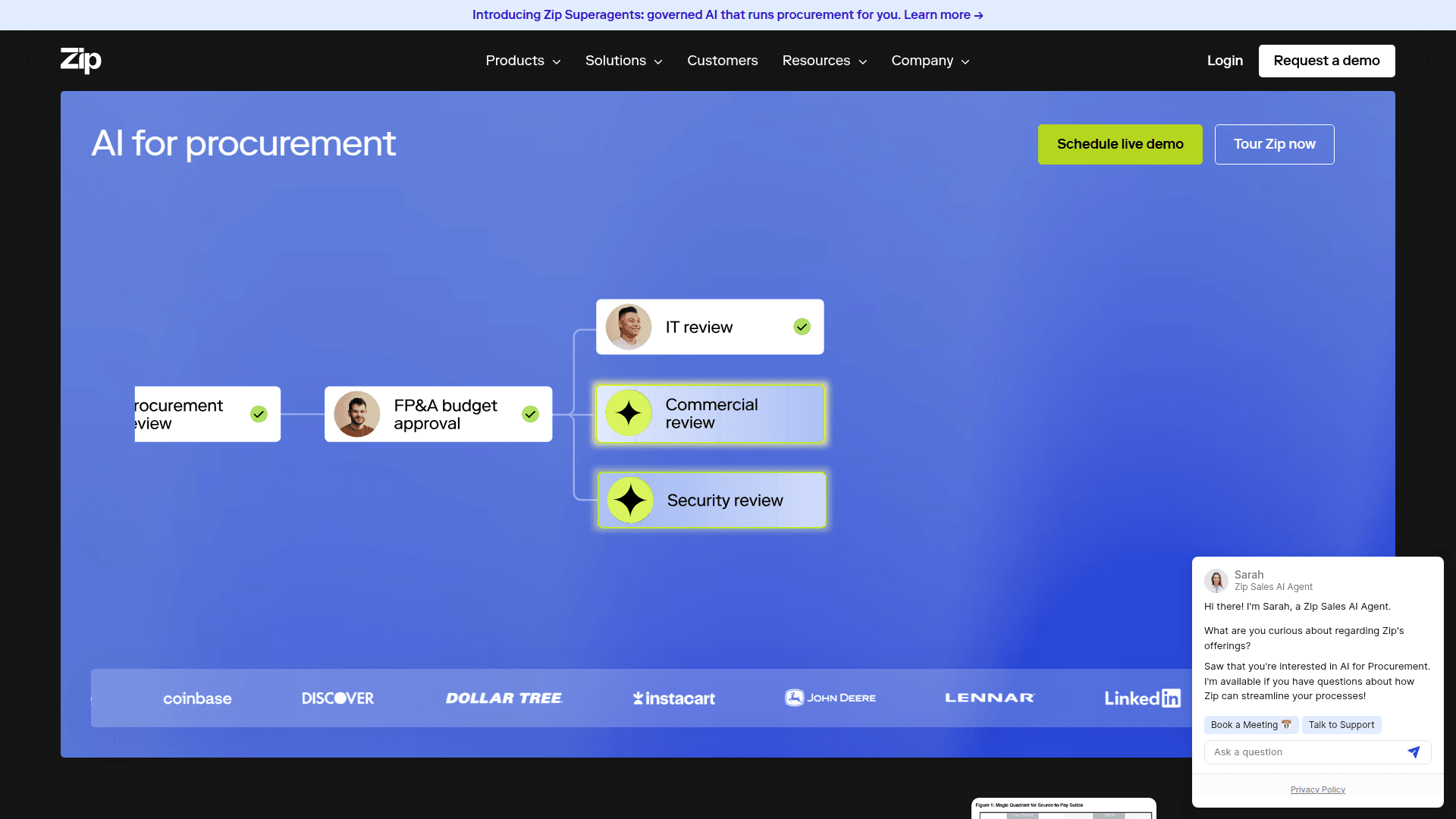
Zip attacks the spend problem everyone else inherits too late: by the time an invoice exists, the money was committed weeks ago by someone who never talked to finance. Zip's answer is a single front door for every purchase request — an employee describes what they want in plain language, and the platform orchestrates the approval sequence that request actually needs: budget owner, security review for new software, legal for contract terms, IT for redundancy checks, privacy for data handling. Each step is tracked, parallelized where possible, and visible to the requester like a package-tracking page. POs, vendor onboarding, and ERP/P2P sync complete the loop downstream. Its AI layer drafts requests, flags duplicate tools, and surfaces renewal timelines before auto-renew traps fire. Zip deliberately layers on top of your existing ERP and payment stack rather than replacing it — which is why adoption spreads fast in companies with established systems. The trades: quote-based pricing, and if purchasing is still simple, built-in intake on an all-in-one platform covers you.
Key Features
- Single Intake Front Door: Every purchase request starts in one place, in plain language
- Cross-Functional Orchestration: Budget, legal, security, IT, and privacy approvals sequenced and parallelized automatically
- Renewal & Redundancy Intelligence: AI flags duplicate tools and surfaces renewals before they auto-fire
- PO & Vendor Onboarding: Approved requests become POs with vendor setup handled in-flow
- Layers on Your Stack: Syncs to existing ERPs and P2P systems instead of replacing them
Pricing
| Plan | Monthly | Annual (per month) |
|---|---|---|
| Core intake + orchestration | Quote-based | Quote-based |
| Procure-to-pay modules | Quote-based | Quote-based |
Pros
- Fixes pre-commitment approvals — the gap most tools miss
- Requesters actually like it (tracking-page transparency)
- Kills duplicate software and surprise renewals
- Deploys on top of existing ERP/P2P investments
Cons
- A layer, not a full spend platform — cards and AP live elsewhere
- Quote-based pricing
- Overkill while purchasing is still simple
Verdict: Zip is the intake pick. When commitments happen before finance sees them, Zip moves approval to the front of the process — the highest-leverage fix in procurement.
Visit ZipStampli
Best for: Finance teams that want AP automation dropped onto their existing ERP and processes — with AI that learns coding and approval patterns
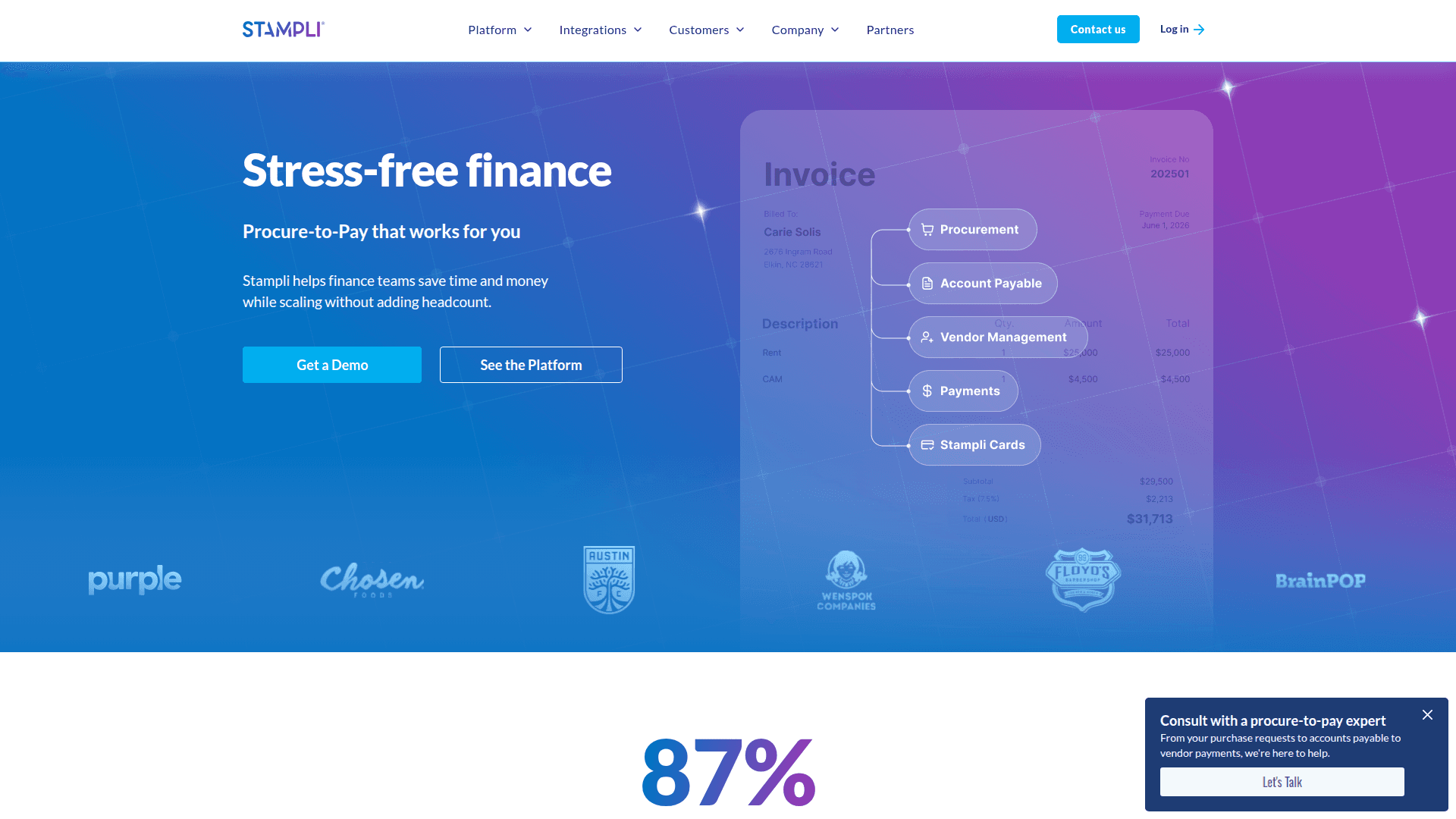
Stampli's design principle is adaptation: instead of forcing your AP process into its workflow, it molds to the ERP and approval patterns you already have — the vendor supports integrations across a very wide ERP range (from NetSuite and Sage to Microsoft Dynamics and QuickBooks) with implementations measured in weeks. The product centers every invoice in a communication hub where approvers, AP staff, and even vendors discuss questions in context, killing the email-thread archaeology that stretches approval cycles. Billy the Bot — Stampli's AI layer — learns from your history to code invoices, suggest approvers, flag duplicates and anomalies, and answer process questions, with the touchless share rising as it learns. Direct Pay, cards, and vendor management extend it toward payments. The trades: it's AP-focused by design — procurement intake and expense are lighter — and pricing is quote-based, typically scaling with invoice volume.
Key Features
- Billy the Bot AI: Learns your coding, approver, and exception patterns; touchless rate climbs with history
- Invoice-Centered Communication: Questions and approvals happen on the invoice, not in email threads
- ERP-Molded Deployment: Adapts to existing ERP fields and processes; weeks-not-months implementations
- Fraud & Anomaly Detection: Duplicates, unusual amounts, and vendor changes flagged automatically
- Payments & Cards Extensions: Direct Pay and card products extend AP into execution
Pricing
| Plan | Monthly | Annual (per month) |
|---|---|---|
| AP automation | Quote-based | Quote-based (scales with invoice volume) |
| Payments / cards add-ons | Quote-based | Quote-based |
Pros
- Fastest path to AI-assisted AP on your existing ERP
- Communication hub genuinely shortens approval cycles
- Touchless processing improves with use
- Wide ERP coverage unusual in the category
Cons
- AP-centric — intake and expense are lighter
- Quote-based pricing
- Payables execution depth trails Tipalti internationally
Verdict: Stampli is the AI-AP pick for teams keeping their ERP and process. If invoice handling is the bottleneck and you don't want a re-platforming project, it's the pragmatic choice.
Visit StampliProcurify
Best for: Mid-market organizations — including education, healthcare, biotech, and nonprofits — that want approachable purchase requests, POs, budgets, and AP in one system
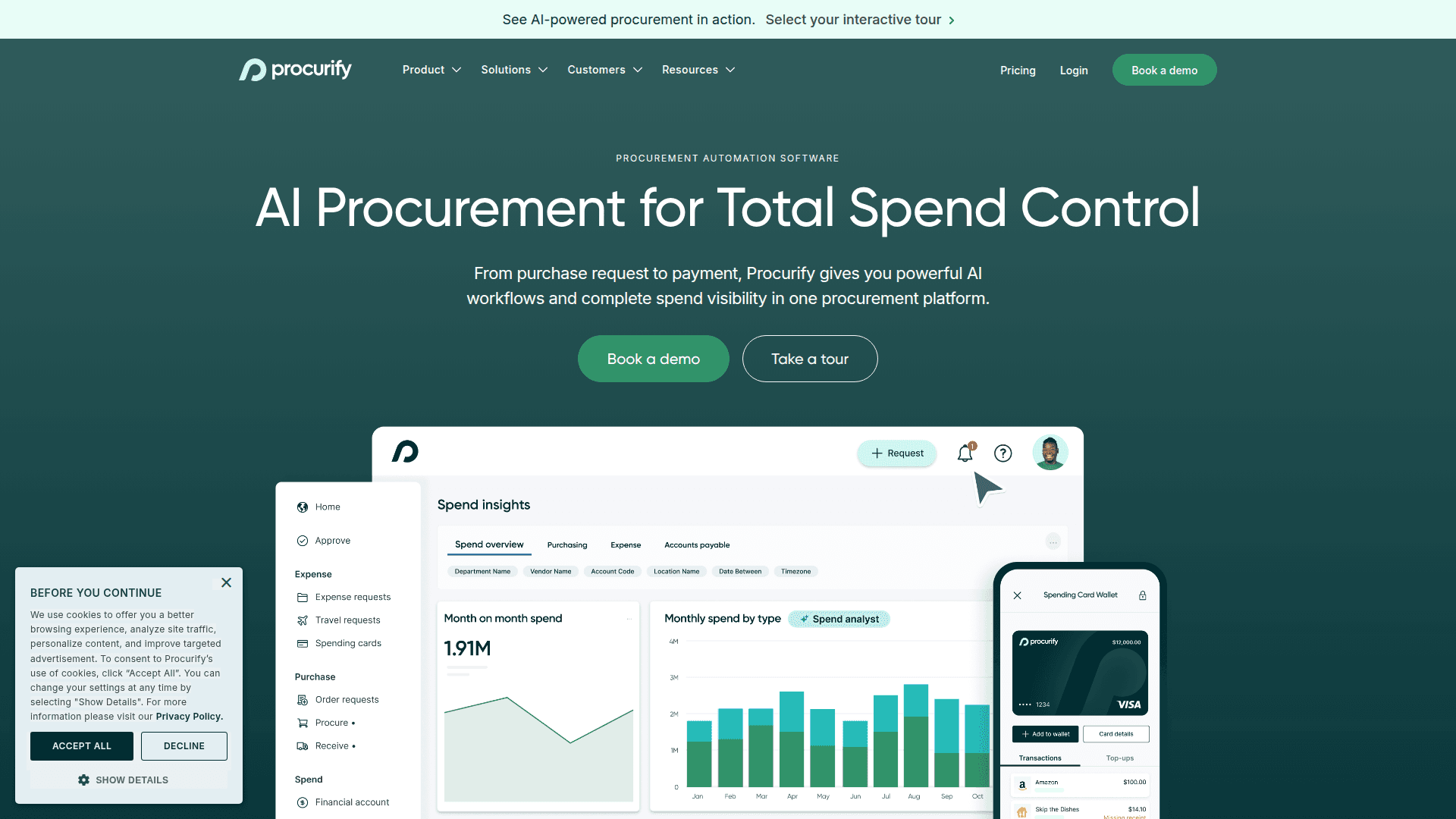
Procurify made procure-to-pay usable for organizations that don't have a procurement department. Employees request purchases from a catalog or free-form; approvals route by department, budget, and amount; POs generate and transmit; receiving confirms delivery; and AP matches invoices against the trail — with real-time budget visibility at every step so approvers see remaining budget before saying yes. Punchout catalogs (Amazon Business and peers) bring guided buying to everyday purchases, and physical/virtual spending cards cover spend that shouldn't wait for a PO. It's a notable favorite in education, healthcare, biotech, and nonprofit settings where grant and departmental budget tracking matter and audit trails are non-negotiable. The trades: quote-based pricing typically starting around four figures monthly, sourcing/contract management is light next to enterprise suites, and global payment execution isn't the point — pair with an AP payments engine if you pay suppliers worldwide.
Key Features
- Approachable Purchase Requests: Catalog and free-form requests with routing by budget, department, and amount
- Real-Time Budget Visibility: Approvers see remaining budget before approving, not after
- Full PO Lifecycle: PO creation, transmission, receiving, and invoice matching
- Punchout Catalogs: Guided buying through Amazon Business and supplier catalogs
- Spending Cards: Physical and virtual cards for spend that shouldn't wait for a PO
Pricing
| Plan | Monthly | Annual (per month) |
|---|---|---|
| Core platform | Quote-based (typically ~$1,000+/mo) | Quote-based |
| Advanced modules | Quote-based | Quote-based |
Pros
- Procure-to-pay without procurement-department complexity
- Budget-aware approvals prevent overspend at the source
- Strong fit for education, healthcare, and nonprofit audit needs
- Punchouts make compliant buying the easy path
Cons
- Sourcing and contract depth trail enterprise suites
- Global payment execution needs a partner tool
- Quote-based pricing with mid-market entry point
Verdict: Procurify is the mid-market P2P pick. For budget-driven organizations that need POs and approvals without a Coupa-sized program, it hits the usability-to-control sweet spot.
Visit ProcurifyPleo
Best for: European small and mid-size companies that want smart company cards, receipt capture, reimbursements, and invoices with local depth
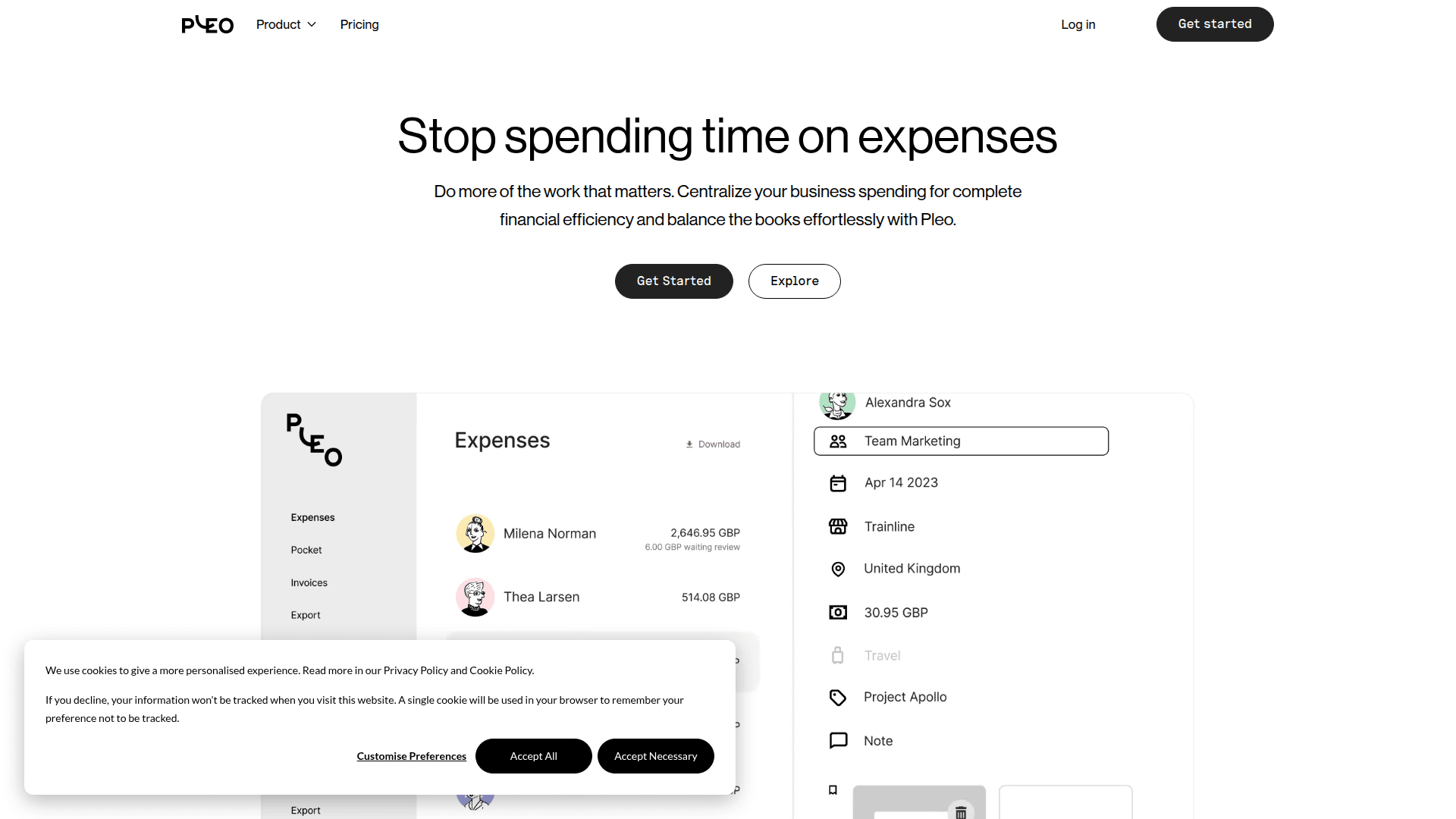
Pleo is Europe's SMB spend favorite for a reason: it made company cards feel consumer-grade. Smart Visa cards — physical, virtual, and temporary — carry per-person and per-team limits; receipts capture by photo with data extraction; and the app nudges spenders for documentation so finance doesn't chase anyone. Pocket handles out-of-pocket reimbursements and mileage; invoice management extends it into light AP; and accounting integrations cover the European stack (Xero, DATEV, e-conomic, and beyond) alongside multi-entity support for growing groups. Serving tens of thousands of companies across 20+ European markets, its localization — currencies, languages, per-diem norms, VAT-aware receipt handling — is exactly what US-first tools approximate. Pricing is SMB-honest: a free starter tier for the smallest teams, with paid plans from roughly €39/month. The trades: enterprise controls, deep PO workflows, and US-market depth aren't the product — Pleo is deliberately an SMB tool done extremely well.
Key Features
- Smart Company Cards: Physical, virtual, and temporary Visa cards with per-person and team limits
- Effortless Receipt Capture: Photo capture with extraction and automatic spender nudges
- Pocket Reimbursements: Out-of-pocket expenses and mileage inside the same flow
- Invoice Management: Light AP for bills alongside card spend
- European Localization: 20+ markets with local accounting integrations (Xero, DATEV, e-conomic)
Pricing
| Plan | Monthly | Annual (per month) |
|---|---|---|
| Starter | Free (smallest teams) | Free |
| Essential | From ~€45 | From ~€39/mo |
| Advanced | From ~€99 | From ~€89/mo |
Pros
- Best card-and-receipt UX in the European SMB market
- Localization US-first tools can't match
- Free starter tier and honest SMB pricing
- Employees comply without being chased
Cons
- Not built for enterprise controls or deep POs
- US presence lighter than its European core
- Charge-card model requires eligibility
Verdict: Pleo is the European SMB pick. For companies across Europe that want spend control employees don't resent, it's the category's most polished answer.
Visit PleoMesh Payments
Best for: Finance teams that want granular, vendor-locked virtual cards for SaaS and travel spend — with a free core platform
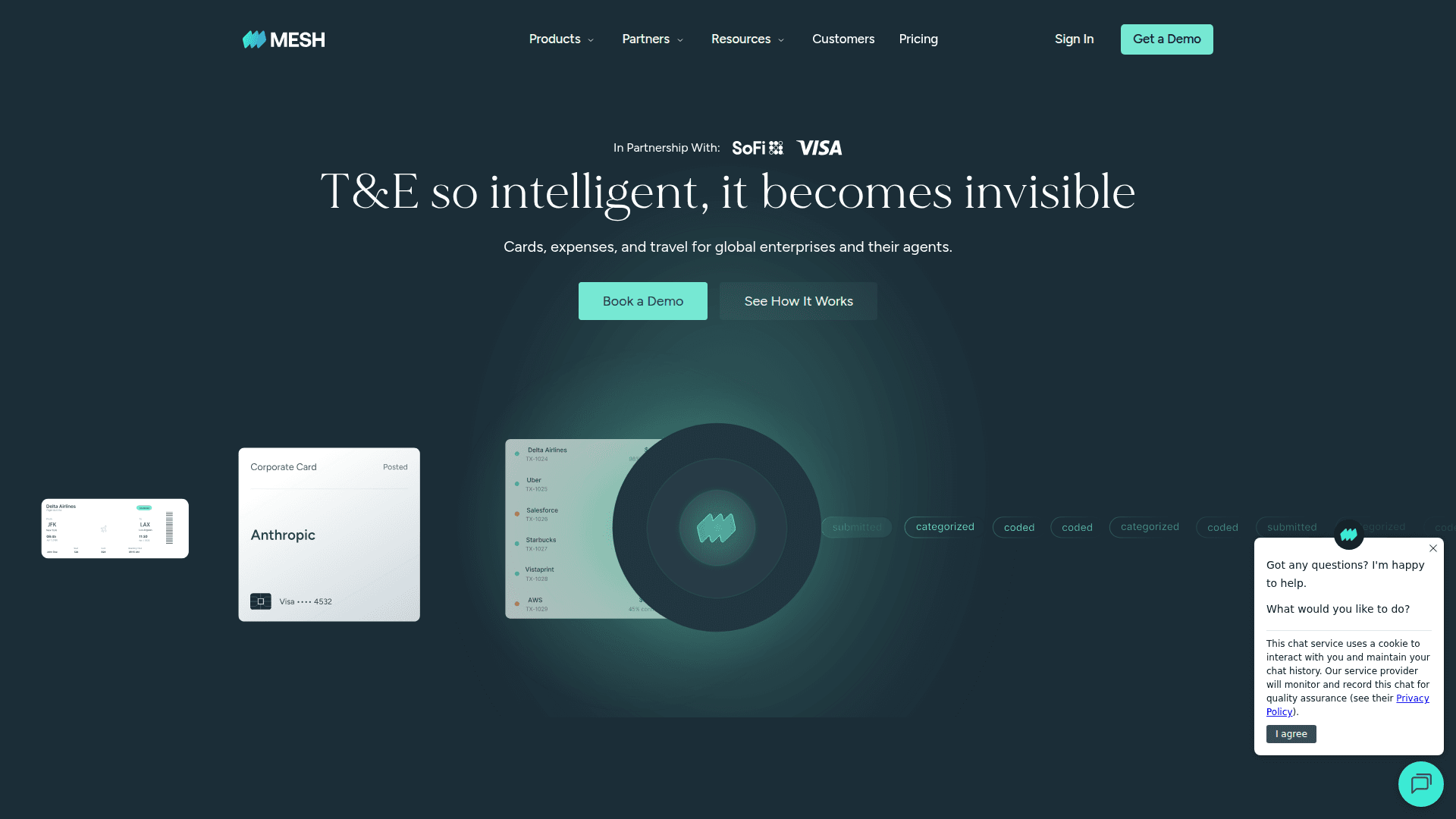
Mesh Payments approaches spend management from the card infrastructure up: if every payment gets its own card with its own rules, control stops being a policy document and becomes physics. Virtual cards issue per vendor, per subscription, and per trip — locked to a merchant, capped to an amount, and set to expire — so a compromised number cancels in isolation and a canceled SaaS tool can't quietly keep charging. Subscription management surfaces every recurring charge with renewal dates; travel cards handle bookings with trip-scoped budgets; receipt automation matches documentation; and real-time notifications land in Slack. ERP sync (NetSuite, QuickBooks, Xero) closes the loop. The core platform is free — interchange-funded — with premium tiers for advanced workflows, multi-entity, and dedicated support. The trades: it's card-first by design (AP and procurement intake are lighter), reimbursements matter less than card spend, and US-centered operations serve global cards but with less local depth than the European specialists.
Key Features
- Vendor-Locked Virtual Cards: Per-vendor, per-subscription, per-trip cards with merchant locks, caps, and expiries
- Subscription Management: Every recurring charge visible with renewal dates and one-click cutoffs
- Trip-Scoped Travel Cards: Travel spend on dedicated cards with trip budgets
- Receipt Automation: Capture and matching with Slack-native nudges and alerts
- Free Core Platform: Interchange-funded core with premium tiers for advanced needs
Pricing
| Plan | Monthly | Annual (per month) |
|---|---|---|
| Core platform | $0 | $0 (interchange-funded) |
| Pro / premium tiers | Quote-based | Quote-based |
Pros
- Sharpest virtual-card control model in the category
- Kills zombie SaaS subscriptions structurally
- Free core platform lowers the entry bar
- Real-time Slack visibility teams actually notice
Cons
- Card-first — AP and intake are lighter
- Requires spend to move onto Mesh cards
- Less local depth outside the US than European rivals
Verdict: Mesh Payments is the virtual-card pick. For SaaS-heavy companies bleeding through shared card numbers and forgotten renewals, its per-vendor card model is the cleanest fix.
Visit Mesh PaymentsHow to Choose the Best Spend Management Software for Your Company
The decision framework, by the question that actually decides it:
If you're mid-market and consolidating point tools
Airbase is the default evaluation — procurement, AP, cards, and expense on one approval engine with NetSuite automation that finance teams describe as close-changing. Payhawk takes the same consolidation across entities and countries. Run the tool-count test: if you'd otherwise renew three point tools this year, the platform quote usually wins on total cost.
If you're an SMB starting with card control
BILL Spend & Expense for free budget-first control in the US; Pleo for the same job done with European localization; Mesh Payments when SaaS subscriptions on shared card numbers are the specific bleed. All three are interchange-funded — verify the card program fits before counting on the free price. For the card programs themselves, see our guide to the best corporate cards for startups.
If invoices and supplier payments are the bottleneck
Tipalti when suppliers are global — payment rails to 190+ countries with tax compliance inside the payment flow removes risk no domestic tool addresses. Stampli when the mandate is AP automation on your existing ERP without a re-platforming project — its AI learns your coding and approval patterns in weeks. Evaluate both on cost per invoice processed and their touchless rate for customers like you.
If purchases commit money before finance sees them
Surprise renewals, duplicate tools, and post-hoc legal reviews all point the same direction: approval needs to move before commitment. Zip layers one intake front door and orchestrated approvals on top of your existing stack; Procurify gives mid-market organizations budget-aware POs without enterprise complexity; Coupa is the full enterprise program when sourcing, supplier risk, and benchmarking justify six figures.
If the pain is really just employee expenses
Don't buy a spend platform to fix expense reports. If receipts, reimbursements, and card reconciliation are the whole problem, the expense-focused tools are cheaper and faster to deploy — we ranked those separately in our guide to the best expense management tools. Graduate to a spend platform when invoices, POs, or vendor payments join the pain list.
Pro Tip
Migrate approval logic from your written policy documents, not from the old tool's configuration — exported approval chains carry years of undocumented exceptions. And run one full parallel close before cutover: spend management failures are silent, and the parallel month is when you catch what the old system was quietly handling.
Frequently Asked Questions
Final Thoughts
The best spend management software of 2026 is the one aimed at where your money actually leaks. Airbase is our best-overall pick because mid-market consolidation — every dollar approved once, closed fast — is the job most buyers are really hiring for. But an SMB taming card spend should start free with BILL Spend & Expense, a company drowning in global supplier invoices should run Tipalti, a business where purchases precede approvals should deploy Zip, and an enterprise building a procurement program should evaluate Coupa — and each would be right.
Whatever you pick: score vendors on touchless rates and cost per invoice rather than feature lists, confirm ERP connectors are included rather than add-ons, and sequence the rollout — software first, cards second, procurement intake third. Spend management pays back in removed work and prevented leaks; buy the platform that removes the most of yours.
Related Free SEO Tools
Content Brief Generator
Generate SERP-grounded briefs for your category content
SEO Content Grader
Score your comparison and alternative pages
Meta Tags Generator
Optimize SERP previews for landing pages
Long-Tail Keyword Generator
Find low-competition commercial queries
Keyword Search Volume
Size demand for your product category
SERP Checker
See who ranks for your target keywords today
Related Articles
Best Expense Management Tools
Receipts, reimbursements, and card reconciliation solved
Best Corporate Travel Management Software
Booking, policy, and duty of care for business travel
Best Corporate Cards for Startups
The card programs behind card-first spend platforms
Browse All Articles
Explore our complete library of guides and tutorials
About the Author

Co-Founder & SEO Execution
Co-founder of PikaSEO. 11 years in corporate tech, then bootstrapped entrepreneur. Leads SEO execution and content-led growth for SaaS companies.