A retailer can appear in an AI answer without its product appearing in a shopping tile. A product can be recommended while a third-party merchant gets the checkout link. That is why ecommerce AI visibility needs more than a brand mention score: it needs a defined prompt set, product and merchant views where available, and a way to connect AI referrals to business outcomes.
This guide compares platforms at different depths. Peec AI and Profound document product-level ChatGPT Shopping analysis. Semrush Enterprise AIO also reports product and merchant visibility in Google AI Mode Shopping. OtterlyAI and Ahrefs Brand Radar are useful for broader prompt and citation monitoring, with different limits on product-level shopping data.
Software tells you what is appearing in sampled AI responses. It cannot observe every private shopper conversation or guarantee a future recommendation. Use these tools to find gaps and verify changes, then assign catalog, content, and feed work to the right team.
How we evaluated these tools
We reviewed official product documentation, help pages, and pricing available on October 28, 2026. We weighted product and merchant visibility, shopping-surface coverage, prompt control, referral reporting, and realistic entry cost. We did not run a controlled prompt benchmark across vendors or verify accuracy against private AI conversations; feature boundaries are based on vendor documentation.
Product-level visibility
Can the platform identify which SKU or product appears, how often, and in what position or tile?
Merchant layer
Check whether the tool distinguishes the brand being recommended from the store receiving a checkout link.
Prompt and engine coverage
Test your category's buyer prompts across the AI interfaces that actually show shopping results.
Business outcome
Look for AI referral, conversion, and revenue integrations, while keeping visibility and attribution separate.
Quick comparison
| Tool | Best fit | Pricing |
|---|---|---|
| Peec AI | Best catalog-connected product tracking | Starter from $95/month; verify Shopping access |
| Profound | Best deep ChatGPT Shopping analysis | Shopping access: request a demo |
| Semrush Enterprise AIO | Best multi-surface AI shopping view | Enterprise quote |
| OtterlyAI | Best accessible prompt baseline | Lite $25/month for 15 prompts |
| Ahrefs Brand Radar | Best AI visibility plus SEO context | AI index from $199/month; custom prompts from $50/month |
Pricing is a published starting point or billing model, not a quote for the same workload. Check the linked vendor page for current limits and billing terms.
Peec AI
Best catalog-connected product tracking
Best for: Commerce teams matching Shopify or CSV products to ChatGPT shopping recommendations
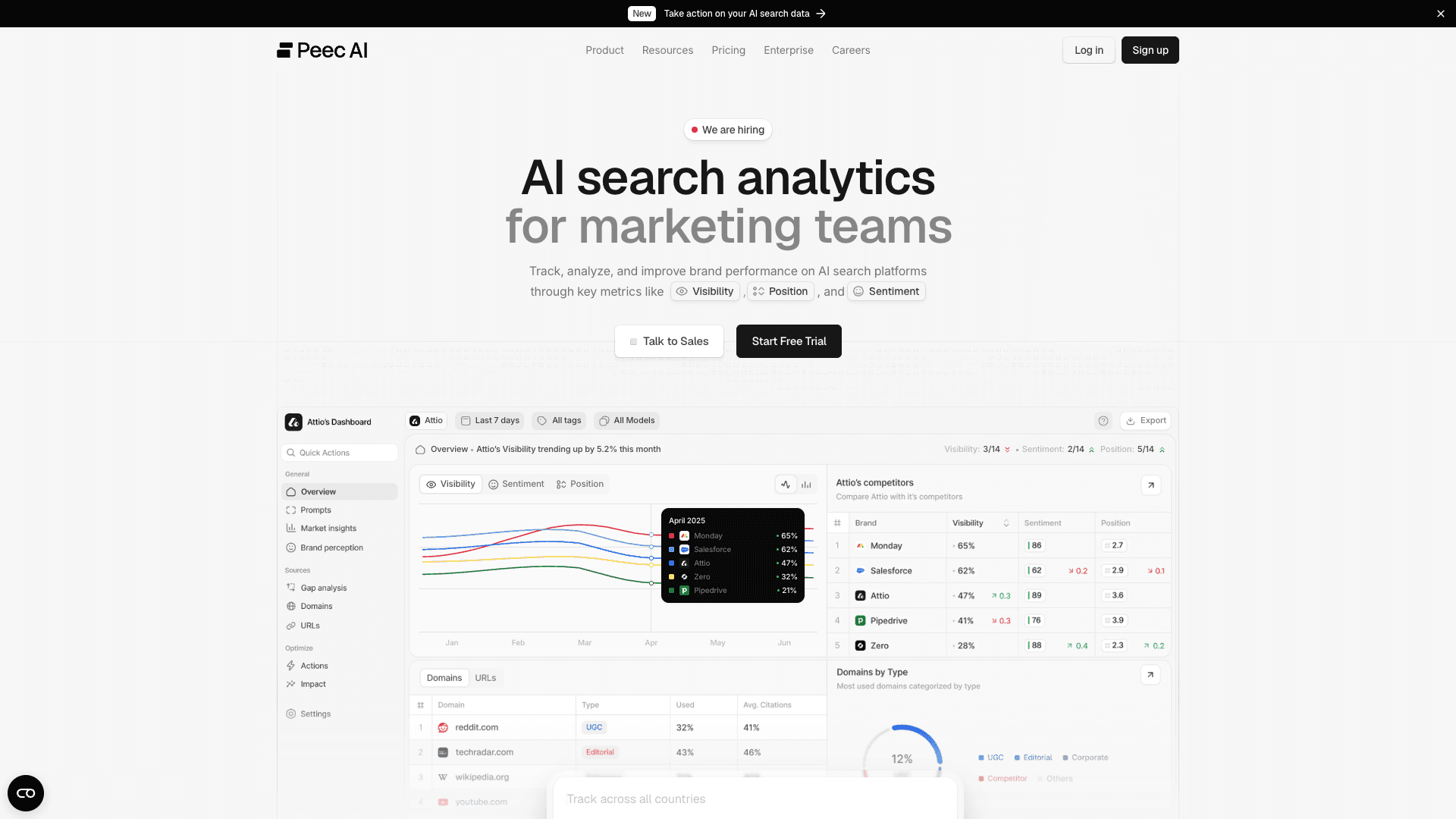
Peec AI lets a team connect a Shopify catalog or upload a CSV and measure products appearing in ChatGPT shopping carousels. Its documentation defines visibility as the share of tracked chats mentioning a product and win rate as the share where it is the first recommendation. A newer AI referrals view connects GA4 sessions, conversions, and revenue from assistants. The key boundary is explicit: Peec counts products in shopping carousels, not every plain-text product mention. Build transactional prompts that actually trigger shopping mode before reading a zero as evidence of no demand.
Where it shines
- Shopify and CSV catalog connection
- Product visibility, win rate, and position
- GA4-based AI referral reporting
Consider before buying
- Shopping analysis depends on prompts triggering carousels
- Check model and prompt allowances by plan
Pricing: Starter from $95/month; verify Shopping access
Prompt tracking consumes plan allowance. Confirm Shopping availability and catalog limits on the proposed tier.
Product details: official source
Profound
Best deep ChatGPT Shopping analysis
Best for: Retail and CPG teams investigating SKU placement, product attributes, and who owns checkout
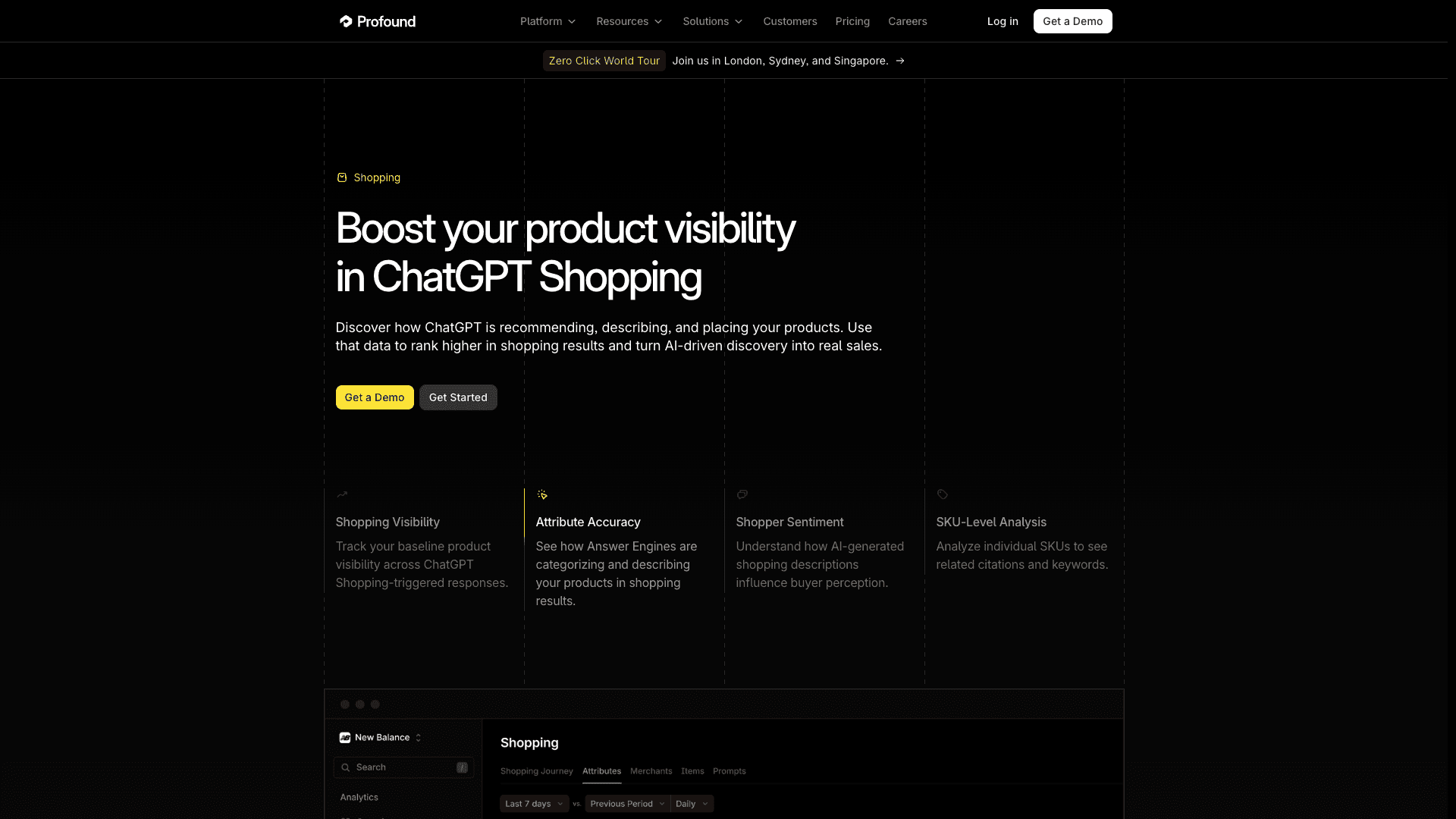
Profound's Shopping Analysis captures product tiles, images, prices, merchant links, and buy buttons for shopping-triggered ChatGPT responses. Its product layer identifies individual SKUs and their attributes; its merchant layer shows where checkout links point. That makes it useful when a retailer is visible as a brand but losing product placements or direct-store traffic. Profound's help center says the Shopping module is currently focused on ChatGPT Shopping, so confirm any planned coverage of other commerce surfaces instead of assuming it is already in the contract.
Where it shines
- SKU and product-attribute analysis
- Merchant and checkout visibility
- Shopping-mode prompt analysis
Consider before buying
- Shopping module currently focuses on ChatGPT
- Requires a scoped sales conversation for module cost
Pricing: Shopping access: request a demo
Confirm the Shopping module, tracked prompts, and retail analytics scope in the quote.
Product details: official source
Semrush Enterprise AIO
Best multi-surface AI shopping view
Best for: Enterprise retailers comparing products and merchants in ChatGPT and Google AI Mode shopping
Semrush says its Enterprise AI Optimization shopping report monitors product and merchant visibility across ChatGPT Shopping and Google AI Mode Shopping. That two-surface view matters for a retailer whose products and sellers appear differently depending on the interface. It can bring AI shopping intelligence into a larger enterprise SEO operation. The buying check is contractual: ask for a demo using your category prompts, specify which markets and products are tracked, and confirm the report is included in the quoted Enterprise AIO package.
Where it shines
- ChatGPT and Google AI Mode shopping coverage
- Product and merchant reporting
- Enterprise SEO context
Consider before buying
- Enterprise sales and pricing process
- Shopping report is not a standard SEO-toolkit feature
Pricing: Enterprise quote
AI Shopping is an Enterprise AIO report; do not assume it is included in a standard Semrush SEO subscription.
Product details: official source
OtterlyAI
Best accessible prompt baseline
Best for: Small retail teams tracking brand, product, citation, and shopping-trigger prompts daily
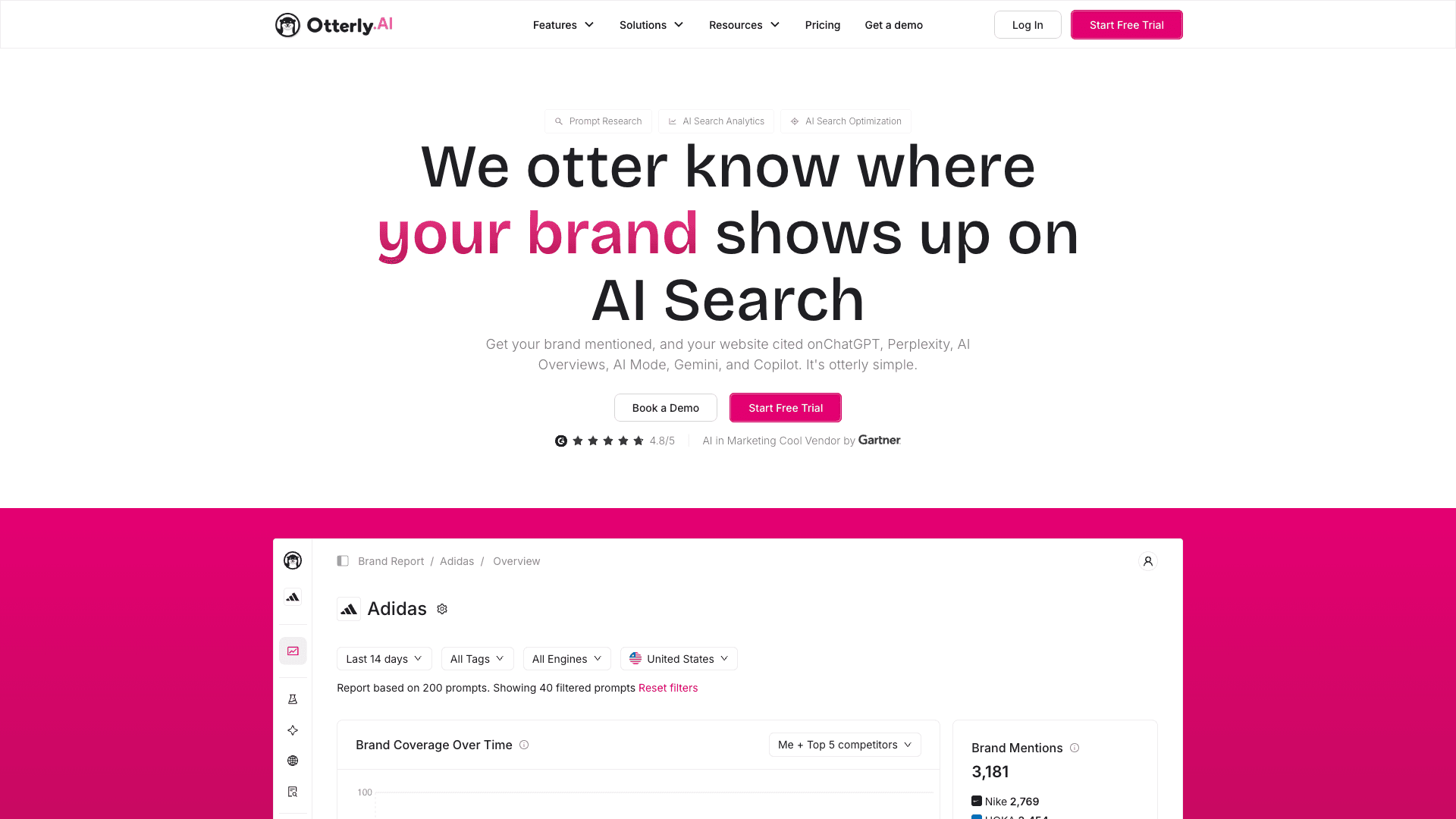
OtterlyAI tracks configured prompts daily and reports brand coverage, product or competitor mentions, citations, and whether a prompt triggered shopping cards. It gives a smaller store a way to establish a repeated buyer-prompt baseline without buying an enterprise shopping platform. The trade-off is depth: a shopping-card rate is different from a full SKU and merchant analysis. Set prompts by category and buyer intent, then use the output to choose which product and content gaps deserve closer investigation.
Where it shines
- Low published entry price
- Daily prompt monitoring
- Shopping-card and citation signals
Consider before buying
- Lite prompt count is small for large catalogs
- Additional engines cost extra; product and merchant depth is narrower
Pricing: Lite $25/month for 15 prompts
Lite includes four engines; AI Mode, Gemini, and Claude are paid add-ons. Check current shopping-card reporting on your plan.
Product details: official source
Ahrefs Brand Radar
Best AI visibility plus SEO context
Best for: SEO teams comparing product and category demand across AI answers and traditional search
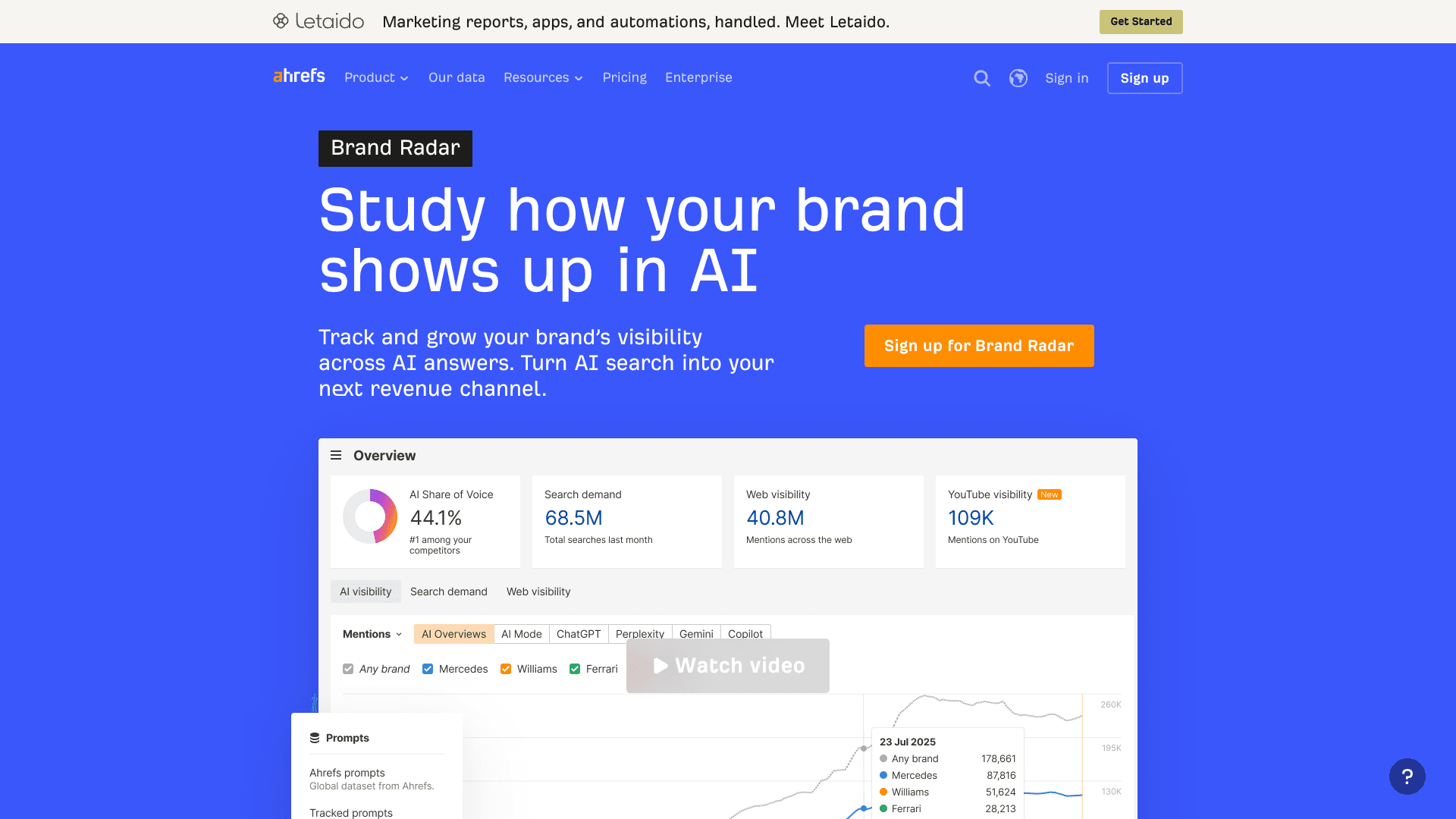
Brand Radar provides a large search-backed sample of AI prompts plus custom questions, competitive share of voice, citations, and search demand. Ahrefs says users can research products as well as brands, which helps retailers see where category awareness is weak. Its model is still sampled answer visibility, not a dedicated catalog feed or merchant-checkout report. Use Brand Radar to connect AI mentions with wider SEO and Reddit visibility, and choose a shopping-specific product if SKU tiles are the decision unit.
Where it shines
- Broad AI and SEO context
- Product and competitor research
- Citation and custom-prompt views
Consider before buying
- No dedicated SKU checkout analysis in the cited product docs
- Modeled prompt visibility is not actual shopper reach
Pricing: AI index from $199/month; custom prompts from $50/month
An Ahrefs paid plan may include some custom prompt checks. Index access and check volume vary by purchase.
Product details: official source
How to choose the right tool
Test shopping-trigger prompts
Use real category, price, use-case, and comparison questions. Record which prompts produce a text answer versus product tiles.
Separate brand, product, and merchant
A brand mention, a recommended SKU, and your store winning the purchase link are three different outcomes. Ask which each tool can measure.
Check coverage before price
Confirm the relevant model, shopping mode, market, prompt count, catalog size, and refresh frequency on the exact plan quoted.
Connect visibility to action
Assign an owner for feed quality, product attributes, category content, third-party coverage, and AI referral analysis.
Frequently asked questions
What is the best AI visibility tool for an ecommerce store?+
Peec AI is a practical starting point when you want to connect a Shopify or CSV catalog and track product recommendations in ChatGPT shopping carousels. Profound adds deeper SKU and merchant analysis; Semrush Enterprise AIO covers ChatGPT and Google AI Mode shopping for larger teams.
Is a brand mention the same as a product recommendation?+
No. An answer may name your brand without showing a specific item. A product tile can also appear with a third-party retailer as the merchant. Track those outcomes separately if sales attribution matters.
Do these tools see every ChatGPT shopping conversation?+
No. They test defined prompts or sampled queries and record the resulting AI answers. Results are directional and can vary with time, location, and wording.
Can I track AI shopping on a small budget?+
OtterlyAI offers a low-cost prompt baseline, while Peec AI offers catalog-connected shopping analysis at a higher starting price. Confirm shopping features, prompt limits, and additional engine charges before subscribing.
Does monitoring improve AI recommendations by itself?+
Monitoring shows where products or merchants appear and where they are absent. A team still has to improve product data, page content, feed quality, and relevant third-party coverage, then retest the same prompts.