
A city-wide ranking number can conceal the most important local SEO fact: visibility changes from street to street. A geo-grid samples a search from several points on a map, while a conventional local rank tracker follows selected keywords and locations over time. Many buyers need both views.
This guide focuses on measurement. It compares Local Falcon, BrightLocal, Whitespark, Local Viking, Semrush Local, and GeoRanker by the reports they produce and the work needed to maintain them. For listing distribution, citations, and review management, use our broader local SEO guide instead.
The right tool depends on how many locations, keywords, devices, and map points you need to measure. A small monthly price can become expensive when every grid point and scan consumes a credit, so model a real schedule before subscribing.
How we evaluated these tools
We compared public product documentation and pricing available on September 30, 2026. We assessed each tool's local measurement methods, competitor context, reporting workflow, and billing model. We did not run identical live scans across vendors, so this is a buyer-fit assessment rather than an accuracy benchmark; local results vary by place, time, device, and query.
Geographic detail
Can the product show rankings across a grid or only from one selected city, postal code, or coordinate?
Result type
Check whether it measures Google Maps, the local pack, organic results, Apple Maps, and mobile or desktop where needed.
Useful context
Look for competitor visibility, location trends, scan history, and a report that explains more than one colored map.
Cost per schedule
Count locations × keywords × grid points × scans per month, plus seats, exports, and other limits.
Quick comparison
| Tool | Best fit | Pricing |
|---|---|---|
| Local Falcon | Best focused geo-grid tracker | Credit-based plans |
| BrightLocal | Best local SEO suite | Location-based plans |
| Whitespark | Best modular local tracking | Grids from $10/month |
| Local Viking | Best for GBP-focused agencies | Credit packages; check current pricing |
| Semrush Local | Best for existing Semrush users | Per-location local plans |
| GeoRanker | Best for geo-located SERP data | Credit-based plans |
Pricing is a published starting point or billing model, not a quote for the same workload. Check the linked vendor page for current limits and billing terms.
Local Falcon
Best focused geo-grid tracker
Best for: Businesses and agencies that need to see Maps visibility across an entire service area
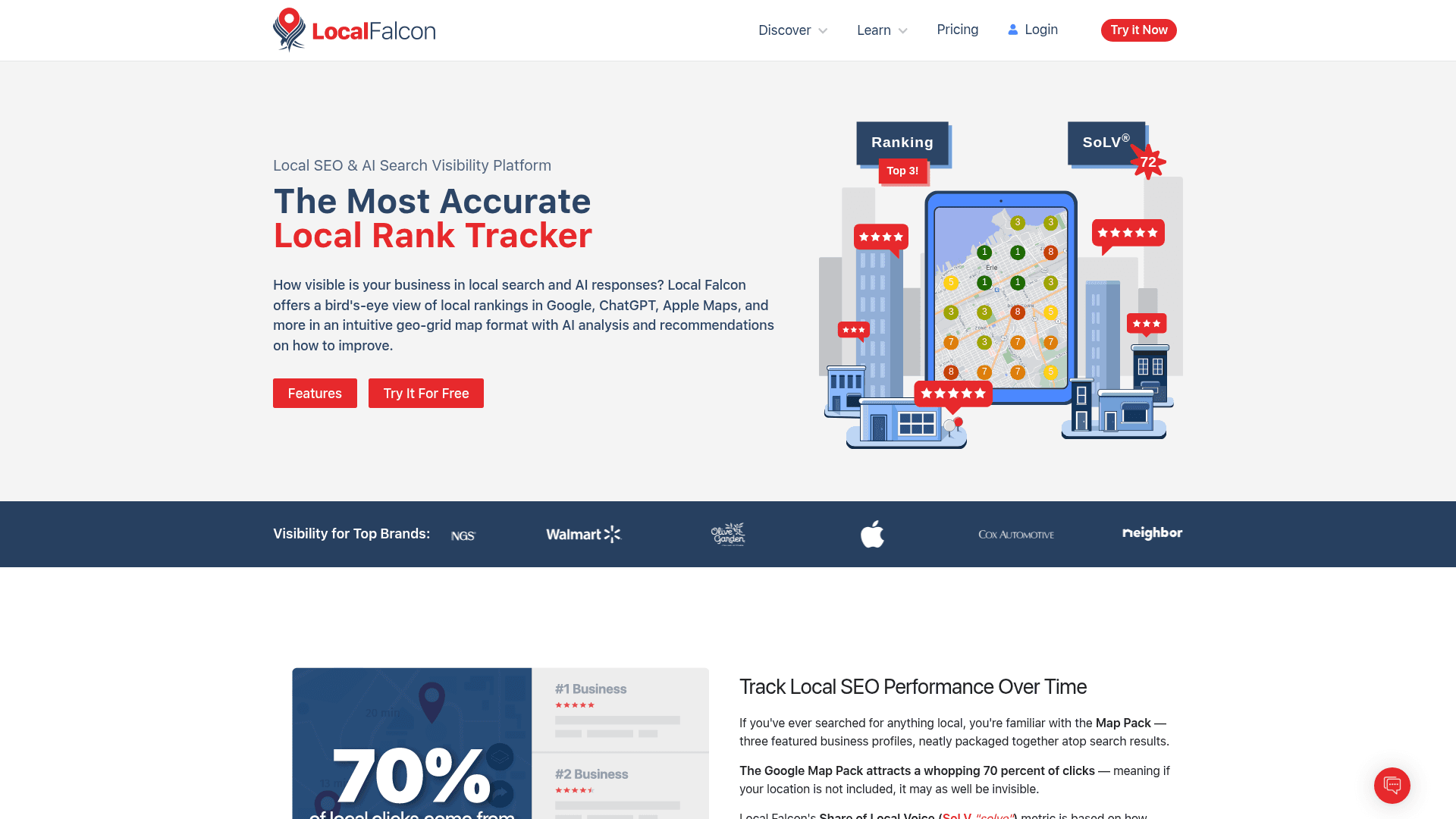
Local Falcon makes geographic coverage the center of the product. A map of ranking points makes it easier to see where a business has strong visibility, where competitors take over, and whether changes persist across the area. It supports Google and Apple Maps views and offers reports for recurring monitoring. Buyers should decide how dense a grid they truly need, because larger grids and frequent rescans spend credits quickly.
Where it shines
- Clear geo-grid maps and competitor context
- Google Maps and Apple Maps measurement
- Useful for showing a client where visibility changes
Consider before buying
- Credit usage rises with grid size and frequency
- It is a measurement layer, not a full citation or listings platform
Pricing: Credit-based plans
Each map pin in a grid scan uses credits. Estimate monthly usage from grid size, keywords, locations, and scan cadence.
Product details: vendor source
BrightLocal
Best local SEO suite
Best for: Agencies and multi-location businesses that want rank tracking, grids, audits, and reports together
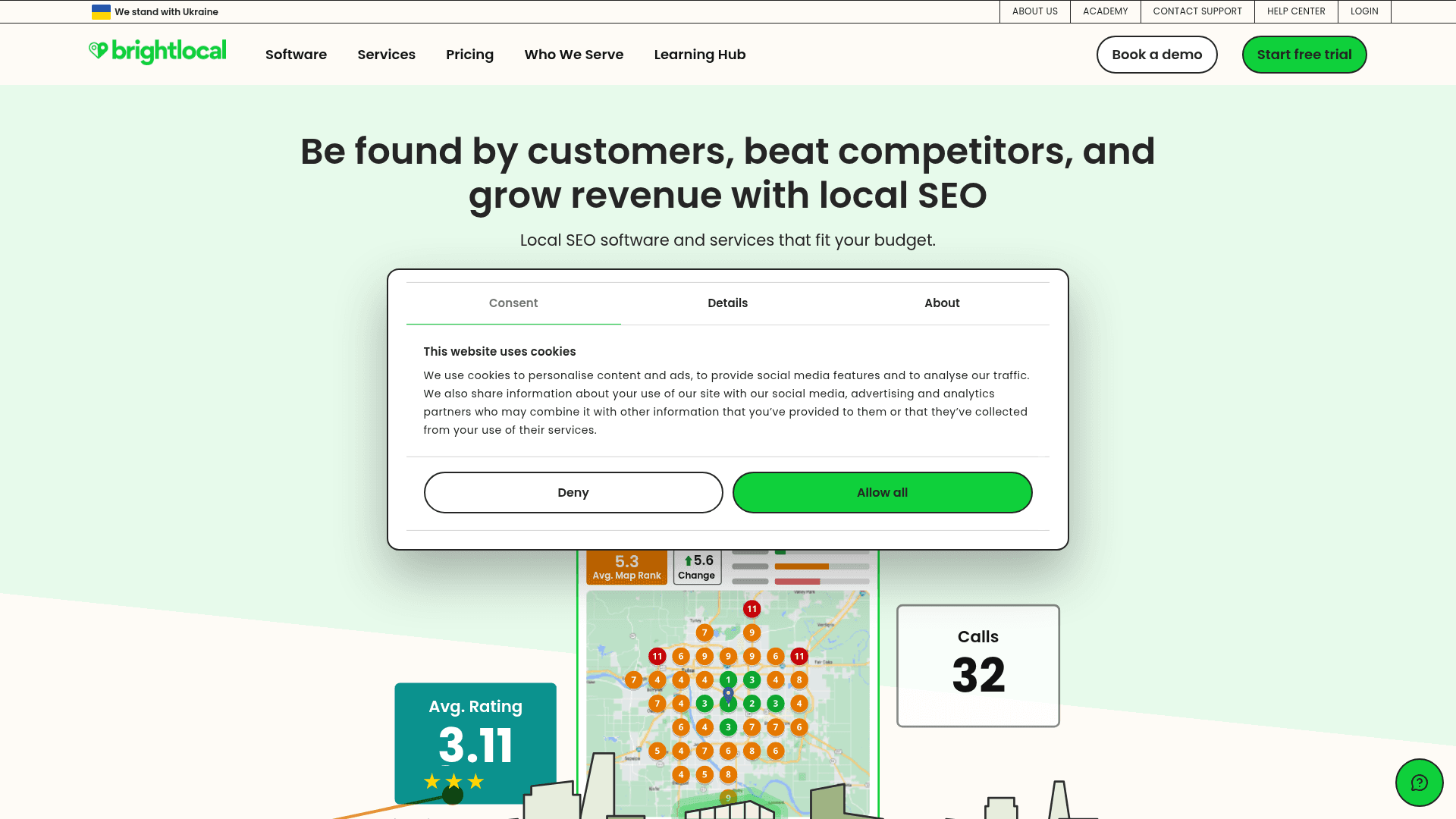
BrightLocal combines a conventional Local Rank Tracker with Local Search Grid, so a team can follow keyword trends and inspect their geographic spread. It also houses audits, citation checks, review tools, and client reporting. That breadth is valuable when rank tracking is part of a monthly local SEO service rather than a standalone analysis. Confirm the grid allowance and reporting cadence for the exact plan before buying.
Where it shines
- Local rank trends and geo-grid views in one platform
- Reports connect rankings with other local SEO work
- Useful agency and multi-location workflow
Consider before buying
- More platform than a business wanting only occasional grids needs
- Keyword and location allowances depend on the plan
Pricing: Location-based plans
Plan pricing varies by managed locations and billing term; verify the grid-keyword allowance for your plan.
Product details: vendor source
Whitespark
Best modular local tracking
Best for: Consultants who want to buy a grid tracker, a local rank tracker, or both without a large suite
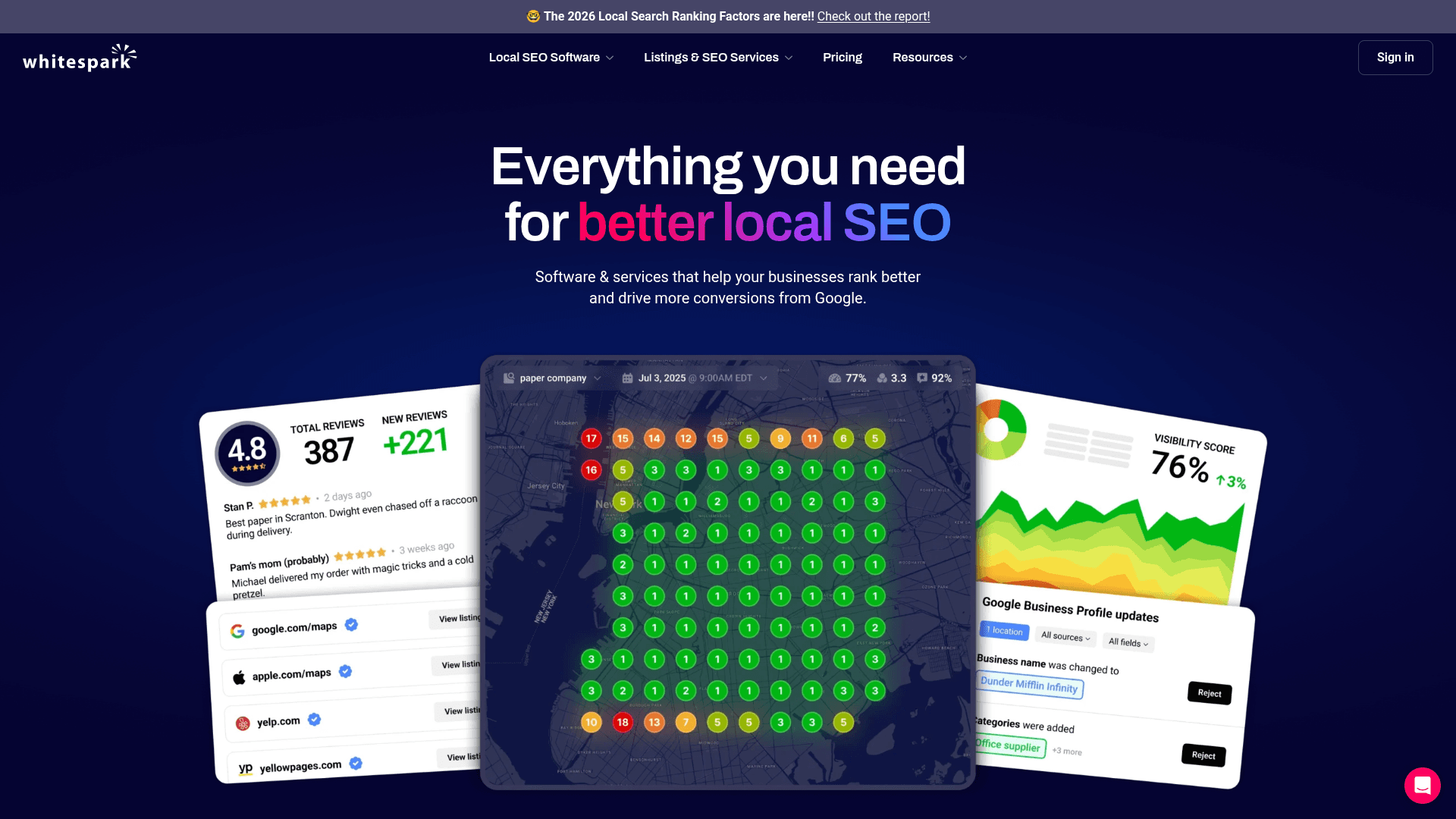
Whitespark separates two local measurement jobs. Local Ranking Grids maps positions across a chosen area and lets users schedule scans; Local Rank Tracker follows local pack, Maps, and organic results for selected locations. This modular setup is useful when a consultant wants one measurement method now and another later. It also means buyers should add the costs together if they need both products.
Where it shines
- Flexible grid sizes and scheduled scans
- Separate pack, Maps, and organic tracking product
- Exports and competitor context for local reports
Consider before buying
- The two tracking products have separate subscriptions
- Grid credits expire at the end of a billing period
Pricing: Grids from $10/month
Local Ranking Grids and Local Rank Tracker are separate products. Their credits, keyword limits, and cadence are priced differently.
Product details: vendor source
Local Viking
Best for GBP-focused agencies
Best for: Agencies that manage Google Business Profiles and want grid visibility in the same local workflow
Local Viking combines geo-grid rank tracking with Google Business Profile management features. For an agency already working in the product, it can keep location operations and map visibility close together. Its grid scans are more useful when they are repeated with the same keyword, map size, and cadence; otherwise a visually dramatic map can mislead. Check current credit packages and how scans are charged before expanding to many locations.
Local Viking
Best for GBP-focused agencies
Where it shines
- Geo-grid views tied to GBP work
- Useful when the agency handles many profiles
- Can support repeated geographic baselines
Consider before buying
- Credit model requires volume planning
- Less suitable for teams that only need organic rank history
Pricing: Credit packages; check current pricing
Geo-grid scan usage depends on purchased credits and the number of grid points scanned.
Product details: vendor source
Semrush Local
Best for existing Semrush users
Best for: Teams that want map-rank checks next to their existing Semrush SEO research and reporting
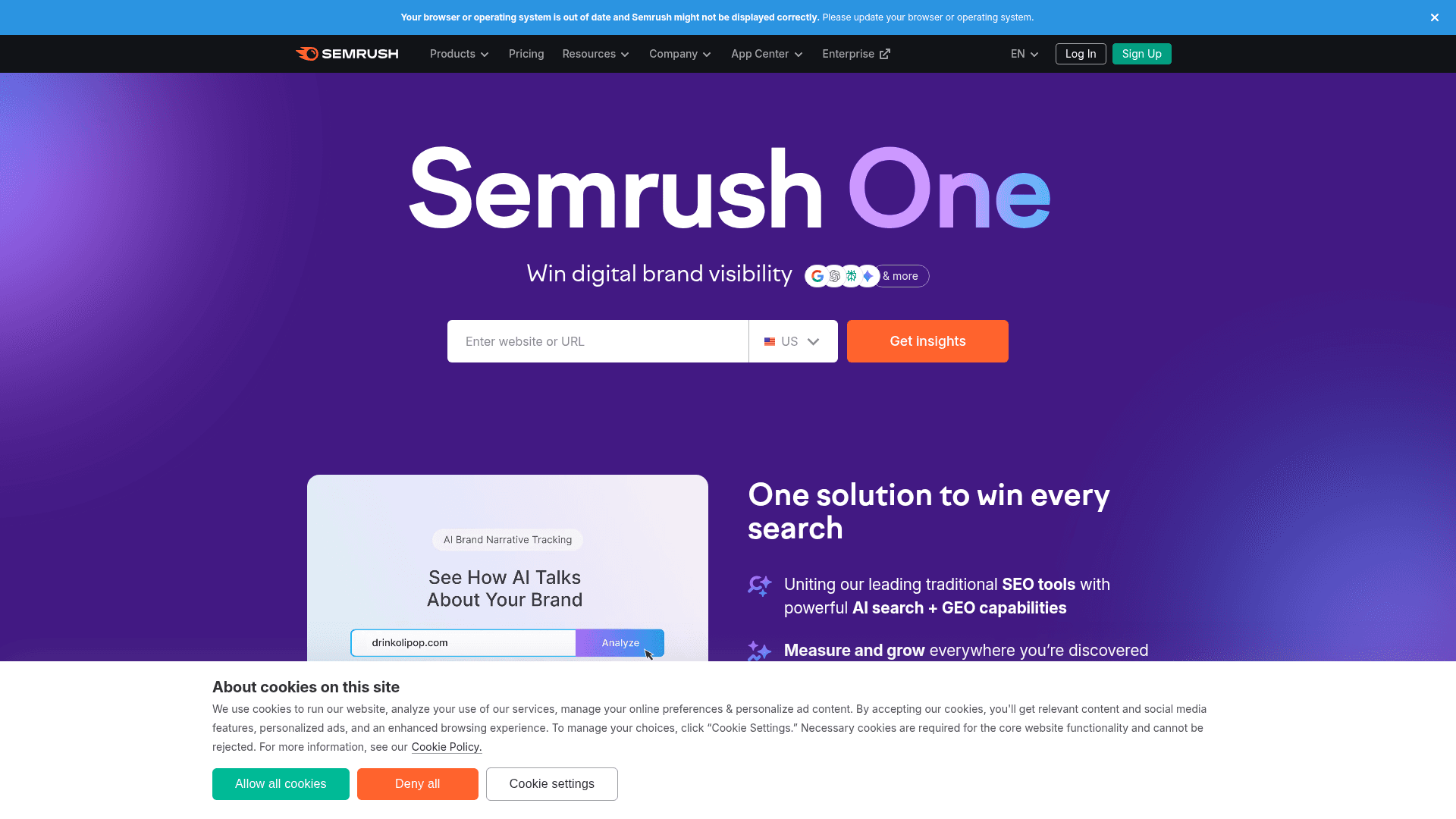
Semrush Local adds map-rank tracking to a broader location marketing toolkit. The advantage is operational: users of Semrush's keyword, audit, and competitor tools can keep local visibility in a familiar ecosystem. The tradeoff is pricing by location and a credit allowance for map checks. It is most compelling when the team will use the surrounding local features, not just one grid report each month.
Where it shines
- Fits an existing Semrush workflow
- Map tracking alongside listings and reviews
- Broader SEO research in the same ecosystem
Consider before buying
- Per-location pricing can add up
- Map scans use a plan-specific credit allowance
Pricing: Per-location local plans
Map Rank Tracker uses a credit allowance; check the local tier and the number of locations in your quote.
Product details: vendor source
GeoRanker
Best for geo-located SERP data
Best for: Teams that need location-specific rank data and may feed it into their own reports or applications
GeoRanker emphasizes location-aware rank tracking and local SERP data. It can be useful when an agency or product team needs rankings for many specific cities or locations and wants to move that data into a custom reporting workflow. It is a different buying decision from a polished geo-grid presentation tool: test the exact result type and export or API format you need before making it the source of a client dashboard.
Where it shines
- Location-specific rank data
- API-oriented option for custom reporting
- Useful for many geographic markets
Consider before buying
- More setup for teams wanting a ready-made visual report
- Credit usage needs careful estimation at scale
Pricing: Credit-based plans
Usage is tied to plan credits. Confirm the geography, search engine, query volume, and API requirements in a trial.
Product details: vendor source
How to choose the right tool
Define the search result you need
Decide whether the outcome is Google Maps, the local pack, organic results, or Apple Maps. A product that excels at one does not automatically cover the others.
Design one representative scan
Pick a real location and keyword. Choose the geographic area, grid density, device, and a repeatable scan time before comparing screenshots or scores.
Calculate monthly usage
Multiply locations, keywords, grid points, and scans per month. Ask the vendor whether each point or report consumes a credit and whether unused credits carry forward.
Compare a trend, not a single map
Run the same setup on more than one date. A local rank is sensitive to location and time; decisions need a stable baseline, competitor context, and enough history to separate noise from change.
Frequently asked questions
What is the best local rank tracking tool in 2026?+
Local Falcon is a focused choice for geo-grid visibility. BrightLocal is better when map tracking must sit beside local audits and client reporting. Whitespark is a modular choice for grids and traditional local rankings. Test the tool against your locations, keywords, and preferred report format.
What is the difference between a geo-grid and a local rank tracker?+
A geo-grid checks one keyword from many points across a map, showing how visibility changes across a service area. A conventional local rank tracker follows chosen keywords at specified locations over time, often across local-pack and organic results. The two views answer different questions.
How often should I scan local rankings?+
Weekly or monthly scans are often enough for a stable local business. Scan more often during a launch, migration, or active experiment, but keep the same grid and settings when comparing results. More scans only help if the team can interpret and act on the change.
Why do two local rank trackers show different positions?+
They may query from different coordinates or at different times, use different devices, and measure Maps, the local pack, or organic results. Personalization and constant result changes also matter. Compare consistent trends within a tool before treating one position as absolute truth.
Can I track multiple business locations?+
Yes. All the paid tools here support location-specific measurement, but plan limits and credit costs differ. Estimate locations multiplied by keywords, devices, grid points, and frequency before choosing a plan for a franchise or agency portfolio.