
Content optimization software can help a writer see missing subtopics, compare the pages already ranking, and keep an editorial team aligned on a brief. The products differ in what they optimize: a single draft, a live page, or an entire content inventory.
This guide focuses on the buying decision behind Surfer, Clearscope, Frase, MarketMuse, PageOptimizer Pro, and NEURONwriter. All six support content improvement, but their editing workflows, strategic depth, and usage limits are different. Choose for the work your team does every week, not for the highest score in a demo.
We compared public product documentation and pricing rather than claiming a hands-on test of every platform. A term recommendation is a prompt to investigate relevance; it is not evidence that adding that phrase will improve a page's ranking.
How we evaluated these tools
We reviewed vendor product pages and public pricing available on September 30, 2026. We prioritized the clarity of the optimization workflow, useful editorial context, support for refreshing existing pages, collaboration, and the real limits that affect a team's cost. The ordering is an editorial fit assessment, not a measured performance benchmark or a promise of rankings.
Useful recommendations
Does the product show relevant gaps and explain why they matter, or only count terms and push a numerical score?
Writer workflow
Can a writer draft, review feedback, share a brief, and hand off the page without copying work between several tools?
Existing-page work
Can the team audit and prioritize published pages, then check whether revisions helped after release?
Cost at real volume
Compare included documents, reports, seats, audits, and extra credits using the number of pages you actually publish or refresh.
Quick comparison
| Tool | Best fit | Pricing |
|---|---|---|
| Surfer | Best all-around editor | From $49/month, billed annually |
| Clearscope | Best for editorial teams | From $129/month |
| Frase | Best research-to-draft workflow | From $39/month, billed annually |
| MarketMuse | Best for topic strategy | Free limited tier; paid plans by quote |
| PageOptimizer Pro | Best for on-page diagnostics | From $40/month |
| NEURONwriter | Best lightweight alternative | Tiered plans; check current pricing |
Pricing is a published starting point or billing model, not a quote for the same workload. Check the linked vendor page for current limits and billing terms.
Surfer
Best all-around editor
Best for: Content teams producing and refreshing articles on a repeatable schedule
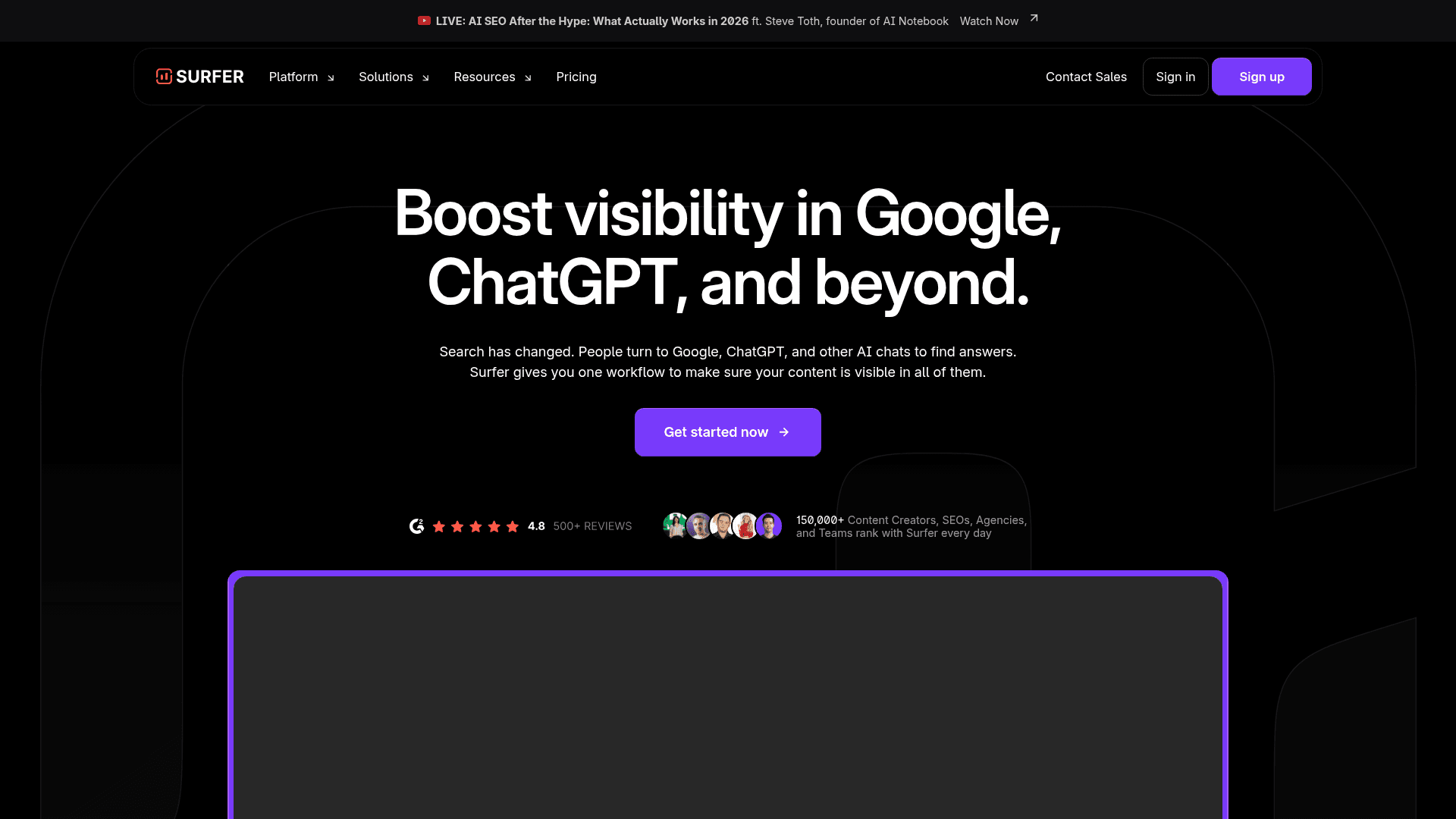
Surfer centers its workflow on a Content Editor that compares a draft with relevant search results and shows live optimization guidance. It also offers content audits and topic planning, so a team can move from deciding what to write to improving a draft and revisiting it later. Its breadth is useful for a recurring publishing program, although buyers should price the number of documents and tracked pages they need rather than the smallest plan alone.
Where it shines
- Live editor with SERP-based guidance
- Connects drafting with audits and topic planning
- Useful when several writers follow a shared optimization process
Consider before buying
- Document allowances make plan selection important
- A high content score can still hide weak original reporting or poor search intent fit
Pricing: From $49/month, billed annually
The published Discovery entry tier has document and tracking limits; compare those limits with Standard or Pro before buying.
Product details: vendor source
Clearscope
Best for editorial teams
Best for: Editors who want clear feedback, collaboration, and oversight of published content
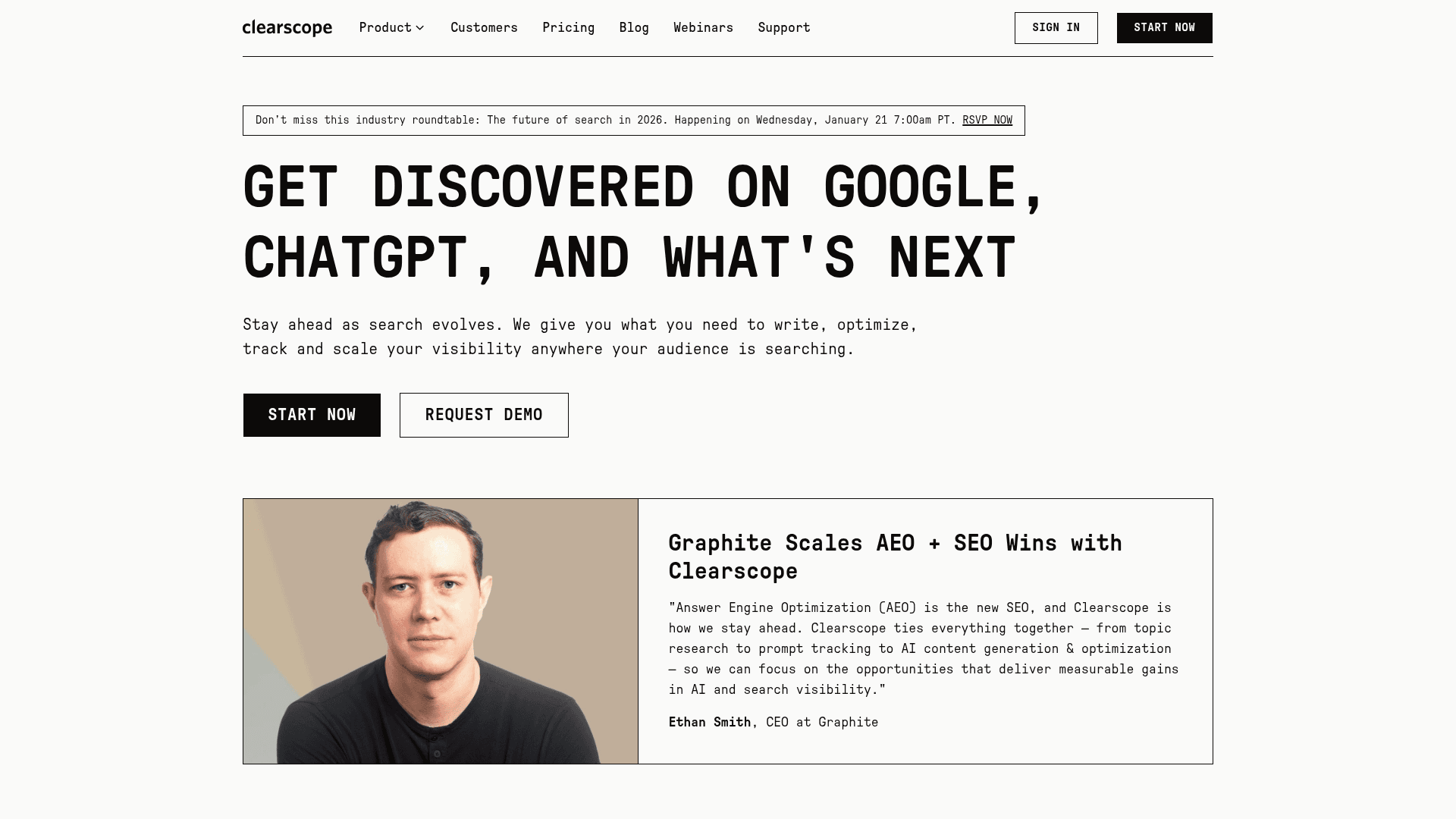
Clearscope puts a simple content grade and topic recommendations into an editing workflow that works with common writing tools. Its current platform also includes topic exploration, drafting, and content inventory features. That combination suits an editor managing quality across many contributors: the grade starts a conversation, while the final decision still depends on expertise, evidence, and whether the page answers the reader's question.
Where it shines
- Easy-to-understand content feedback
- Google Docs, Word, and WordPress workflow options
- Content inventory helps teams revisit published pages
Consider before buying
- Higher entry spend than some focused editors
- Teams need an editorial review process beyond the grade
Pricing: From $129/month
Essentials is the published entry tier; check its draft, topic, and page allowances against your monthly workload.
Product details: vendor source
Frase
Best research-to-draft workflow
Best for: Small content teams that want SERP research, briefs, writing, and optimization together
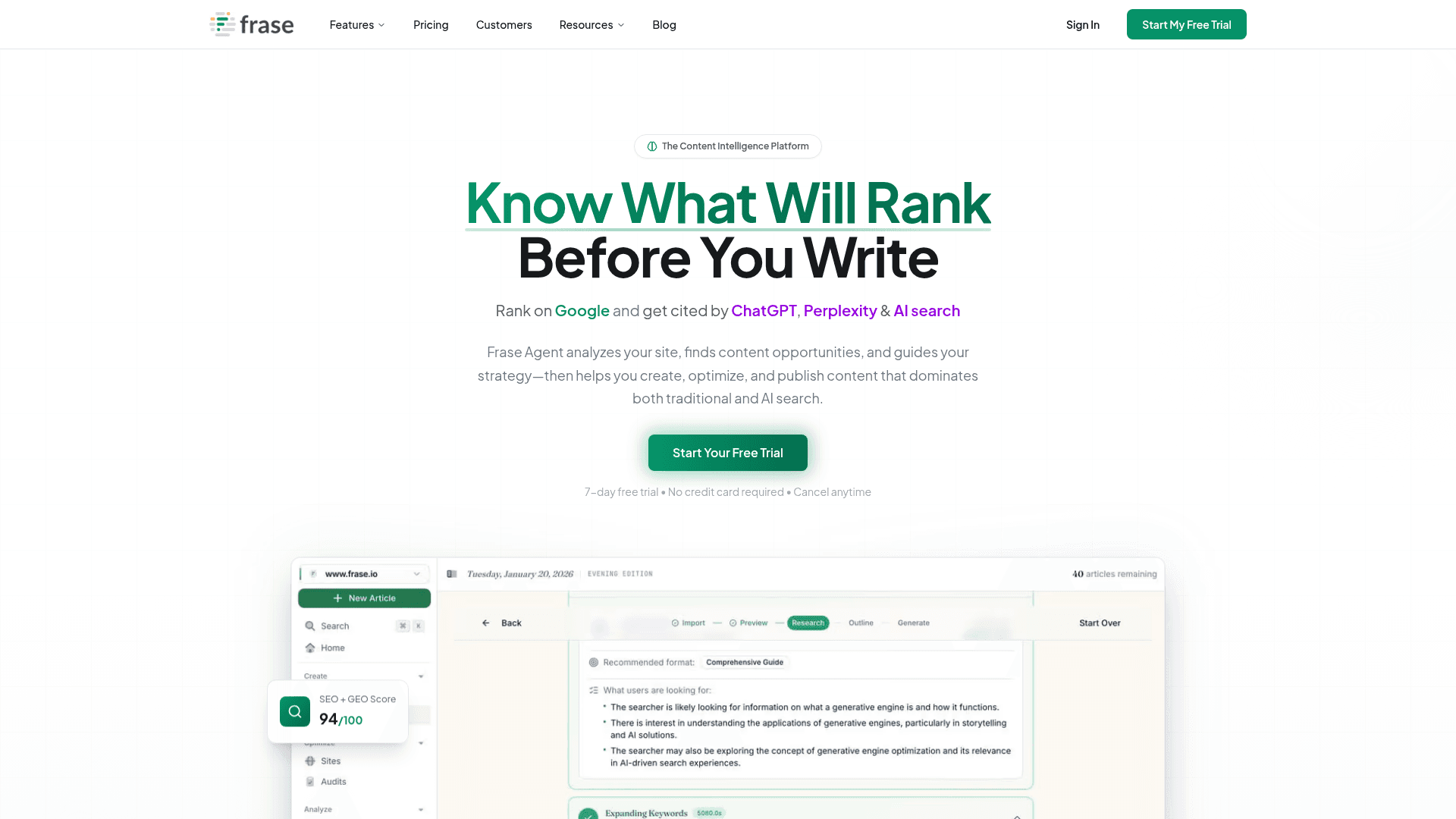
Frase brings competitive research, question discovery, briefing, drafting, and optimization into the same workspace. Its value is the shorter path from a query to a useful brief, especially for teams that cannot dedicate separate specialists to research and writing. The risk is over-automating the first draft: a brief built from ranking pages still needs first-hand examples, current facts, and a clear point of view.
Where it shines
- Research, brief, and draft in one workflow
- Useful question and SERP context for outlining
- Lower published entry point than many team-focused products
Consider before buying
- AI draft output still requires fact-checking and editing
- Seat and usage allowances vary substantially by plan
Pricing: From $39/month, billed annually
Higher plans add capacity, seats, and reporting; confirm the current article and audit allowances.
Product details: vendor source
MarketMuse
Best for topic strategy
Best for: Established sites deciding which content clusters to build, improve, or consolidate
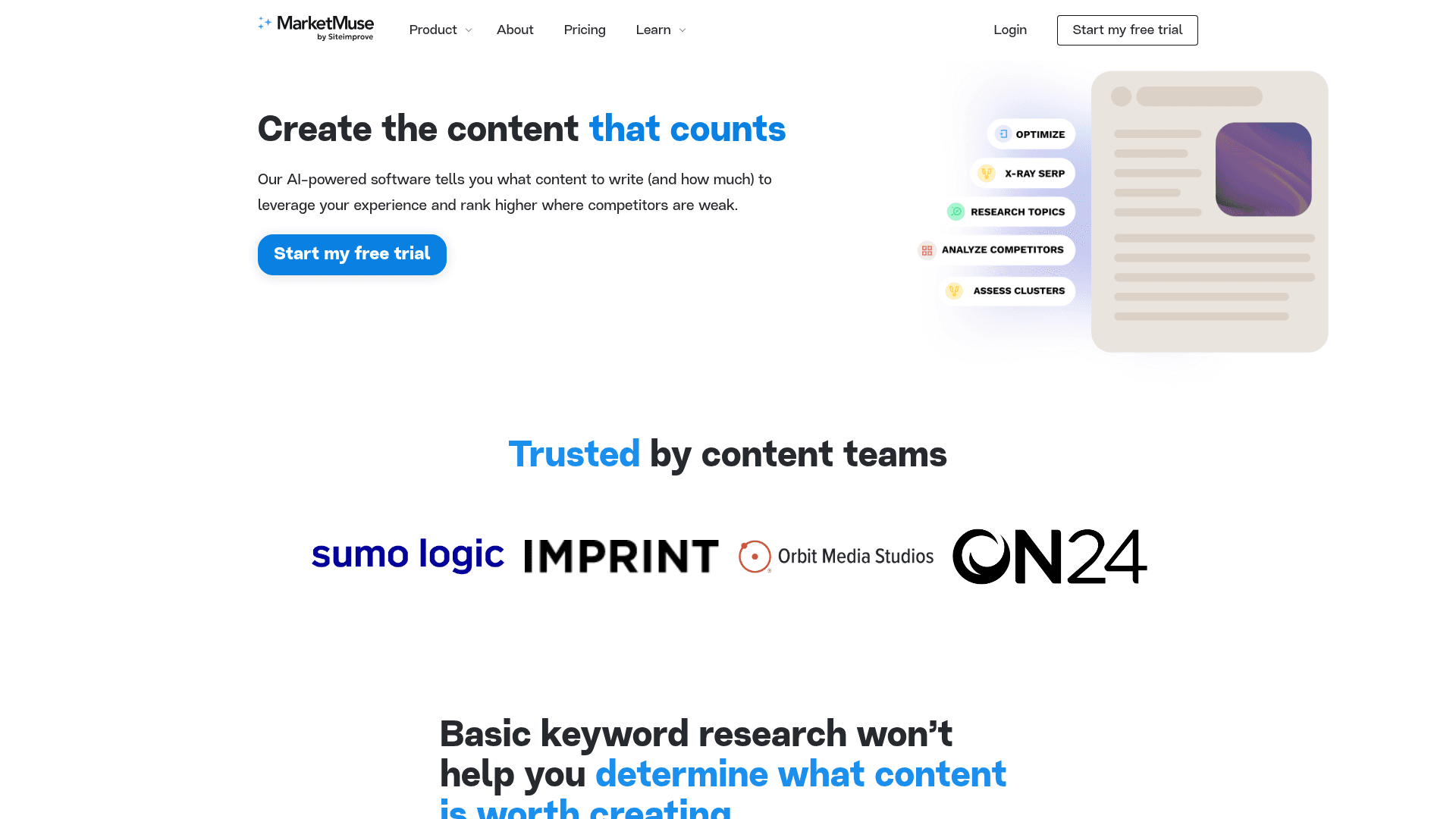
MarketMuse is most distinctive before the writing starts. Its topic research, content briefs, and site inventory help teams examine coverage across a subject and prioritize which pages need work. A team running a large editorial program may get more value from those portfolio decisions than from another draft score. Solo writers focused on one article at a time may find the planning depth and paid-plan process excessive.
Where it shines
- Topic-level planning and content inventory
- Useful for prioritizing briefs across a large site
- Limited free tier allows a small evaluation
Consider before buying
- Paid pricing requires a sales conversation
- More setup than a writer who only needs a lightweight editor may want
Pricing: Free limited tier; paid plans by quote
The free tier has limited monthly queries. Paid tiers change inventory, tracked topics, briefs, and seats.
Product details: vendor source
PageOptimizer Pro
Best for on-page diagnostics
Best for: SEOs who want detailed page-level recommendations and can act on technical as well as editorial findings
PageOptimizer Pro puts more emphasis on the structure and signals of an individual page than on managing a content calendar. Its reports and editor examine on-page elements and allow writers to revise against the recommendations. That makes it useful during focused page refreshes or landing-page work. The credit model and breadth of controls take more attention than a simple drafting grade.

Where it shines
- Detailed page-level reports and content editor
- Works with common site editors and Google Docs
- Useful for targeted refreshes and landing pages
Consider before buying
- Credit usage needs modeling for repeated reports
- Detailed recommendations can overwhelm writers without SEO support
Pricing: From $40/month
The Basic plan uses credits for reports and other features; larger plans change report and team allowances.
Product details: vendor source
NEURONwriter
Best lightweight alternative
Best for: Independent writers and small teams that want semantic guidance without a larger strategy platform
NEURONwriter combines SERP analysis, semantic term guidance, and a content editor for drafting or revising a page. It is a focused alternative when the team wants an optimization workspace but does not need extensive inventory planning. Compare its project and analysis allowances with your publishing volume, and review the suggested terms for relevance before changing copy.
NEURONwriter
Best lightweight alternative
Where it shines
- Focused content editing and SERP analysis
- Project-based workspace for several topics
- Approachable option for a small publishing team
Consider before buying
- Analysis and AI allowances vary by tier
- Less useful when portfolio planning is the main requirement
Pricing: Tiered plans; check current pricing
Plans differ by projects, content analyses, AI credits, and access to advanced features.
Product details: vendor source
How to choose the right tool
Choose the job first
For new drafts, test the editor. For refreshes, test the audit and before/after workflow. For a large site, test topic inventory and prioritization.
Use the same real page in two trials
Choose a page with a clear target query and existing Search Console data. Compare the advice each tool gives and how long a writer takes to apply it.
Check the output as an editor
Reject irrelevant terms, unsupported claims, and copy that sounds like the current top results. Add original examples and verify facts before publishing.
Price a normal month
Count new briefs, drafts, page refreshes, users, and tracked pages. Then compare the plan that covers that workload, including credit or document overages.
Frequently asked questions
What is the best SEO content optimization tool in 2026?+
Surfer is the broadest starting point for a recurring content workflow. Clearscope is a strong editorial choice, Frase combines research and drafting, and MarketMuse is better suited to topic planning across a large site. The best fit depends on whether your bottleneck is drafting, review, or prioritization.
Will a high content score guarantee better rankings?+
No. A score summarizes one vendor's model of topic coverage or on-page signals. Search intent, original information, authority, links, technical accessibility, and competing pages still matter. Treat the score as a review aid, then measure the published page in Search Console.
Can these tools optimize an existing page?+
Yes, but the depth varies. Surfer and PageOptimizer Pro support page-focused audits and revisions; MarketMuse helps prioritize work across an inventory; Clearscope and Frase can guide a rewrite. Test the full workflow on an existing page before buying.
What is the difference between content optimization and keyword research?+
Keyword research helps decide which queries and topics deserve a page. Content optimization helps structure, write, or improve that page after the target is chosen. Some platforms include both, but the buying criteria are different.
Do I need AI writing in a content optimization tool?+
No. AI drafting can speed up outlines and first passes, but many teams get more value from better briefs, editing guidance, and a clear refresh process. Judge generated text for factual accuracy, useful detail, and originality before it goes live.