
BrightLocal vs Whitespark: Which Local SEO Tool Fits?
BrightLocal vs Whitespark is really a decision about how you want to run local SEO. BrightLocal puts audits, tracking, listings, and reviews in a tiered platform. Whitespark lets you select specialist tools and services for citations and local rankings. Here is how to choose based on the work you actually do.
Quick verdict
Choose BrightLocal when you need a repeatable local SEO workflow across audits, rankings, business information, reviews, and client reports. Choose Whitespark when citation discovery or granular local rank tracking is the primary job and you would rather buy those capabilities separately. Neither choice eliminates the need to maintain your Google Business Profile and verify actual listing changes.
BrightLocal
Businesses and agencies running several local SEO tasks in one workflow
Whitespark
Teams focused on citation opportunities, local rankings, or geo-grid scans
BrightLocal vs Whitespark: quick comparison
Swipe the table sideways to see both tools.
| Decision factor | BrightLocal | Whitespark |
|---|---|---|
| Best fit | Businesses and agencies running several local SEO tasks in one workflow | Teams focused on citation opportunities, local rankings, or geo-grid scans |
| Published pricing | Track from $41/month for one location on monthly billing; Manage and Grow cost more | Local Rank Tracker from $25/month on monthly billing; Citation Finder and Grids have separate plans |
| Citation work | Track citation accuracy; manage listings or buy Citation Builder separately | Research opportunities with Citation Finder; purchase building services separately |
| Local rankings | Rank tracking plus Local Search Grid in the platform | Dedicated tracker and separate Ranking Grids product |
| Reviews | Review monitoring and response in the Grow tier | Not the center of the cited tracker and citation products |
| Buying model | Tier and active-location pricing | Separate product plans and optional services |
Prices are vendor-published starting points checked in October 2026. Billing terms, location counts, and credits affect the final quote.
Citation work: Choose based on whether discovery or ongoing management is the bottleneck.
Local rankings: Test the reports your team will actually share.
Reviews: A review-heavy workflow favors BrightLocal.
Buying model: Compare total monthly and one-off costs.
Inside the tools
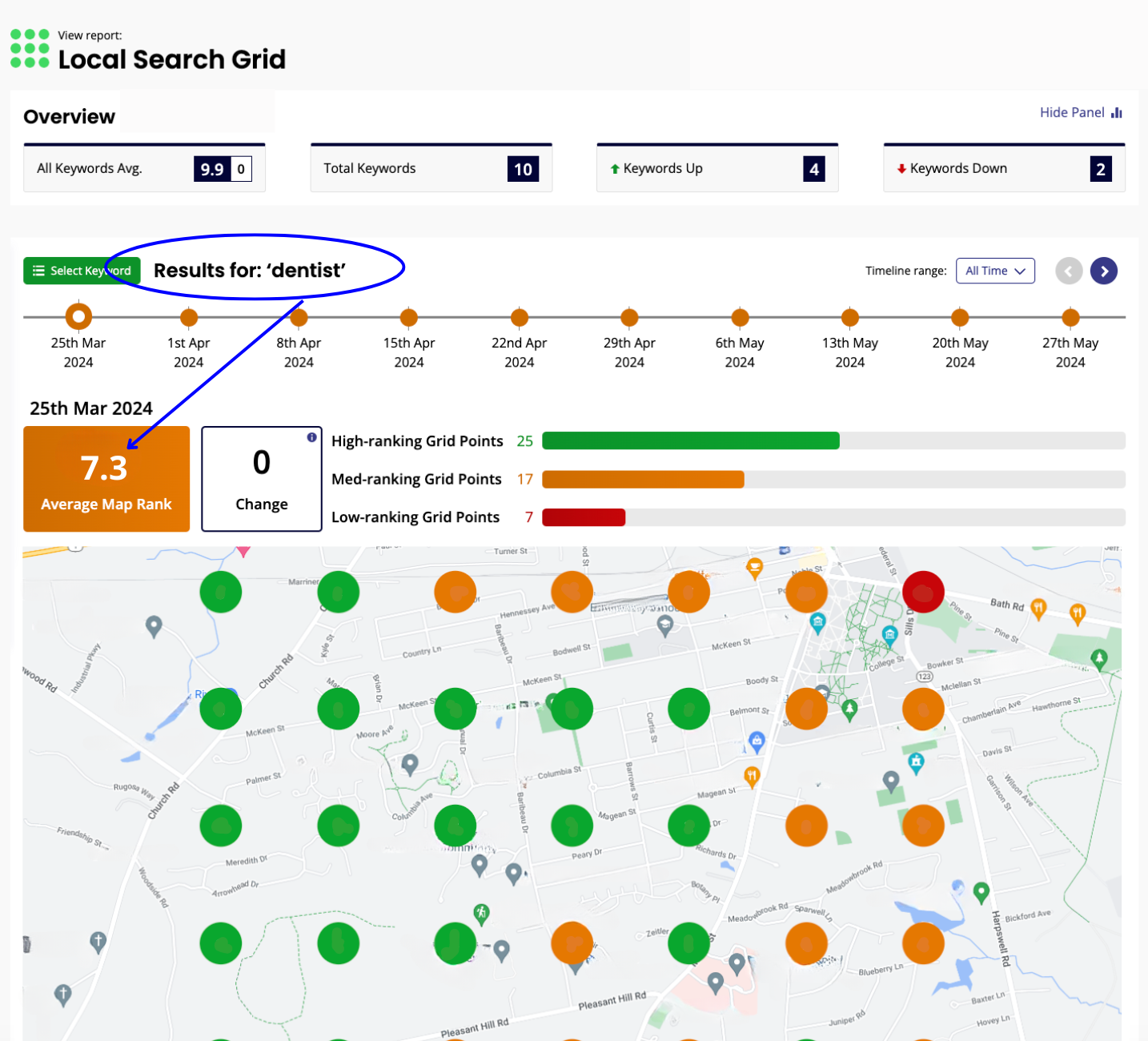
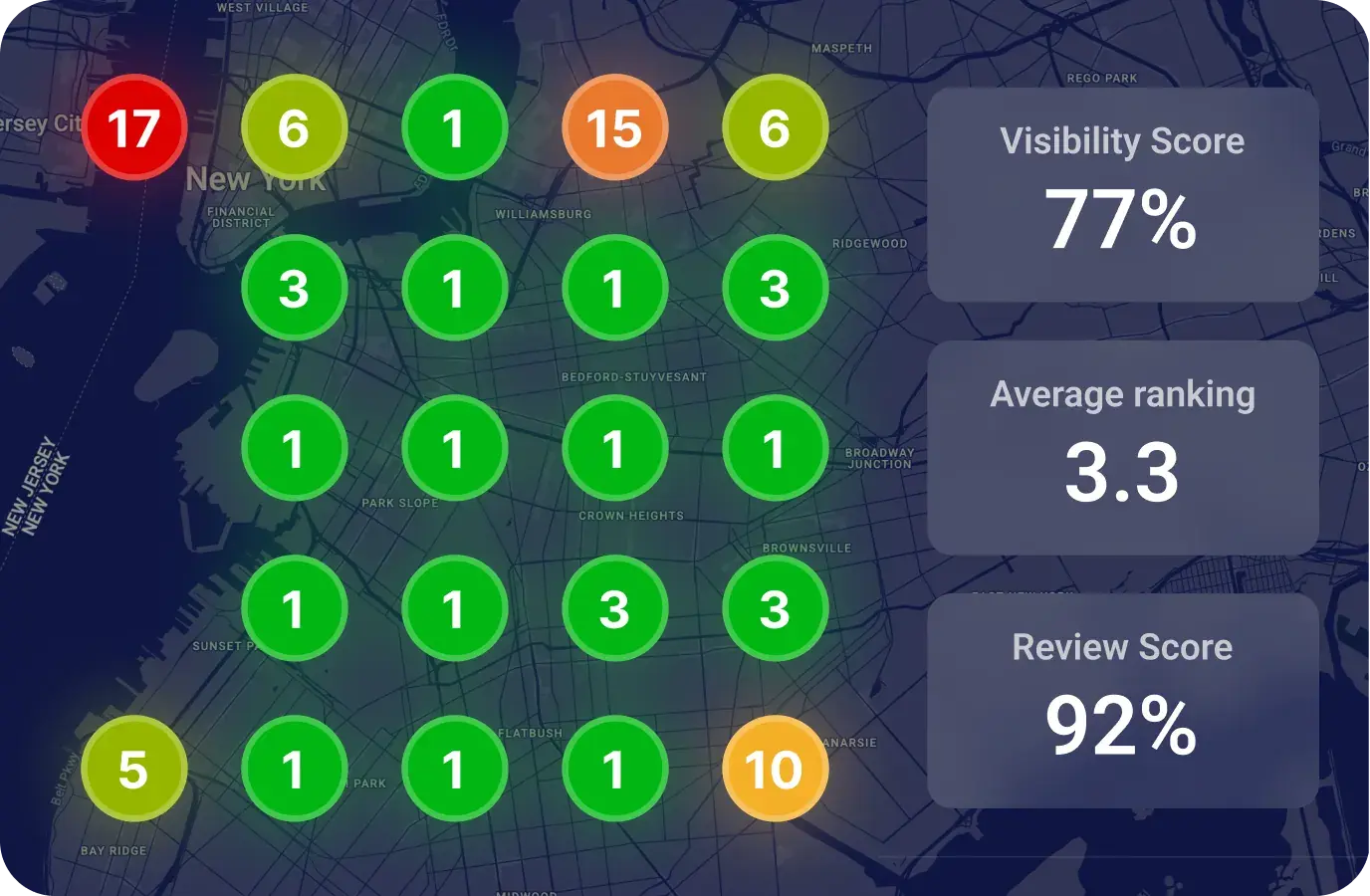
These vendor-published examples show the interfaces behind the features discussed below. Screens may change as products evolve.
What is BrightLocal?
BrightLocal is a local marketing platform organized around three jobs: Track visibility, Manage listings, and Grow reputation. Its Track plan brings local search audits, ranking reports, a local search grid, citation tracking, and Google Business Profile analysis into the same workspace. Manage adds ongoing listing synchronization, while Grow adds broader review workflows.
That packaging matters more than the feature count. A local SEO consultant can begin with a ranking or citation problem, show the client an audit, then monitor the same location after changes are made. The handoff between discovery, action, and reporting is the reason to consider the suite. It is less compelling if you only need a single ranking report or a short citation campaign.
Where it is useful
- Local Search Audit connects several visibility signals
- Local Rank Tracker and Local Search Grid support trend and neighborhood views
- Higher plans add listing and review workflows
- Location-based plans make the starting scope visible
Check before buying: Check whether the features you need sit in Track, Manage, Grow, or a separate Citation Builder purchase. The number of active locations changes the subscription price.
Visit BrightLocalWhat is Whitespark?
Whitespark is a collection of focused local SEO products. Local Citation Finder researches where competitors are mentioned and surfaces potential citation opportunities. Local Rank Tracker follows Local Pack, Maps, and organic positions for chosen terms and locations. Local Ranking Grids maps visibility across a geographic area. Whitespark also offers citation-building services, which are distinct from its software subscriptions.
The modular model works when you know which job needs attention. A consultant with a citation backlog can spend on discovery without adopting a full review-management platform. An agency that mainly reports location-level rankings can use the tracker and add grids only when the map view changes a decision. The cost and complexity rise when you need several Whitespark products together.
Where it is useful
- Citation Finder goes beyond a fixed directory checklist
- Local Rank Tracker separates Local Pack, Maps, and organic results
- Ranking Grids provides geographic visibility
- Separate tools let teams purchase a narrower workflow
Check before buying: Price the exact mix of Citation Finder, Local Rank Tracker, Ranking Grids, and services. A low starting price for one product is not the total cost of a full local SEO stack.
Visit WhitesparkCitation discovery vs listing management
A citation is a mention of a business's name, address, and phone number on another site. The useful question is not how many citations a dashboard counts. It is whether the tool shows missing, inaccurate, or duplicate records you can realistically fix. BrightLocal's Citation Tracker is useful for monitoring accuracy and finding gaps, while its Manage tier covers ongoing listing synchronization. Its Citation Builder is an additional service rather than an automatic part of every plan.
Whitespark's Local Citation Finder starts from a different workflow: find where comparable businesses appear and identify sources worth pursuing. Its citation-building service can then handle placements and cleanup. That is valuable when you have a specific local market, a shortlist of competitors, and someone ready to act on the findings. A discovery report alone does not make business information consistent across publishers.
For a one-off cleanup, list the important directories and verify the final live records before choosing any subscription. For ongoing changes across several locations, ask which platform will maintain the correct hours, address, categories, and URLs after the initial campaign.
Practical takeaway: Use Whitespark when discovering and building citations is the project. Use BrightLocal Manage when maintaining listing accuracy is a recurring operational job.
Rank tracking and geo-grids
One local rank number hides geography. A search from two neighborhoods can return different map results, and a business can be visible in the Local Pack while its website ranks differently in organic results. Both vendors address this, but their product boundaries are different: BrightLocal combines conventional tracking with Local Search Grid, while Whitespark offers a dedicated Local Rank Tracker and a separate Local Ranking Grids product.
Whitespark's tracker distinguishes Google Local Pack, Maps, and organic results and lets you segment by location and keyword group. BrightLocal is useful when ranking changes must appear beside GBP audits, citations, and client-facing local reports. Neither map should be treated as a precise forecast of calls or revenue. Set the same keyword, grid size, scan cadence, and location center before comparing the tools.
If your team makes weekly recommendations from rank data, inspect how quickly each report leads to a concrete action. A beautiful grid is less useful if it cannot tell you whether to change a business category, correct a listing, improve a page, or investigate a competitor.
Practical takeaway: Pick the reporting method that matches your decisions, then compare equal scans instead of headline ranking scores.
Audits, Google Business Profile, and reviews
BrightLocal's suite is strongest when an audit starts a broader local SEO process. Its Local Search Audit and Google Business Profile analysis can uncover a weak listing, uneven rankings, or review gaps. The higher tiers let a team keep working on business data and reviews without moving the case into unrelated software. That is useful for an agency delivering a monthly service and showing progress over time.
Whitespark's public product lineup places more emphasis on citation research and local ranking measurement. Its rank tracker includes Google Business Profile views and competitor insights, but the citation and tracker plans are not an equivalent replacement for every listing and review operation in BrightLocal's higher tiers. A team already using another reputation tool may prefer that focused scope.
Test a real location with messy data. Can you find the incorrect record, assign the fix, and later verify it? Can you explain the result to a non-specialist client? These questions reveal more than a checklist claiming both products support local SEO.
Practical takeaway: BrightLocal has the more connected audit-to-action workflow; Whitespark fits a stack that already handles listings and reviews elsewhere.
BrightLocal vs Whitespark pricing
BrightLocal publicly lists Track at $41 per month for one active location on monthly billing, Manage at $54, and Grow at $65. Annual billing lowers the effective monthly rate, while the account price changes as you add locations. This makes a small pilot straightforward to budget, but an agency should model its whole active-location count instead of multiplying a one-location teaser price.
Whitespark prices the relevant products separately. Its Local Rank Tracker page lists a Small Business plan at $25 per month on monthly billing and $20 per month when billed annually. Ranking Grids advertises plans starting at $10 per month. Citation Finder and citation services have their own purchasing paths. The right comparison is the cost of the exact combination you need, at the scan or keyword allowance you will really use.
Do not compare BrightLocal Grow with only Whitespark's tracker and call the difference a saving. Equally, do not buy a suite to solve a short-term citation research task. Write down monthly subscriptions, annual commitment, one-off services, active locations, keywords, and grid frequency on one sheet before deciding.
Practical takeaway: Compare a complete workflow at your actual location count. The cheapest entry plan is not always the cheapest way to finish the job.
Switching tools without losing your baseline
A switch between these products should begin with an inventory rather than a cancellation. Export the list of locations, tracked keywords, target coordinates, ranking history, citation opportunities, and client-facing reports you rely on today. Some historical views may not import cleanly into another vendor's interface. Save a dated copy of the baseline so you can explain why a new dashboard begins with a different score or location setup.
For citations, record which listings were submitted, corrected, or claimed and who holds the credentials. Whitespark's discovery output can inform a BrightLocal monitoring program, but a discovered opportunity is not the same as a live, verified listing. If BrightLocal is the current platform and you are adding Whitespark for a campaign, assign one owner to update the master business information. That prevents two tools or teams from using conflicting phone numbers or hours.
Run both measurement setups for a short overlap period when possible. Use identical keywords and geographic settings, and compare trends rather than demanding identical positions on every scan. Once the new reports are useful, remove redundant subscriptions and document where the authoritative location record lives.
Practical takeaway: Preserve the location and ranking baseline, then make one system responsible for the business facts you publish.
Agency reporting and day-to-day work
An agency's reporting need is wider than exporting a chart. The report should connect a baseline to work completed, changes in visibility, and unresolved issues. BrightLocal's combined audits, tracking, listings, and review data make that narrative easier to assemble when the client buys a broad local SEO retainer. Its value comes from reducing context switching across those tasks.
Whitespark's Local Rank Tracker supports shared and white-label ranking views, keyword segmentation, and exports. That can be ideal for a focused rank-monitoring service. Citation Finder provides a separate research output that a specialist can turn into a placement plan. The agency still needs a way to document work performed and connect these outputs to business outcomes.
Ask a teammate who did not configure the campaign to produce a useful client update. If they cannot explain which locations improved and what happens next, a lower subscription fee will not fix the delivery workflow.
Practical takeaway: Choose the tool whose reports fit the service you sell, then verify that another team member can reproduce them.
Who should choose which tool?
Single-location business
BrightLocal Track
Start here if you want an audit, ranking trends, and citation checks in one place. Move to Manage or Grow only when listing or review operations become recurring work.
Citation cleanup project
Whitespark
Citation Finder and optional building services fit a defined research-and-cleanup assignment. Verify each important listing after the work is done.
Agency local SEO retainer
BrightLocal
The connected audit, visibility, listing, and review workflow is easier to turn into a repeatable monthly service.
Specialist rank reporting
Whitespark
The dedicated tracker and optional grids fit a team that wants detailed local measurement and already uses other tools for listings and reputation.
How to test your shortlist
Run the same small pilot in each product. Keep the locations, keywords, and success criteria fixed so a polished dashboard does not disguise a workflow mismatch.
- 01Select one representative location with a verified Google Business Profile and several known listing issues.
- 02Track the same five search terms at the same geographic center, device, and cadence in both tools.
- 03Log the full price of the plan, extra products or services, active locations, and reporting access you need.
- 04Ask a second person to identify three actions from each product's reports without help from the setup owner.
Final verdict
BrightLocal is the stronger default for a team that wants to manage the full local SEO cycle rather than one part of it. Its tiered pricing and shared workspace make most sense when audits, rankings, listings, and reviews feed one another. Start with the lowest tier that covers your actual work and count every active location before budgeting.
Whitespark is the better specialist choice when citations or local rank measurement justify a purpose-built product. It can be cheaper and clearer for a narrow assignment, but compare all required modules if you are trying to replace an end-to-end platform. For a wider field, read our best local SEO tools guide and the separate local rank tracking guide below.
Frequently asked questions
Is BrightLocal better than Whitespark?
BrightLocal is a better fit when audits, rankings, listings, reviews, and reporting must work together. Whitespark is a better fit when citation research or specialized local rank tracking is the priority. Compare the tools against the work you do each month, not only their published feature lists.
Which is better for citation building?
Whitespark's Local Citation Finder is designed to find citation opportunities, and Whitespark offers citation-building services. BrightLocal tracks citation accuracy and offers a separate Citation Builder service. For either vendor, specify which directories matter and confirm the live listings after purchase.
Do both tools provide local rank tracking?
Yes. BrightLocal offers Local Rank Tracker and Local Search Grid in its platform. Whitespark offers Local Rank Tracker and a separate Local Ranking Grids product. Match the keywords, location center, frequency, and report format before comparing results.
How much do BrightLocal and Whitespark cost?
In October 2026, BrightLocal lists Track from $41 per month for one location on monthly billing. Whitespark lists Local Rank Tracker from $25 per month on monthly billing; other Whitespark tools and services are priced separately. Both have options that change with scope or billing term, so verify the exact order before buying.
Can I use BrightLocal and Whitespark together?
Yes. A team can use BrightLocal for routine audits, listings, and reviews while using Whitespark for a focused citation campaign or a different ranking view. Keep one source of truth for location data and avoid paying for duplicate reports nobody uses.
Which is better for an agency with many locations?
BrightLocal can be easier when an agency needs a standard service across audits, rankings, listings, and reviews. Whitespark can be attractive for a specialized citation or ranking offering. Model the total cost at your active location and keyword count, then test how each tool handles client reporting.
Sources and pricing checks
Product capabilities and prices were checked against vendor pages on October 6, 2026. Reconfirm a plan before purchasing.