
BrightLocal vs Yext: Local SEO or Enterprise Control?
BrightLocal vs Yext is a question of operating model. BrightLocal gives local marketers audits, ranking data, listings, and reviews in a tiered platform. Yext centers on authoritative location data and direct distribution across a broad publisher network, with other products for reviews and digital experiences. The right choice depends on who owns each location and how changes are approved.
Quick verdict
Choose BrightLocal when a small business or agency needs to diagnose local visibility and run practical campaigns at a published starting price. Choose Yext when a multi-location organization needs controlled location data, direct publisher distribution, and governance across teams. Ask Yext for a scoped quote; there is no useful public list price to compare with BrightLocal's one-location entry plan.
BrightLocal
Local marketers and agencies managing campaigns and reporting
Yext
Organizations coordinating location data across many teams and publishers
BrightLocal vs Yext: quick comparison
Swipe the table sideways to see both tools.
| Decision factor | BrightLocal | Yext |
|---|---|---|
| Best fit | Local marketers and agencies managing campaigns and reporting | Organizations coordinating location data across many teams and publishers |
| Published pricing | Track from $41/month for one location on monthly billing; Manage from $54/month | Contact sales for a quote based on scope and products |
| Primary job | Local SEO diagnosis and recurring campaign work | Centralize and distribute location data at scale |
| Listings | Ongoing listing management in Manage and Grow | Direct publisher distribution from centralized location records |
| Ranking visibility | Local Rank Tracker and Local Search Grid | Evaluate ranking needs against the exact Yext product scope |
| Buying model | Published tiers by active-location count | Sales-led quote by organization scope |
Prices are vendor-published starting points checked in October 2026. Billing terms, location counts, and credits affect the final quote.
Primary job: Start with the operational bottleneck.
Listings: Test important publishers and update flows.
Ranking visibility: Do not assume identical reporting in a quote.
Buying model: Compare full-year totals and obligations.
Inside the tools
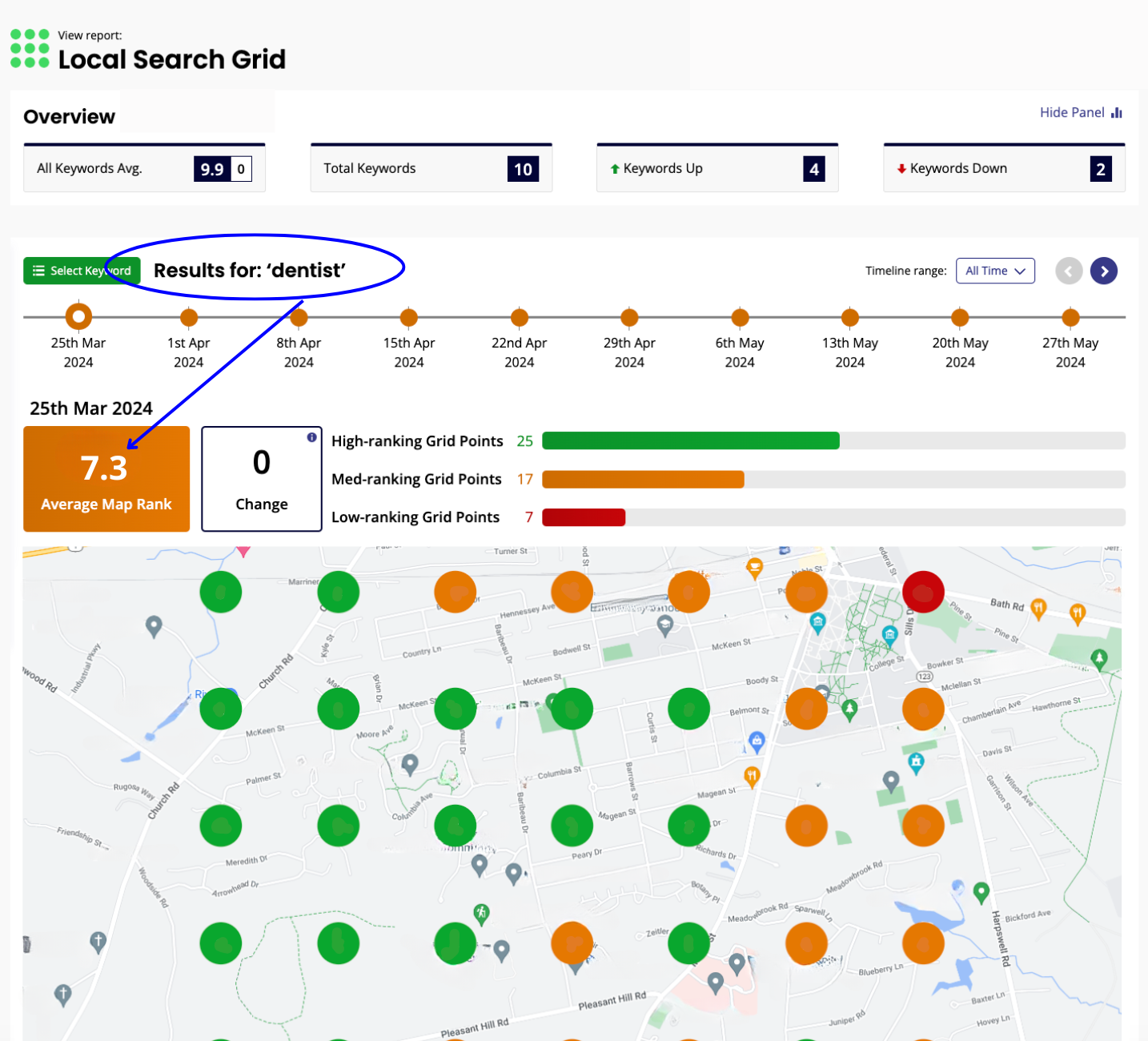
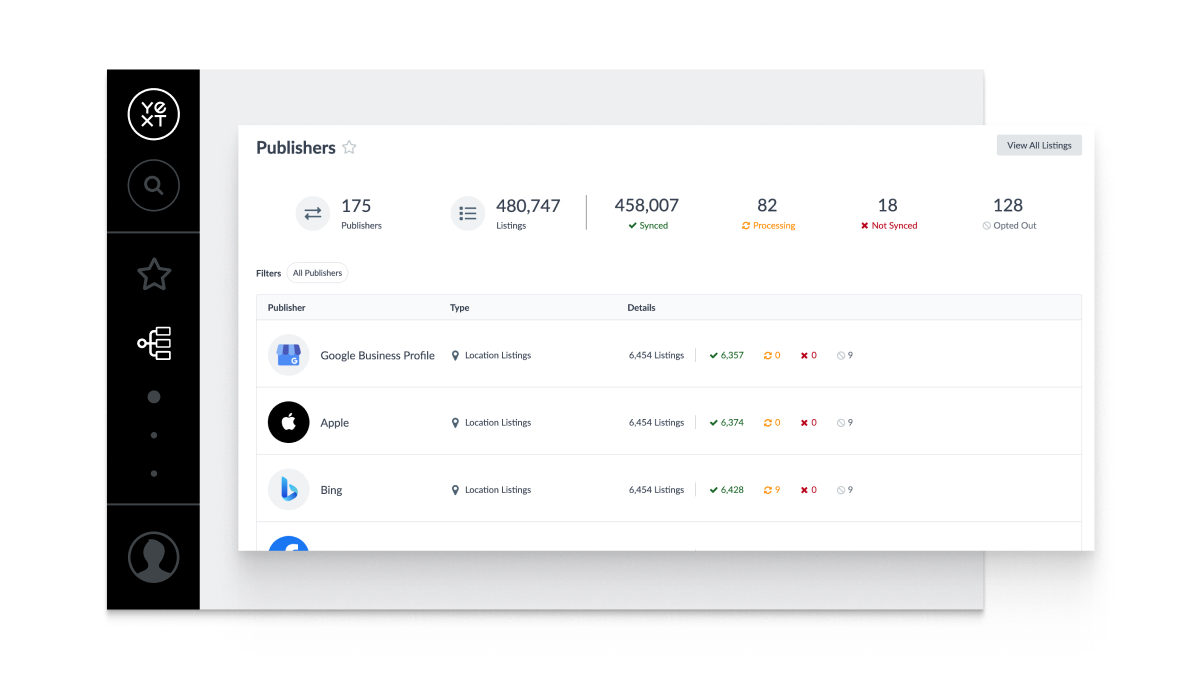
These vendor-published examples show the interfaces behind the features discussed below. Screens may change as products evolve.
What is BrightLocal?
BrightLocal is built around the tasks a local SEO practitioner does repeatedly: audit a Google Business Profile, check rankings by area, spot citation errors, maintain business listings, and monitor reviews. Its Track, Manage, and Grow tiers progressively add operations to a measurement foundation. The public price table scales by the number of active locations.
That makes it straightforward to pilot on one or several locations and to teach an agency team a consistent delivery process. Its strength is the path from visibility diagnosis to local SEO action. Its tradeoff is that organizations with complex approval chains, many brands, or custom data integrations may need to assess whether the standard workflow fits their governance requirements.
Where it is useful
- Local Search Audit and Google Business Profile analysis
- Local rankings and geo-grid visibility
- Published plan and location pricing
- Manage and Grow tiers cover listings and reviews
Check before buying: Tracking, listing synchronization, and review workflows sit in different tiers. Model the cost at your real number of active locations.
Visit BrightLocalWhat is Yext?
Yext Listings keeps structured business information in a central platform and distributes it through direct publisher connections. The wider Yext platform includes products for reviews, pages, search, and other digital presence tasks. The practical appeal is control: a brand can define the correct facts for each location and manage how they appear across publisher surfaces.
A large retailer, healthcare network, or franchise may care less about a single audit report and more about who can change holiday hours, how quickly those changes reach important publishers, and whether a central team can oversee hundreds of locations. Yext's sales-led buying process makes sense to evaluate with a concrete location count, publisher list, and feature scope rather than a generic per-location estimate found on an old comparison site.
Where it is useful
- Central source of location information
- Direct connections to a broad publisher network
- Products for reviews and other digital presence workflows
- Designed for coordinated multi-location operations
Check before buying: Get a written quote covering locations, products, onboarding, integrations, contract length, and what happens to listings when a subscription ends.
Visit YextListing accuracy and publisher distribution
Both products can help keep business information consistent, but they approach the job from different directions. BrightLocal's Manage plan builds on audit and tracking features to sync and protect business details across key sites. A local marketer can identify a citation problem, fix the source record, and monitor the location in the same workspace. That is a good fit when an SEO practitioner owns the changes.
Yext Listings is built around a central record of brand facts and direct distribution to its publisher network. Its value becomes clearer when a location's hours, address, services, and imagery change frequently or must pass through a central team. The important test is not the claimed size of a network; it is whether your critical publishers accept the fields you need, how conflicts are resolved, and how quickly a real change appears live.
Before buying either product, pick a few difficult locations: one with duplicate listings, one with unusual hours, and one with a recent move. Track a change from approval to publication. This exposes manual cleanup needs and publisher-specific limits that a sales overview may not show.
Practical takeaway: BrightLocal is practical when the SEO team drives listing changes; Yext is compelling when location data is a company-wide controlled asset.
Operating across many locations
Location count alone does not make a platform enterprise-ready. A fifty-location business with one local marketing owner may have a simpler process than a twenty-location franchise with regional approvals, separate brands, and frequent staff changes. BrightLocal prices by active locations and can report on many locations, but you should test how your team assigns work and keeps records consistent at your intended scale.
Yext's central location model is designed for coordinated changes across a large footprint. Ask for a demonstration of permissions, change approval, field-level data, bulk updates, and any integration with the system that holds your official location information. Those questions matter more than a generic promise of multi-location support. If a local manager can overwrite central data or an import silently changes hours, the organization needs a clear governance process regardless of vendor.
The most useful pilot includes a routine update and an exception. Publish new regular hours to several locations, then handle a temporary closure or a holiday schedule. Measure the number of steps, who approves them, and how you verify the final listing.
Practical takeaway: For complex ownership and approvals, evaluate Yext's governance in a live demo; for a lean agency workflow, test BrightLocal first.
Audits, local rankings, and campaign decisions
BrightLocal provides a dedicated measurement path. Local Search Audit, Google Business Profile analysis, local ranking reports, and Local Search Grid help a practitioner diagnose where a business is weak and decide what to improve. A grid can show that a location performs near its storefront but disappears a few neighborhoods away. A citation report can reveal inconsistent information. These are inputs for local SEO work, not evidence that the software itself created new demand.
Yext's Listings product focuses on distributing and maintaining data. The wider platform has analytics and other products, but a buyer should not assume the exact ranking workflow in BrightLocal is included in a Yext Listings quote. Write down the reports your SEO team needs: map-grid history, local pack tracking, competitor views, GBP audit fields, and a way to export or share results. Ask Yext to show each item in the specific package proposed.
A team already using a separate rank tracker may not need BrightLocal's breadth. Conversely, a small agency may find Yext's centralized data strength less valuable than BrightLocal's everyday audit and reporting flow.
Practical takeaway: BrightLocal is the easier starting point when the main goal is to diagnose and improve local SEO performance.
Reviews and customer-facing operations
Reviews are both an operational task and a trust signal. BrightLocal's Grow plan extends its measurement and listing workflow with review monitoring, response, and generation features. That lets a local marketer connect a reputation task to the rest of a monthly campaign. It also means a Track or Manage buyer should not assume every review capability is included.
Yext sells a Reviews product alongside Listings. For a distributed organization, assess how review alerts are routed, who can reply, whether responses follow brand rules, and how negative feedback escalates. The right setup often depends on staffing as much as software. An automated reply that reaches the wrong team can create more work than a slower, well-owned response process.
A useful pilot sends several test reviews through the intended workflow, including one that needs a sensitive human response. Confirm the users, permissions, notifications, and reporting that would be in the purchased package.
Practical takeaway: Include review management in the scope only if you have owners and response rules for it.
Implementation, data ownership, and exit
A listings platform is only as reliable as the source data it receives. Before importing locations, reconcile duplicate records and agree on a canonical name, address, phone number, URL, category, and hours for each one. Decide who approves changes from local managers, who handles urgent closures, and how mistakes are rolled back. This preparation is useful with either vendor and becomes essential when a central system feeds many publishers.
For a BrightLocal pilot, begin with a small set of representative locations and document how the SEO team will use audits, listings, and rank reports each month. For a Yext evaluation, include the people who own the official location database, legal or brand approvals where relevant, and the team that will maintain integrations. A demo attended only by marketers can miss the operational constraints that later determine whether a rollout succeeds.
Ask both vendors what can be exported and in what format. Confirm which listings remain editable through your own publisher accounts if you stop paying and what manual cleanup may follow. Keep credentials for important Google Business Profiles and other primary publisher accounts under company control. A clean exit path makes it easier to switch tools or change agencies without losing track of location facts.
Practical takeaway: Treat accurate source data and an exit plan as part of the purchase, especially when many locations are involved.
BrightLocal vs Yext pricing and contracts
BrightLocal publishes a price table by plan and active location count. At one location on monthly billing, Track starts at $41 per month, Manage at $54, and Grow at $65. Annual billing changes the effective monthly cost. The entry price is useful for a pilot, but a multi-location buyer should calculate the total at the intended location band and check whether services such as Citation Builder are additional purchases.
Yext sends buyers to its sales team for a platform quote. Treat any unsourced flat monthly number in a comparison article with caution. Ask Yext to itemize locations, products, publisher coverage, onboarding, integrations, support, contract length, renewal rules, and data export. Then compare that full scope with the BrightLocal tier and any other software you would still need.
The two products may also differ in implementation effort. A centralized location platform may require data cleanup and integrations before it delivers value, while a smaller campaign suite may be configured quickly but leave governance work elsewhere. Include staff time and migration work in the decision.
Practical takeaway: BrightLocal is easier to budget from public prices; Yext requires a written, scope-matched quote.
Who should choose which tool?
One to a few locations
BrightLocal
A published starting price, local audits, and ranking visibility make a small pilot simple to evaluate. Add listing or review tiers only when you will use them.
Local SEO agency
BrightLocal
A practitioner can connect audits, map visibility, citations, and reporting in a repeatable client workflow.
Franchise or chain
Evaluate Yext first
Central ownership of location facts and direct publisher distribution can matter more than an individual audit. Validate permissions and exceptions in a pilot.
Enterprise team with a rank tracker
Evaluate Yext
If SEO measurement already lives elsewhere, focus this purchase on data governance, listing updates, and the exact Yext products required.
How to test your shortlist
Run the same small pilot in each product. Keep the locations, keywords, and success criteria fixed so a polished dashboard does not disguise a workflow mismatch.
- 01List every location, brand, country, publisher, and data field that the proposed platform must manage.
- 02Use one routine update and one exception, such as holiday hours or a moved location, to test approval and distribution.
- 03Ask both vendors to show the exact ranking, review, and listing workflows included in the proposed purchase.
- 04Compare total annual cost, setup time, integrations, support, contract terms, and how you export your data.
Final verdict
BrightLocal is the clearer choice for local SEO practitioners who need to diagnose a problem, take action, and explain progress to a client or business owner. Its published tiers make a small pilot possible. The decision becomes less simple when location counts grow or the organization needs strict data governance, so calculate the full scope before assuming the entry price applies.
Yext is worth the sales process when location facts must be controlled across departments and distributed through many publisher relationships. Require a demonstration of your own update and approval workflow. If the main unmet need is local rank tracking or audits, begin with BrightLocal and compare other specialist tools before taking on a broader platform contract.
Frequently asked questions
Is BrightLocal or Yext better for local SEO?
BrightLocal is usually the more direct fit for local SEO audits, rank tracking, geo-grid analysis, and a recurring campaign workflow. Yext is a stronger candidate when centralized location data and coordinated publisher distribution are the main needs. The best choice depends on who owns changes and how many teams or locations are involved.
Is Yext only for large businesses?
Yext supports different organizations, but its sales-led platform is especially relevant when a business needs centralized control over many location records and publisher updates. A smaller business should still evaluate the exact quote against a simpler tool and the amount of governance it actually needs.
Does BrightLocal manage business listings?
Yes. BrightLocal's Manage tier adds ongoing listing synchronization to its Track features, and Grow adds broader reputation tools. Its separate Citation Builder service may be useful for specific placement or cleanup work. Verify which plan or service covers the sites that matter to your business.
How much does Yext cost compared with BrightLocal?
BrightLocal publishes monthly prices starting at $41 for Track with one location, with higher tiers for listing and review workflows. Yext directs buyers to contact sales, so there is no reliable public platform price to compare directly. Ask for a written quote with locations, products, onboarding, support, and contract terms.
Can BrightLocal replace Yext for multiple locations?
It may cover the SEO and listing workflow for many teams, but do not decide by location count alone. Test approvals, field ownership, publisher coverage, integrations, and reporting at your actual scale. If those processes are complex, a platform built around central governance may be more appropriate.
Should I buy both BrightLocal and Yext?
Only if the jobs are distinct. An organization might use Yext as the source of truth for location facts and BrightLocal for SEO audits or rank measurement. Define which system owns each field and avoid paying twice for overlapping listing or review functions.
Sources and pricing checks
Product capabilities and prices were checked against vendor pages on October 6, 2026. Reconfirm a plan before purchasing.